Puppy-Proofing Your Home:
Cords, Gaps, and Plants Checklist
Three days after my dog Gureum arrived, I found a charging cable chewed clean in half (it means "cloud" in Korean). That she wasn't electrocuted was pure luck. That evening I crawled the entire home on my knees, checking what the world looks like from dog height: and found twenty hazards. It was the job I should have done BEFORE she arrived. Here's the list, so you can.
The puppy-proofing principle: at dog's-eye level (a foot off the floor), remove everything chewable, swallowable, trappable, or fall-able. Cords into covers, small objects up high, medications and cleaners behind latched doors, toxic plants out, mats over slick floors, screens locked on windows and balconies. The night before arrival: crawl every room on your knees and check.
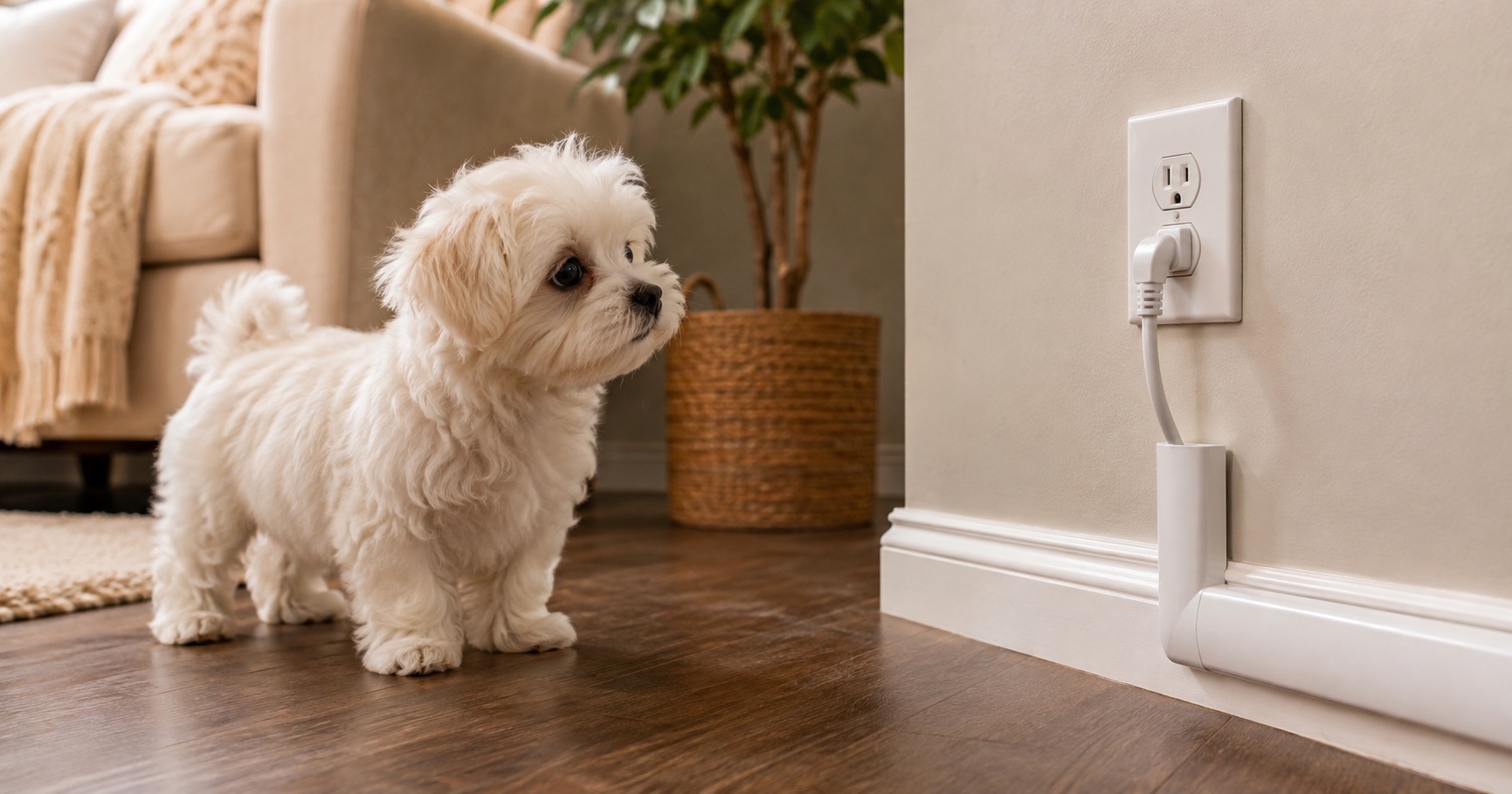
The room-by-room audit
| Room | Hazards | Fixes |
|---|---|---|
| Living room | Cords, remote batteries, the gap behind the couch, slick floors | Cord covers or cable boxes, batteries in drawers, gaps blocked, mats down |
| Kitchen | Trash can, dropped food, toxic foods (onions, grapes), cleaners | Locking-lid trash can, under-table sweeps, food and cleaners up high |
| Bathroom | Cleaners, razors, hairpins, toilet water | Door closed, lid down |
| Bedroom | Socks, hair ties, earrings, medications, the high bed | Small items in drawers, steps beside the bed |
| Balcony, windows | Falls, screen push-outs, planters | Screen locks, balcony access controlled, toxic plants removed |
| Entryway | Shoes, umbrellas, door-gap pinches, escapes | Shoe cabinet closed, a gate at the door |
* Puppies go first for the smelly (socks, shoes) and the small (hair ties, batteries). Clear those two categories before anything else.
The five most dangerous things
- Cords: chewing means shock and burns. Cable covers, furniture-hidden routing, and safety caps on unused outlets.
- Medications and supplements: one human pill can be lethal to a small dog: painkillers, cold medicine, and vitamin D top the danger list. Drawers, closed.
- Toxic plants: lilies, monstera, snake plant, aloe, ivy, pothos, dieffenbachia. Assume most houseplants are hazards and move them out of reach.
- Small objects: hair ties, batteries, earrings, buttons, socks. Swallowed, they become obstruction surgery. Gureum's #1 vet emergency was exactly this.
- Toxic foods: chocolate, grapes, onions, garlic, xylitol gum. Audit the tabletop AND the inside of your bag.
How does a dog's-eye audit work?
Learned this on the job: what's invisible standing up is obvious on your knees. The night before arrival, crawl each room and touch everything you can reach. The coin under the couch, the cord behind the bookshelf, the tassel on the curtain hem, the gap behind the door. Whatever your hand finds, a dog's mouth finds first. My crawl ended with a couch-gap blocker and three cord covers in the shopping cart.
Even the crime-scene photos become keepsakes
The picture of a dog studiously ignoring the cable they just halved gets funnier every year. Before cleaning up each incident, take one photo and post it to kkeung: the dates stack up into a photographic inventory of your home's danger list. And if a vet visit ever follows an incident, that photo earns its keep.
Save a photo of today →After the proofing
Stock the legal chews
Teething (3-6 months) means everything gets chewed. Removing the dangerous matters exactly as much as SUPPLYING the permitted: three or four chew toys in rotation drain most of the interest in cords and furniture.
A pen and a crate
If the whole home can't be perfect, build one space that is. Unsupervised hours in a pen or crate prevent the majority of accidents: and a crate taught as a den, not a jail, becomes a place the dog loves.
Re-audit quarterly
A growing dog's reach grows. The tabletop that was safe at three months is a front-paws-up buffet at nine. Every three months: back on your knees.
Puppy-proofing isn't a one-time project: it's the habit of living with a dog. Nothing left on floors, doors closed, meds in drawers. Cumbersome for a month, automatic forever after: and it's what keeps the 2 a.m. ER drive from ever happening.
Frequently asked questions
Which houseplants are toxic?
My puppy already chewed a cord. Now what?
I think my dog swallowed something.
How do I secure window and balcony screens?
Do I need to puppy-proof for an adult adoptee?
This article is general information and does not replace a veterinary diagnosis. Talk to your vet about your dog's condition.