Your New Dog's First Day:
The 7 Things NOT to Do
The day my dog Gureum arrived (it means "cloud" in Korean), I invited the whole family. Everyone took turns holding her, photographing her, calling her name. That night she would not come out from under the couch. In hindsight: from her side, it was the day six strange giants took turns lifting her off the ground. Here's everything I didn't know then.
Day one's principle: quiet, slow, and let the dog approach first. No guests, no bath, no forced holding, no food switch, no solo time with kids, no nighttime isolation in another room, no scolding the accidents. Skip these seven and the adjustment runs days faster.
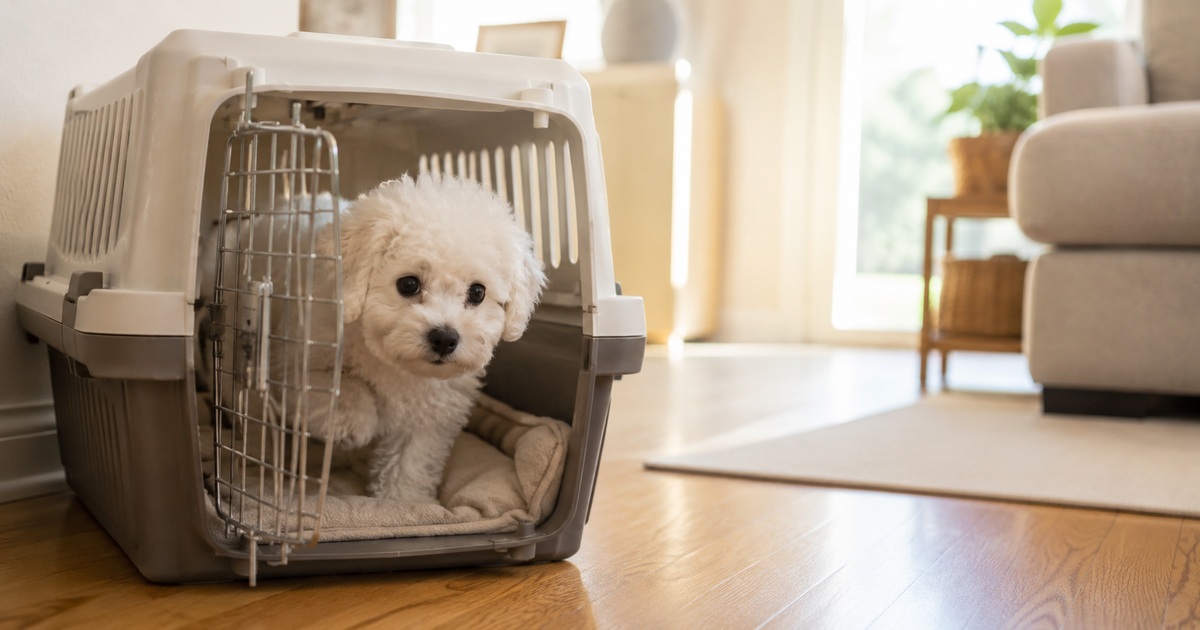
The 7 don'ts
From the dog's side, day one is close to an abduction. Mother, siblings, every familiar smell and sound: gone, replaced by a strange place and strangers. The owner's job today isn't doing things FOR them. It's NOT doing things.
| Don't | Why | Instead |
|---|---|---|
| Invite guests | Every stranger multiplies the fear | Family only for week one, introduced one at a time |
| Bathe on day one | Washing away the last familiar smell maximizes anxiety | Wait a week even if they're smelly: damp cloth on paws only |
| Force holding | Being unable to flee is the scariest state there is | Sit on the floor: wait for them to come |
| Switch the food | New environment plus new food equals diarrhea | Exact same food: switch after 2 weeks, over 7 days |
| Leave them alone with kids | A child's excitement reads as threat | An adult alongside, teaching the quiet touch |
| Isolate them at night | A first night crying alone plants separation anxiety | Crate near the bedroom, within earshot |
| Scold the accidents | Day-one accidents are a given: scolding teaches hiding to potty | Clean quietly, show them the pad's location |
* A brand-new name can start day one: just make sure every use is followed by something good (a treat, a stroke) so the name imprints as a good sound.
What state is the dog in on day one?
Almost always one of three: hiding in a corner and not emerging: patrolling and sniffing everything: or over-excited and ricocheting. All three are normal. The hider: leave them be. The patroller: clear the hazards and let them map. The ricocheter: don't feed the excitement: be quiet nearby. Reward day-one mania with play and day-one mania becomes the baseline.
Learned this on the job: not eating on day one is almost always normal. Water going down is the bar that matters. No food by the second evening: THAT's when you call the vet.
The day-one must-dos
- Build the safe spot: crate or bed in a quiet corner, slightly off the foot-traffic lanes. House rule: nobody touches them while they're in it.
- Water out: food is optional today: water isn't. Somewhere visible.
- Fix the pad location: one spot, from hour one. Setting them on it briefly on arrival files the scent away.
- Pad trips every 2 hours: accidents are fine today: one SUCCESS is what compounds.
- Leave your smell: a worn T-shirt next to the bed quiets the night considerably.
One day-one photo: open it in a year
The bewildered day-one face exists for exactly one day. Post the eyes-peeking-from-under-the-couch photo to kkeung and the date stays: a year later it sits beside the belly-up-on-that-same-couch photo. Just kill the flash and shoot from a distance.
Save a photo of today →How the first week goes
Days two to three
The dog venturing off the bed on their own means adjustment has begun. Start pairing the name with treats and befriending the hands. Holding waits until THEY climb into the lap. Gureum first slept next to my feet on night three.
Days four to seven
House sounds familiar now: introduce the big ones: vacuum, doorbell, dryer: one at a time, from a distance. Pad success past 50%: bigger praise. Normal appetite returning: that's the week for the first vet checkup.
After the first week
Now the non-family introductions begin, one person at a time: and for the fully vaccinated, the first short front-stoop walks. Most of the day-one don'ts have expired by this point. The bath still waits until week two.
And don't punish yourself over day-one mistakes. I invited SIX people, and Gureum turned out wonderfully. Dogs recover faster than we fear: go quiet from day two, and they catch right up.
Frequently asked questions
They cried all through the first night. What do I do?
They won't eat anything on day one. Is that okay?
Can I take them for a walk on arrival day?
How do I introduce them to my existing pets on day one?
Can I change their name on day one?
This article is general information and does not replace a veterinary diagnosis. Talk to your vet about your dog's condition.