Leaving Your Dog Home Alone:
The 5-Minute Pre-Departure Checklist
Locking the door on the way to work always came with that weight in the chest: worse on the days my dog Gureum followed me all the way to the door (it means "cloud" in Korean). Then the preparation became a routine, and the weight got noticeably lighter. Five minutes before leaving: that's the whole cost.
The pre-departure five: water, temperature, lighting, hazard removal, and one boredom project. For adults, keeping alone-time under 6 hours a day is the comfortable zone: if longer days are frequent, line up a midday visitor or daycare help. And the goodbye itself: brief and boring, on principle.
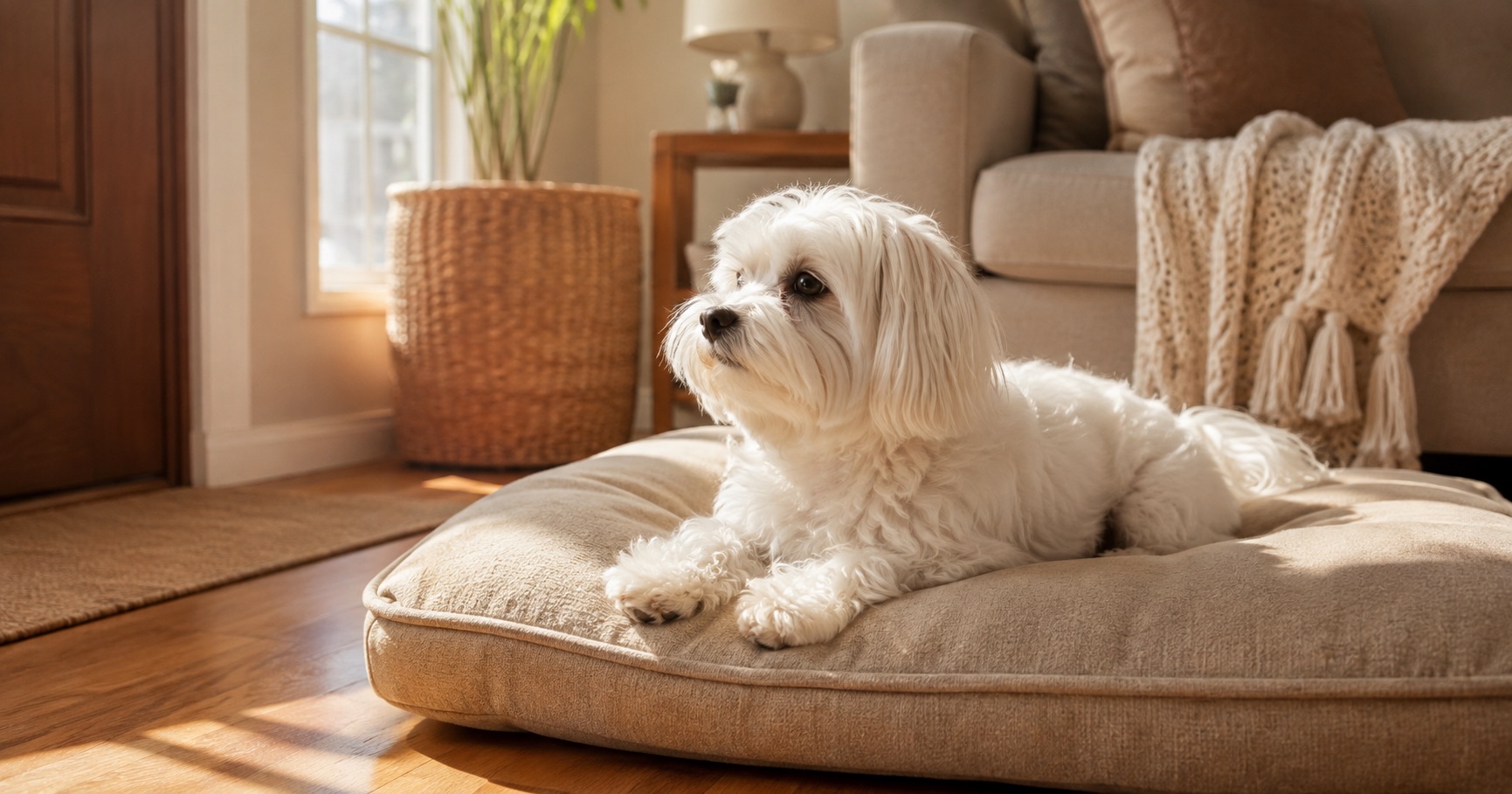
The checklist
Re-deciding everything every morning is how the routine exhausts you: turn it into a list and let habit run it.
| Item | Check |
|---|---|
| Water | Generous amount, untippable bowl: two stations in summer |
| Temperature | Summer AC around 26°C (79°F): winter drafts blocked |
| Lighting | Sunset before you're home: one soft lamp on |
| Hazards | Cords, food trash, medications, swallowables: cleared |
| Boredom project | A snuffle mat or one long-lasting chew |
| Potty | Fresh pad: outdoor-only dogs walk before you go |
| Doors | Balcony, bathroom, and window locks checked |
※ Size-check any long-lasting chew: a piece small enough to lodge in the throat is exactly wrong for an unsupervised dog.
How long alone is okay?
Adults handle under 6 hours comfortably: repeated 8-plus-hour days strain both the bladder and the loneliness budget. Puppies max out at three or four hours: small tanks. Households with long daily absences: mix in a lunchtime family visit, a sitter, or daycare. And skip the guilt arithmetic: a SUSTAINABLE owner beats a perfect one, every time, in the dog's own accounting.
The goodbye and the homecoming
A long, tender farewell is anxiety fuel: dial attention down starting ten minutes before departure, then leave quietly. On return: wait out the launch sequence, and greet warmly once the excitement lands. Learned this on the job: fifteen minutes of walking before work reshapes Gureum's entire day: a drained dog spends the morning asleep instead of on patrol.
Fifteen morning minutes change the whole day
Start the pre-work walk and the home-alone hours transform. Log walks in kkeung and every walked morning stamps a paw print: weeks of the streak, visible at a glance. Funny thing about the streak weeks: the furniture tends to survive them.
Start logging walks →Alone-time, case by case
Puppies and new arrivals
Never open with hours: 1 minute, 5, 15, climbing gradually. Start even smaller: shoes on, shoes off, going nowhere: until the departure signals lose their charge.
The demolition crew
Destruction during absences isn't rebellion: it's anxiety and boredom finding an outlet. Scolding makes it worse. Raise the pre-departure energy burn: and if it's severe, run the separation-anxiety ladder from rung one.
The unavoidable long day
Book the midday visit in advance, stage multiple water stations, and widen the potty zone beyond normal. One long day is survivable: a pattern of them dismantles the dog's routine.
Don't let the eyes at the door hold you too long: in a well-prepared home, most dogs start their own day within ten minutes of yours leaving. Before heading out today: skim the five. Five minutes, whole different day.
Frequently asked questions
Should I leave the TV or music on?
They whine and follow me out every morning. Separation anxiety?
Is crating them while I'm out better?
How do I set the temperature in summer and winter?
Can an automatic feeder handle meals while I'm out?
This article is general information and does not replace a veterinary diagnosis. Talk to your vet about your dog's condition.