Choosing a Dog Camera:
Only the Features That Matter
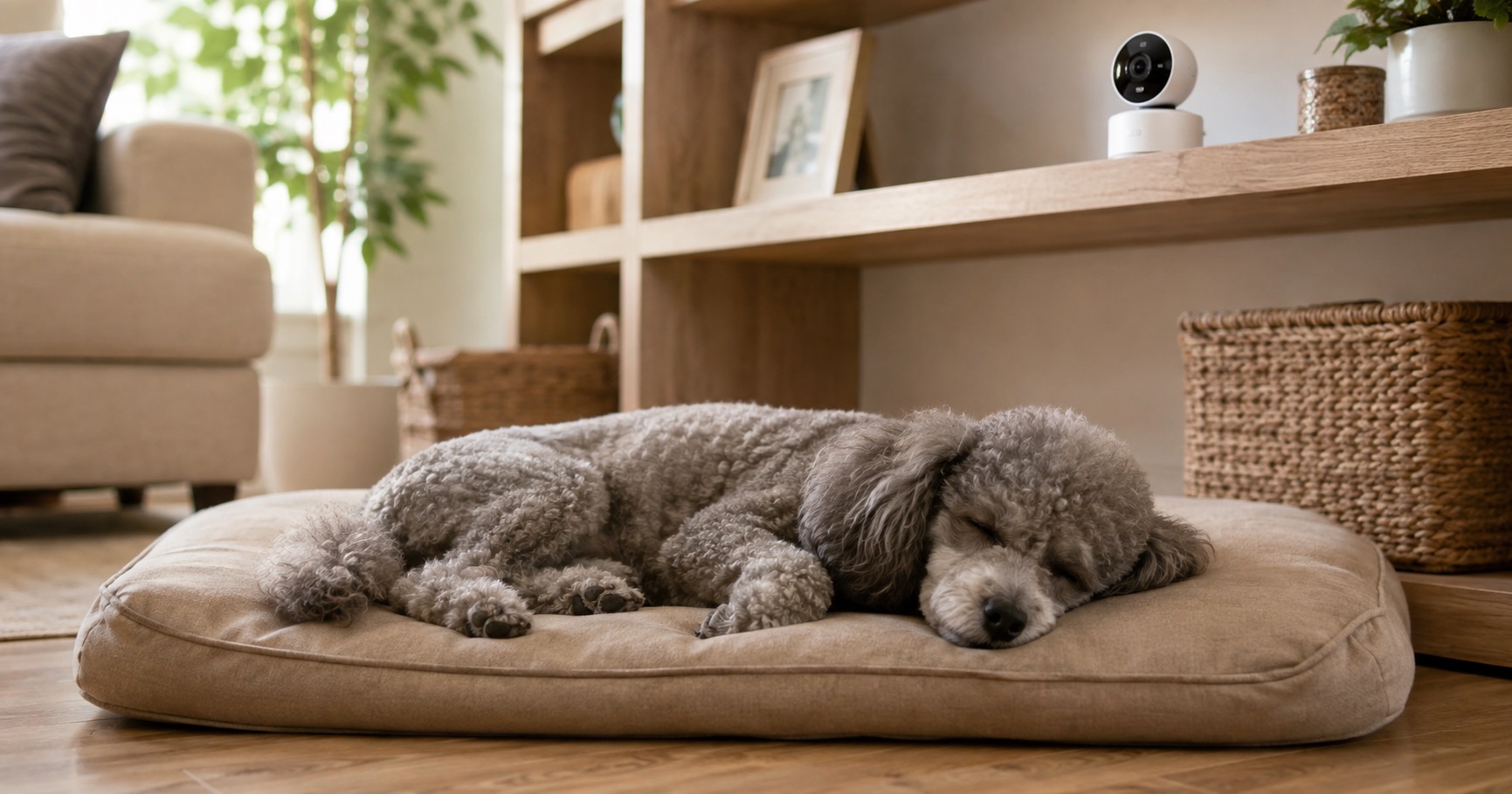
The first week I owned a pet camera, I got no work done: checking on my dog Gureum every ten minutes (it means "cloud" in Korean). Which is how I learned the two truths of the genre: the midday dog is mostly asleep, and everything that matters happens in the first thirty minutes after the door closes. THAT is what the camera is for.
Only three features are truly necessary: a view wide enough for the whole living room, sharp night vision, and playback of recorded footage. Two-way audio and treat tossing are optional extras that actively confuse some dogs. Skip the spec-sheet fireworks: the real criterion is whether you can clearly review the thirty minutes after you leave.
Which features actually matter?
The spec sheet is longer than the job. Filtered through the actual purpose: checking on a dog who's home alone: it collapses to this:
| Feature | Priority | What to check |
|---|---|---|
| Field of view | Essential | The dog's whole living zone in one frame: pan-capable is a bonus |
| Night vision | Essential | Sharp through the lights-off stretch before you're home |
| Recording | Essential | Playback of past footage, not just live view |
| Motion detection | Useful | Jump straight to the moments that moved |
| Two-way audio | Optional | Some dogs get MORE anxious hearing a bodiless owner |
| Treat tossing | Optional | Machine-wary dogs, and machine-tippers, beware |
※ A camera mounted at paw-swat height is a camera pointed at the ceiling by Tuesday. Fixing it out of reach is part of the installation.
Reading the footage for separation anxiety
The first thirty minutes after departure: that window is the dog's true state. A brief whine at the door, then off to the bed: normal range. Thirty-plus minutes of barking or howling, scratching at the door and walls, destruction, drooling laps of the apartment: that's the separation-anxiety profile. And don't rule on a single day: check several. Plenty of dogs run different shows on different weekdays and departure times.
Two-way audio and treat tossing: use them?
Dog-dependent, genuinely. Some settle at the sound of their person: many others hear the voice, find no body attached, and escalate into searching. Learned this on the job: the first time my voice came out of the speaker, Gureum sprinted to the front door and paced for ten minutes. It's been watch-only ever since. Treat tossing splits the same way: entertainment for some, a machine to distrust or tip over for others. Undecided? Start with a basic model and let the dog vote.
The highlight reel of home-alone hours deserves an audience
Cameras catch masterpieces: the dog startled awake by its own fart, leaping to its feet. Post the clip to kkeung and the date stays on it: and the neighborhood dog people arrive in the comments with "ours does that too." Home-alone highlights are twice as funny shared.
Show the neighborhood dogs →Setup and usage notes
Where to mount
Best seat: the bed AND the front door in one frame. Avoid aiming toward a bright window: backlight whites out the image: and run the cord through molding so it can't be chewed. Bonus points if the water bowl is in frame: you get drinking-volume monitoring for free.
Check smart, not constantly
All-day live-watching only exhausts the human. Thirty minutes after leaving, lunchtime, once before heading home: that's plenty. A motion-clips digest feature cuts review time to almost nothing.
What the camera teaches
Watch long enough and the to-do list writes itself: long pacing right after departures means a pre-departure walk to drain energy: reliable barking at one recurring noise means masking sound during that time slot. A pet camera is less surveillance, more field journal.
Seeing the dog sleeping soundly in the little window unclenches something in the chest. The camera's biggest deliverable might not be for the dog at all: it's the owner's peace of mind.
Frequently asked questions
Can I just use an old phone instead of a camera?
What about camera hacking?
My dog barks at the camera.
Does the treat-tossing feature help separation anxiety?
How long does footage stick around?
This article is general information and does not replace a veterinary diagnosis. Talk to your vet about your dog's condition.