Coping With Pet Loss:
The Shape of Grief, and Where to Find Help
A few years back, one of the older dogs in our walking group crossed the rainbow bridge. His owner disappeared from the trail for a long while: and then one evening I saw her walking that same path, carrying the empty leash. I won't claim to know the whole of that feeling. But I was nearby for it, and I'm writing this as someone who was: hoping it reaches whoever is walking through that time right now.
Pet loss is not an illness: it is the natural grief of a person who lost a family member. The tears, the guilt, the numbness, even the phantom sound of paws on the floor: all of it is a normal response. The road through: let the grief be fully felt rather than suppressed: remember them in your own way: talk with people who understand. And if daily life stays broken for a long stretch: don't endure it alone. Reach for professional help.
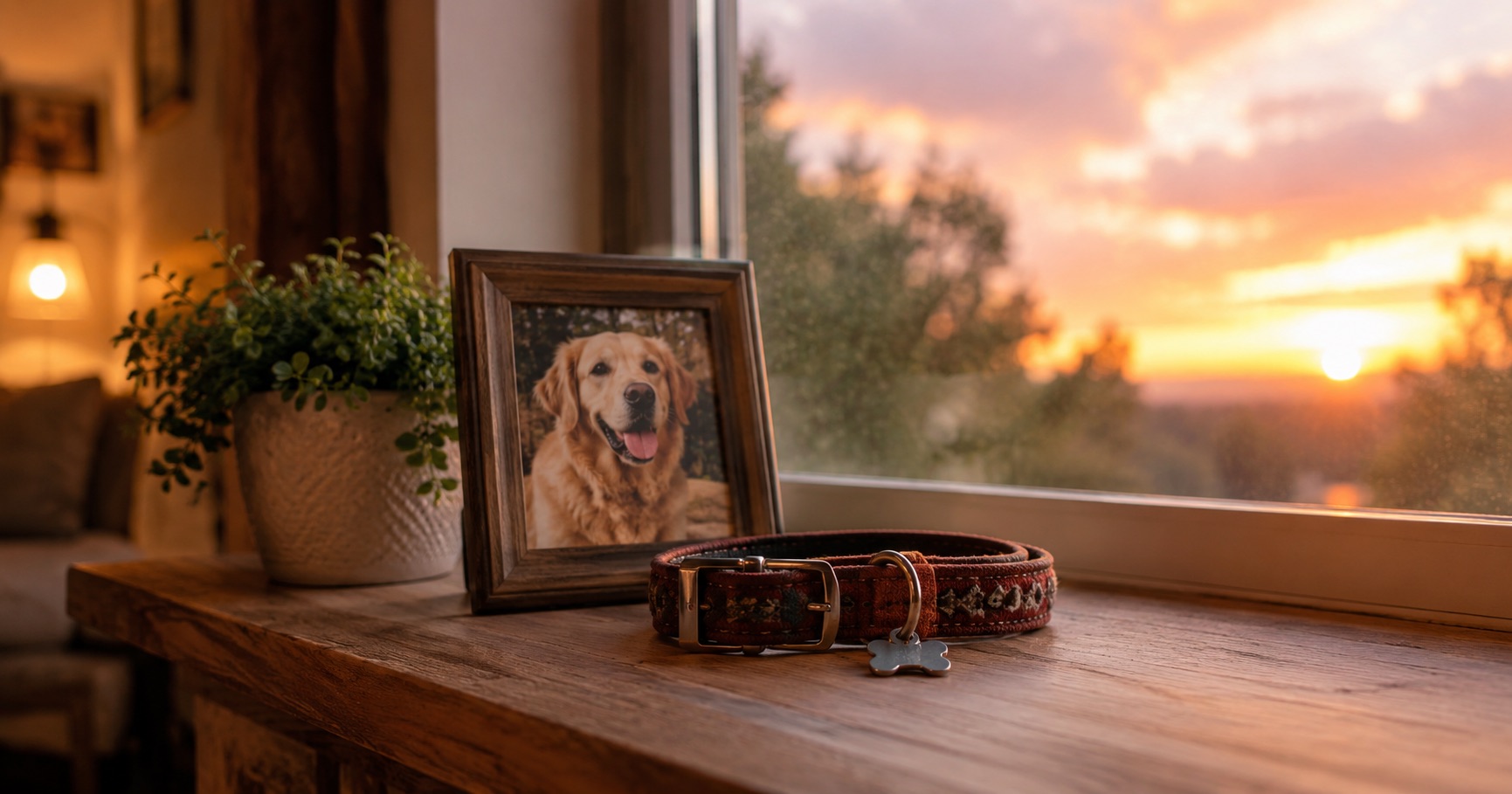
Why does this grief run so deep?
A dog is a daily presence: the first eye contact of the morning, the celebration at the door, the warm weight beside you at night. Dozens of small exchanges a day: and then all of them gone at once, so the grief keeps re-arriving from every corner of ordinary life. And the world around us rarely grants this sorrow a proper seat: grief that isn't allowed its full mourning simply lasts longer. So if it hurts this much right now, nothing is wrong with you. It hurts in proportion to how deeply you loved.
The forms grief takes
| Common form | How it shows up | Worth remembering |
|---|---|---|
| Numbness, denial | It doesn't feel real: running on autopilot | The mind's natural shock absorber at work |
| Guilt | "Should have done more, gone to the vet sooner" | It lands hardest on those who tried hardest |
| Anger | At the clinic, the family, yourself | A coat grief wears briefly: it passes |
| Deep sorrow | Tears at the food bowl, the old route | Letting it flow heals faster than holding it |
| Phantom moments | Seeming to hear pawsteps, the tag jingling | Known to be a common experience of mourning |
| Acceptance, memory | A day comes when their name brings no tears | Not forgetting: making a place for them inside |
※ These don't arrive in order: they mix, cycle, and double back. A few okay days followed by a collapse is not a step backward.
Caring for yourself through it
- Hold a farewell ritual: a memorial, a letter, one more walk down their favorite route. Ritual helps the heart accept what the mind already knows.
- Don't rush the belongings: clear them when you're ready, and only then. Months are fine.
- Talk with people who understand: owner groups who've been through it, online memorial spaces. Company in this is real strength.
- Eat, and move: grief dismantles the body first. Owe yourself the minimum: one meal a day, ten minutes of walking.
- When the guilt surges, ask this: if they could speak right now, what would they say to me? It would not be blame. You know it wouldn't.
If someone has said "all this over a dog": that sentence measures the narrowness of their experience, not the size of your grief. Your sorrow needs no apology and no proof. The day that owner finally came back to the walking trail, my dog Gureum ran to her first (it means "cloud" in Korean): and I heard later that was the first time she'd smiled.
If they're still beside you: save today
For anyone reading this in advance: save one completely ordinary moment of today. A post on kkeung keeps its date, so someday that day's face can be met again with that day's feelings. Memory blurs. A saved day doesn't.
Save a photo of today →When to reach for help
The signals that call for professional support
If weeks pass and sleep and meals stay broken: if work and relationships can't be held together: if the thought arrives that there's no reason to keep going: do not carry that alone. This is not a question of willpower: it is a state that needs help. Knocking on the door of a counselor or a psychiatrist isn't dramatic: it is protecting yourself. And in the hardest moments, crisis and suicide-prevention hotlines answer around the clock: please reach out to the one serving your region: someone is there to listen, at any hour.
Tend the whole family's grief
With children, a soft and honest telling is known to serve better than "they went away somewhere": make room to grieve together, drawing pictures, writing letters. Remaining pets feel the loss too: skipped meals, searching the house for their friend: keep their walks and routines steady, and stay close.
On the question of a new dog
There is no correct timing: the time is whenever you can welcome a new meeting rather than a replacement. That may be three months, several years, or never: all of it is okay. Nobody else's urging sets that clock.
The day the grief disappears may never come. But the day you can smile through it while telling their stories: that day comes. Until then, today only asks to be survived today's worth. That is enough.
Frequently asked questions
How long does pet-loss grief usually last?
Is it harder when the loss was sudden?
Should I keep their things, or clear them away?
Do I have to act fine at work or school?
Where can I find pet-loss counseling?
This article is general information and does not replace a veterinary diagnosis. Talk to your vet about your dog's condition.