Tear Stains:
From the Cause to the Care Routine
For white-furred dog owners, tear stains are the eternal homework. Our Bichon household is no exception: my dog Gureum and I have cohabited with those brown tracks under her eyes for years (it means "cloud" in Korean). The conclusion that cohabitation taught me: finding the cause outranks perfecting the wipe.
Tear stains form when tears overproduce (irritation, allergy, lash problems) or overflow through narrow drainage (tear-duct issues, breed anatomy) and pigment the fur. The baseline care: wipe gently once or twice daily with a pet eye cleanser or lukewarm water, and keep the area DRY. Sudden worsening, or discharge, redness, or itching alongside: that can be eye disease: the exam comes first.
The cause map
| Category | Cause | Clues |
|---|---|---|
| Tear overproduction | Allergy, dust irritation, lash poke | Itching, redness, rubbing alongside |
| Drainage problem | Narrow or blocked tear duct | Clean eyes, always wet |
| Anatomy | Flat-faced and large-eyed breed structure | Persistent since puppyhood |
| Other | Dental trouble, ear inflammation effects | One side suddenly worse, etc. |
The stain's chemistry: compounds in tears (porphyrins) oxidizing on the fur into brown streaks. The mark isn't dirt: it's a RESULT: which is why erasing alone regrows it forever. Catch why the tears overflow, and you've got root-level management.
The home routine
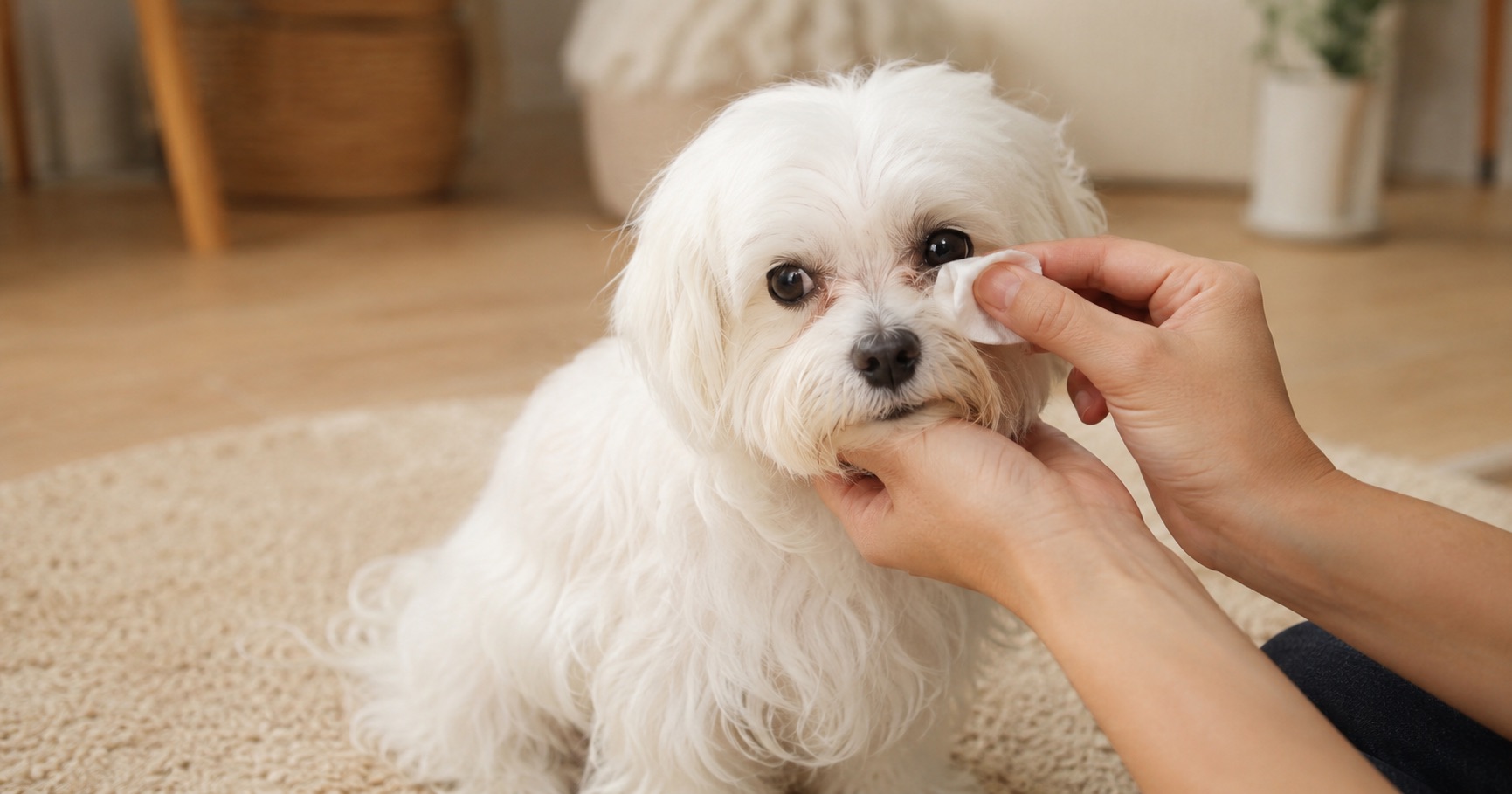
The basics: often, gently, dry. Once or twice daily, wipe inner corner to outer with gauze dampened in pet eye cleanser or lukewarm water: then press the area dry with fresh gauze. Sustained wetness deepens both the staining and the skin trouble. Keep the eye-area fur trimmed at every groom so it can't poke the eye. And the internet folk remedies (human contact-lens solution, hydrogen peroxide): dangerous near eyes: never. If weeks of faithful routine change nothing, the problem likely isn't your routine: it's the cause.
The food-switch claim: how true is it?
Half true. For the dog whose tear overproduction runs on food allergy, a protein-source switch CAN help: hence the abundant testimonials. For the dog whose cause is a duct or anatomy, a hundred food switches change nothing. If you want the food experiment, skip the aimless wandering: rule out other causes with an eye exam FIRST, then run a single-protein diet for about 8 weeks as a proper test. Gureum's exam ruled her staining mostly structural, so our household retired from food nomadism and settled into the wiping routine. Knowing the cause is how the wasted money and effort stop.
Whether the care works: last month's photo answers
Fading tear stains can't be seen in the mirror of daily life. Post face-on photos to kkeung and each keeps its date: this month beside last month, side by side. Whether a food or routine change did anything gets judged by exactly that comparison.
Save a photo of today →The tear stains that belong at the clinic
These cases are medical, not cosmetic: staining that suddenly intensified from a particular day: yellow or green discharge alongside: redness or eye-rubbing: trouble opening the eye: one side dramatically worse. Corneal damage, conjunctivitis, lash abnormalities, and blocked tear ducts can all hide underneath. A blocked duct in particular sometimes improves dramatically with an in-clinic flushing procedure. If you've spent YEARS on wipe-and-repeat, one ophthalmic exam might be what ends the era.
And the already-stained fur?
Fur already oxidized brown doesn't wipe back to white. The realistic options: wait for the fur to grow out and replace itself, or have the stained portion trimmed at grooming. Bleaching products near the eye area: dangerous: don't. And one word for the heart: tear stains on a health-managed dog aren't a problem: they're part of that particular face. Your dog isn't only your dog on the photogenic days: the cohabitation deserves less stress than we give it.
Frequently asked questions
Do tear-stain supplements and powders work?
I heard switching to filtered water helps?
The area under the eyes is raw and smelly.
They won't let me near their face to wipe.
The staining suddenly got much worse. What do I check?
This article is general information and does not replace a veterinary diagnosis. Talk to your vet about your dog's condition.