Dog Eye Discharge:
The Color Changes the Meaning
The crusty little deposits at the corner of their eyes each morning: so routine we flick them away without thought. But eye discharge is actually a daily report on eye health, filed in color and quantity. Mornings at our house open with my dog Gureum's eye-gunk check (it means "cloud" in Korean). Here's how to read the report.
Small amounts of clear or light-brown discharge after sleep are normal: dust and dried tears, purely physiological. The watch-list: yellow or green-tinged sticky discharge (bacterial-inflammation signal), discharge produced all day long, and redness or eye-rubbing alongside. Those raise conjunctivitis and corneal possibilities: exam needed, and human eye drops on your own initiative are strictly out.
The color decoder
| Color and pattern | Read | Response |
|---|---|---|
| Clear, scant (on waking) | Normal physiological discharge | Wipe gently |
| Light brown, scant | Dust + oxidized tears: mostly normal | Keep clean, watch the amount |
| White, mucousy, heavy | Possible allergy or dry eye | Exam if persistent |
| Yellow or green, sticky | Bacterial-inflammation signal | Exam needed |
| One-sided + eye held shut | Possible corneal damage, foreign body | Prompt exam |
Removing it properly
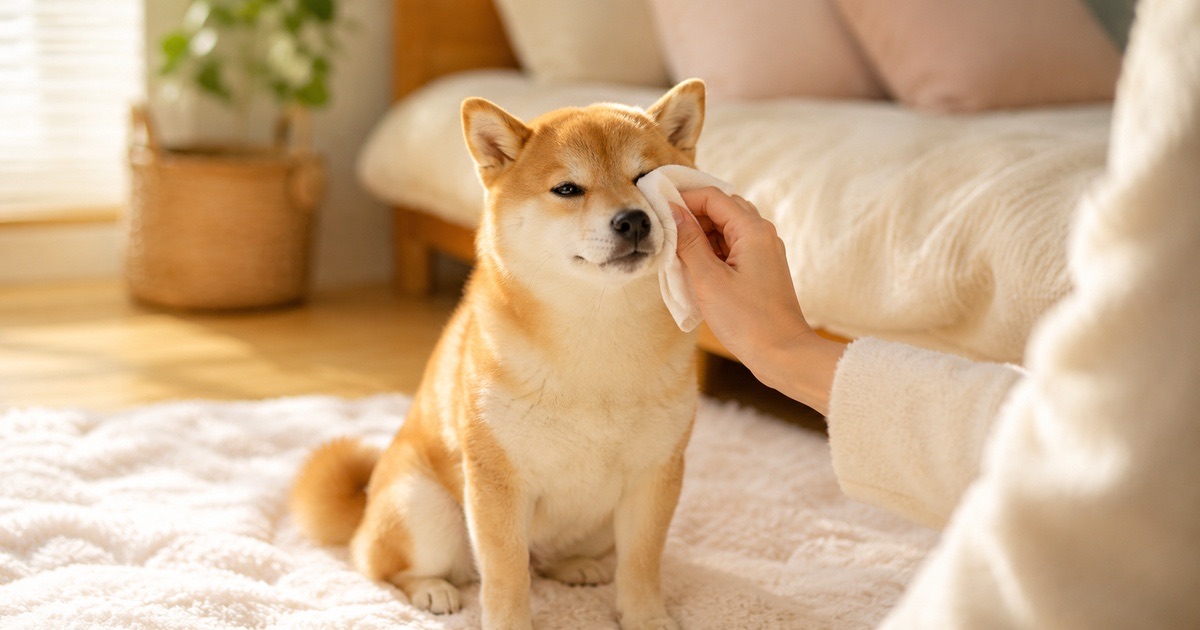
Picking dried crusts off with fingernails tears skin and hair along with them: it hurts. Soften a few seconds with gauze or a cotton pad dampened in lukewarm water or a pet eye cleanser, then wipe gently from the inner corner outward. For dogs whose long facial hair keeps snagging discharge, trimming around the eyes at grooming makes daily care far easier. One more: never rub the eye SURFACE. The territory we manage is around the eye, not the eyeball.
The companion signals that settle ambiguous colors
When the color is borderline, companions cast the deciding vote: redness, squinting or extra blinking, pawing at the eye, face-rubbing on the floor, light sensitivity, a cloudy-looking surface. Any one of these overlapping means exam-worthy even with pale discharge. A dog holding an eye shut in pain moves fastest of all: corneal damage is on the table. Eyes are an organ that can deteriorate sharply over a day or two of neglect, so the observation bar sits stricter here than for other body parts.
The morning eye check becomes a pattern in photos
Discharge color shifts day to day: hard to carry in words. Photograph the face each morning before wiping and post to kkeung: each keeps its date, so counting how many days the yellow has run takes one scroll, and the clinic sees the same thing you did.
Save a photo of today →Human eye drops: never
When the discharge turns ugly, the bathroom-cabinet eye drops beckon: a dangerous shortcut. Human formulas can contain ingredients wrong for dogs, and steroid drops in particular, applied to a cornea that carries a scratch, can worsen it dramatically. Since scratch-or-no-scratch is invisible from outside (clinics confirm with a stain test), the principle holds: any eye drop comes after diagnosis, by prescription. Until the exam, your tools are cleanliness and a cone to block the rubbing.
Frequent flare-ups call for cause management
If treatment settles it but yellow discharge returns weeks later, the game changes from incident response to cause management. The repeat offenders are structural: lashes poking the eye, inward-rolling eyelids, dry eye, allergy, tear-drainage failure. For a recurring pattern, an ophthalmic workup covering structure and tear volume, plus a long-term plan, is the right move. Finding why the fire keeps starting beats running in with drops every time: easier on the dog, easier on you.
Frequently asked questions
They get eye gunk every day. Vet visit?
Only one eye has heavy discharge.
My senior dog's eyes look cloudy. Is that a discharge problem?
Are watery eyes and heavy discharge the same problem?
What should I wipe eye gunk with?
This article is general information and does not replace a veterinary diagnosis. Talk to your vet about your dog's condition.