Dog Ear Cleaning:
Schedule and Method (No Cotton Swabs)
A surprising number of diligent owners clean dog ears by digging in with cotton swabs: the human habit, transplanted. But rule one of dog ear cleaning is the opposite: nothing goes IN. The correct method is far simpler, and the dog hates it far less.
For healthy ears, once a week to once every two weeks is plenty. The method: pour a generous amount of ear cleaner into the canal, massage the base of the ear for 30 seconds, let them shake it out, then wipe ONLY what surfaces with cotton. Cotton swabs in the canal are banned: they pack debris deeper and scratch the canal. Smell, redness, or brown discharge means it's an exam, not a cleaning.
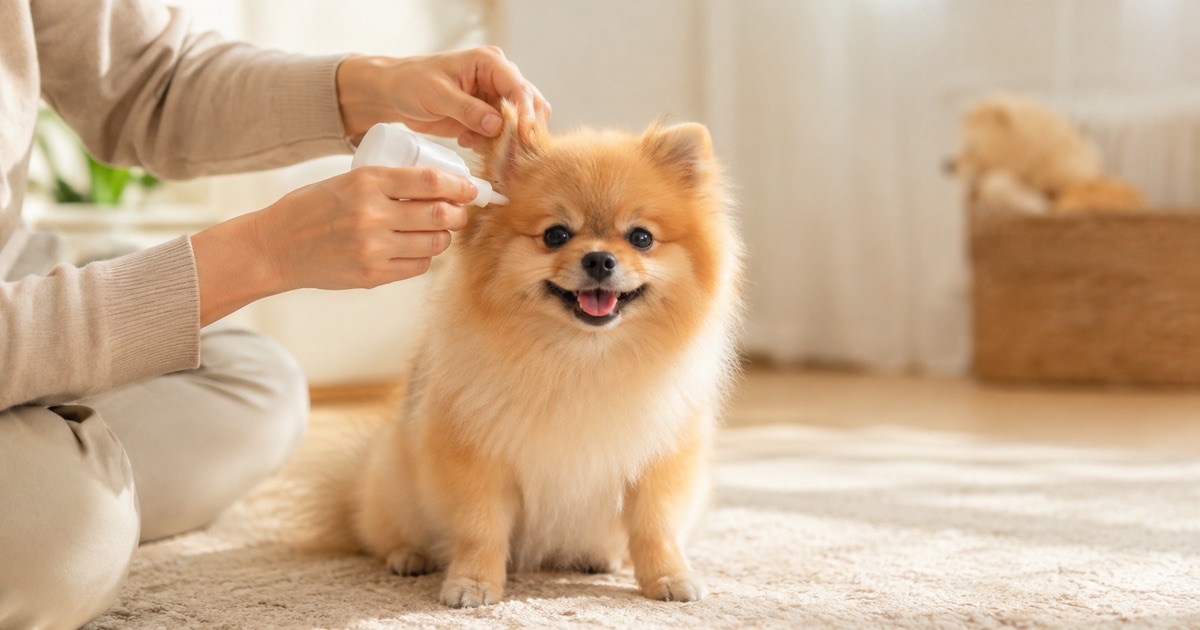
The correct 5 steps
| Step | Method | Point |
|---|---|---|
| 1. Inspect | Check color and smell inside | Anything off: clinic instead of cleaning |
| 2. Pour | Cleaner generously into the canal | Bottle tip never touches the ear |
| 3. Massage | Knead the base cartilage 30 seconds | Squelching sounds are correct |
| 4. Shake | Let them shake their head | This is how debris exits |
| 5. Wipe | Only what surfaced, with cotton or gauze | Finger-reach depth only |
Why the cotton swab ban?
A dog's ear canal, unlike ours, bends in an L shape. A swab pushes wax and debris around the bend and deeper in, and scratches the delicate canal skin: an open door for infection. Add the injury risk if they jerk mid-clean. The principle of ear cleaning is never excavation: it's loosening with cleaner so the dog evicts it themselves. The cleaner and the head-shake handle the inside; humans handle only the outside.
The schedule varies by the dog
Upright ears with sparse hair ventilate well: every two weeks can suffice. Drop-eared breeds (Cocker Spaniels, Retrievers), hairy-canal breeds (Poodles, Bichons), and enthusiastic swimmers sit closer to weekly. After baths or swims, canal moisture seeds infection, so a clean-and-dry session earns its place. And the reverse failure exists too: daily washing strips the protective baseline of wax and becomes its own irritant. Leaving a clean ear alone is also care. My dog Gureum, a drop-eared Bichon (it means "cloud" in Korean), runs on the two-week schedule, and her face at the moment the cleaner pours remains pure betrayal.
Ear condition is best judged by photo comparison
Whether the canal got redder or the wax changed color is hard to judge from memory. Photograph the inner ear on cleaning day and post to kkeung: each post keeps its date, giving you last-time-vs-now, and the schedule falls into place on its own.
Save a photo of today →Ears that need an exam, not a cleaning
These signals mean putting the cleaner DOWN and going in: a sour or rancid smell; brown or black discharge; red, swollen canal skin; persistent scratching or a head tilted to one side; pain on touch. Bacterial or yeast (malassezia) infection or ear mites are the candidates, and home cleaning at that stage not only fails to treat the cause: it can wash away the very discharge the diagnosis needs. Recurring ear infections can also signal food allergy, so a relapse pattern deserves that conversation too.
Ear-hair plucking: the groomer says yes, the vet says no?
The groomer plucks; some vets say don't. Genuinely confusing, and here's the current: routine full plucking of a HEALTHY ear's hair now gets caution, since micro-wounds from plucking can seed inflammation. But a dog whose canal hair blocks airflow and whose infections recur does need thinning. The verdict comes from YOUR dog's ears: no infection history, skip the full pluck; recurring trouble, set a plucking policy with the vet, and hand that policy to the groomer.
Frequently asked questions
Can I use saline or plain water instead of ear cleaner?
They hate ear cleaning so much we can't even start.
Only one ear keeps having problems.
What color of earwax is normal?
They keep shaking their head after cleaning. Did I do it wrong?
This article is general information and does not replace a veterinary diagnosis. Talk to your vet about your dog's condition.