Puppy Vaccinations:
The Whole Schedule in One Table
Bring a puppy home and the first homework assignment is vaccinations. Every clinic seems to say something slightly different, and the round-counting gets confusing fast. I wrote this for the five-months-in owner I once was: the one whose lap my dog Gureum sat trembling on in the waiting room before her first shot (it means "cloud" in Korean).
The skeleton: the DHPP combination vaccine (core), starting at 6-8 weeks and repeating every 2-4 weeks until at least 16 weeks: typically 4-5 rounds: with Bordetella (kennel cough), leptospirosis, and the legally required rabies shot added at the right points. About 2 weeks after the final round, a titer test can confirm protection, and from there it's annual (or per local law, up to 3-year) boosters. The precise schedule gets tuned by YOUR vet to your puppy's health.
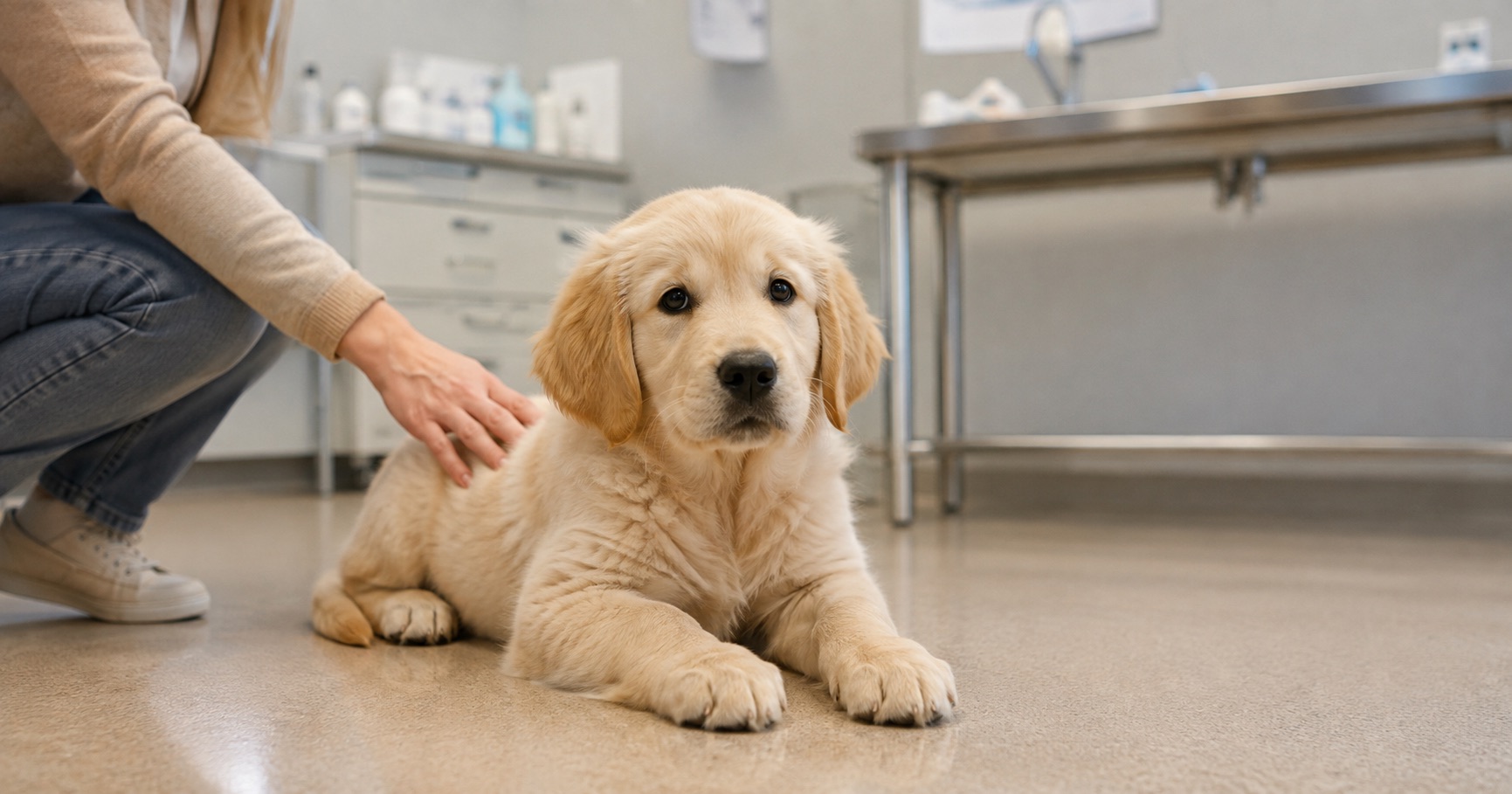
The base schedule
| Age | Vaccines | Note |
|---|---|---|
| 6-8 weeks | DHPP round 1 | Check vaccine history at adoption |
| 9-11 weeks | DHPP round 2 (+ lepto 1, per lifestyle) | |
| 12-14 weeks | DHPP round 3 + Bordetella (+ lepto 2) | Bordetella for daycare and boarding plans |
| 16+ weeks | DHPP final round + rabies | Rabies required by law in most states |
| Final round +2 weeks | Titer test (optional) | Confirms protection; boost if short |
| Every year after | Annual boosters | Titer-test alternative worth discussing; rabies per 1- or 3-year local law |
Clinics differing slightly on start weeks and gaps is not a red flag: adjustments for the puppy's health, the mother's antibody situation, and local disease patterns are NORMAL. The table is the map: your vet does the driving.
Before the series ends: when can walks start?
The great dilemma. Fear of infection says stay home until the series completes: but the socialization golden window (roughly 3-14 weeks) is ticking away. The modern answer is the middle path: even mid-series, avoid the grass where other dogs' waste collects, but carry them out to see the world, and allow meetings with fully vaccinated, healthy dogs. Where exactly to draw YOUR line, by round completed, is a conversation with your clinic.
Shot day and the day after
A day or two of slight sluggishness, or a tender little swelling at the injection site: common, and it passes. Shot day itself: skip the bath and the wild play: keep it quiet. The rare but serious exception: facial swelling, hives, vomiting, or breathing changes mean a hypersensitivity reaction: contact the clinic immediately. Which is why morning appointments are the smart booking: if trouble comes, the clinic is still open.
The road to the final round runs on dates
The series lives and dies by its 2-4 week gaps: you need the LAST shot's date to plan the next. Post a clinic-day photo to kkeung and it keeps its date: counting to the next round gets easy, and even if the vaccine booklet goes missing, the dates survive.
Save a photo of today →Cost: the realistic picture
Vaccine costs vary by clinic and region, but per-visit charges commonly run a few tens of dollars, and completing the full puppy series lands in the few-hundred-dollar range overall. Many shelters and municipalities run low-cost vaccine clinics: rabies especially: so check what's offered near you. What NOT to do to save money: stretching the intervals or skipping rounds on your own: that punches holes in the protection. If budget is genuinely tight, say so at the clinic and prioritize together: the honest conversation beats the quiet skip.
Adopted an adult dog with unknown history?
Shelter and rehome adoptions often come with murky vaccine records. Two paths: a titer test to measure current protection, vaccinating only the gaps: or restarting a basic series from scratch. Which fits depends on age and health: the vet's call. Neither blanket-revaccinating in the dark nor shrugging it off is the answer: remember the middle bridge exists, and it's called the titer test.
Frequently asked questions
We're late on one round. Restart the whole series?
Is the titer test really necessary?
Can they have a bath before their shots?
Is the rabies shot legally required?
They're limp and skipping meals after their shots. Normal?
This article is general information and does not replace a veterinary diagnosis. Talk to your vet about your dog's condition.