Normal Dog Temperature,
and How to Take It at Home
Touching the nose like a forehead, cupping an ear: that's what we all do on the listless days. But hand-felt warmth is less reliable than it seems, because dogs simply run hotter than we do. Learn the real numbers and the method, and the worried nights gain one solid piece of ground.
Normal dog temperature runs around 100.4-102.6°F: higher than ours. The accurate measurement is a rectal thermometer: lubricate the tip and insert about half an inch to an inch. Sustained readings above 103°F mean calling the clinic; above 104°F is high fever: and a LOW reading below 99.5°F is an emergency signal too. If measuring is a losing battle, don't force it: bring the other symptoms to the clinic and let them measure.
The temperature reference table
| Temperature | Read | Response |
|---|---|---|
| 100.4-102.6°F | Normal range | Watch the other symptoms instead |
| 102.7-103.1°F | Possible mild fever | Rule out excitement and heat, remeasure |
| Above 103°F, sustained | Fever | Call the clinic |
| Above 104°F | High fever | Clinic immediately |
| Below 99.5°F | Hypothermia | Warm them and go immediately |
Note: excitement, hard play, and hot days all raise temperature temporarily and normally. In the mild-fever band, settle them for 30 minutes and remeasure. Never conclude from one number alone: read it alongside energy and appetite.
The rectal method, step by step
Supplies: a digital thermometer (ideally pet-specific with a flexible tip) and lubricant (water-based gel or petroleum jelly). One person holds and calms; the other lifts the tail slightly, inserts the tip gently about half an inch to an inch, and holds until the beep. Most dogs hate the first attempt, so bank short, treat-paired experiences. Full disclosure: my family's first attempt on my dog Gureum failed with all hands on deck (it means "cloud" in Korean). Attempt two succeeded on treat diplomacy: but for the truly unwilling dog, skip the wrestling and let the clinic take it. Better for everyone.
What about ear and no-touch thermometers?
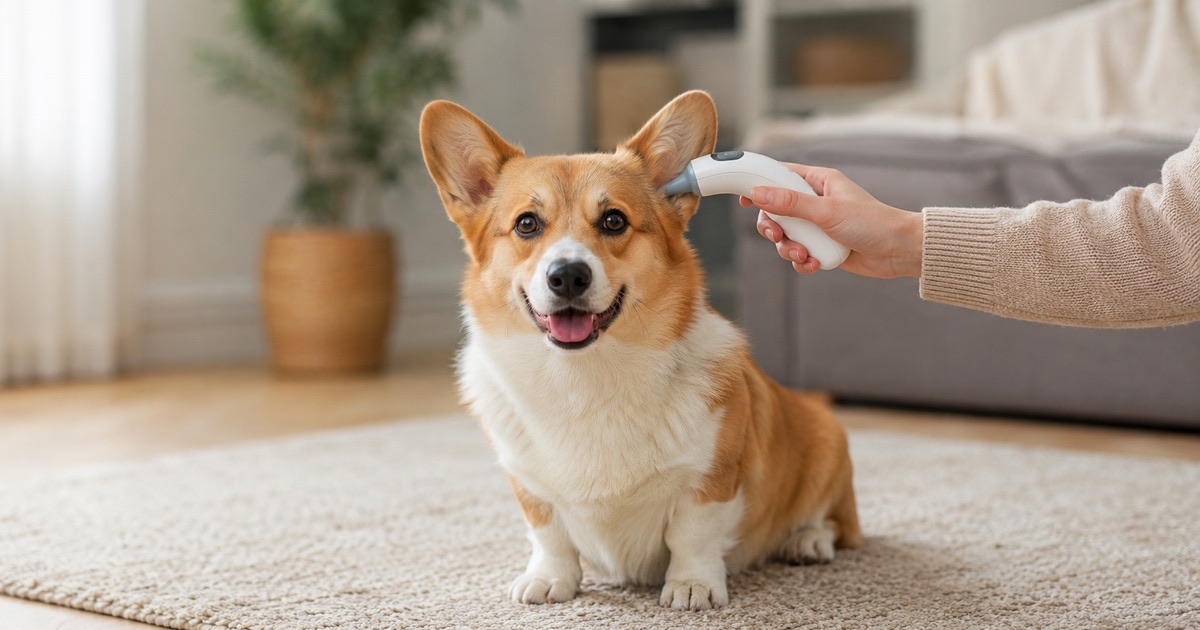
Pet ear thermometers and infrared no-touch models exist, but placement and technique swing their readings: less accurate than rectal. If you use one, take YOUR dog's healthy baseline several times first, and use the device to detect change from that baseline: a relative-change tool, not an absolute one. And the human forehead thermometer pressed against fur doesn't clear even the reference bar: skip it.
A sick-day temperature only reads against a healthy-day baseline
Every dog's normal runs a little different. Photograph the thermometer screen next to your dog on a healthy day and post to kkeung: it keeps its date, and on the feverish day, YOUR dog's baseline is one scroll away.
Save a photo of today →With a fever, do NOT do this
A confirmed high fever never gets home fever-reducers. Human medications (acetaminophen, ibuprofen) are toxic to dogs: the drug becomes more dangerous than the fever. Ice-water dunking backfires too, via blood-vessel constriction. What you CAN do: move them somewhere cool, keep water available, and head to the clinic. Finding the fever's cause (infection, inflammation, heatstroke, and so on) is the actual treatment: home attempts to just lower the number only mask the cause.
Summer heatstroke moves at a different speed
Heavy panting, drooling, and staggering after a hot-day walk or a wait in the car: suspect the heatstroke track. Here, response outranks measurement: move immediately to shade or air conditioning, wet the body with cool (not cold) water, and go straight to the clinic. Heatstroke drives organ damage fast: even a dog who seems to recover needs the clinic's confirmation. And skipping midday summer walks remains the prevention that cannot be overstated.
Frequently asked questions
A dry nose means fever, right?
Any way to estimate fever without a thermometer?
They seem feverish after their vaccines.
Can we share the human thermometer?
When should I take their baseline temperature?
This article is general information and does not replace a veterinary diagnosis. Talk to your vet about your dog's condition.