Paw Pad Hair: Should You Trim It?
Traction, and Tidying It at Home
My dog Gureum once lost her back legs mid-sprint on the hardwood: a full slide (it means "cloud" in Korean). I was about to order non-slip mats when I flipped her paw over: the pads were invisible under hair. One trim later, no mats needed: she stopped slipping. Of everything I groom at home, paw-pad hair delivers the most obvious payoff.
Pad hair gets trimmed every 2-3 weeks, down to pad height. Hair covering the pads erases floor friction: the dog slips: and repeated slipping loads small-dog kneecaps and senior joints. Trapped moisture and debris breed between-the-toes infections from the same hair. A small trimmer, ten minutes at home: done.
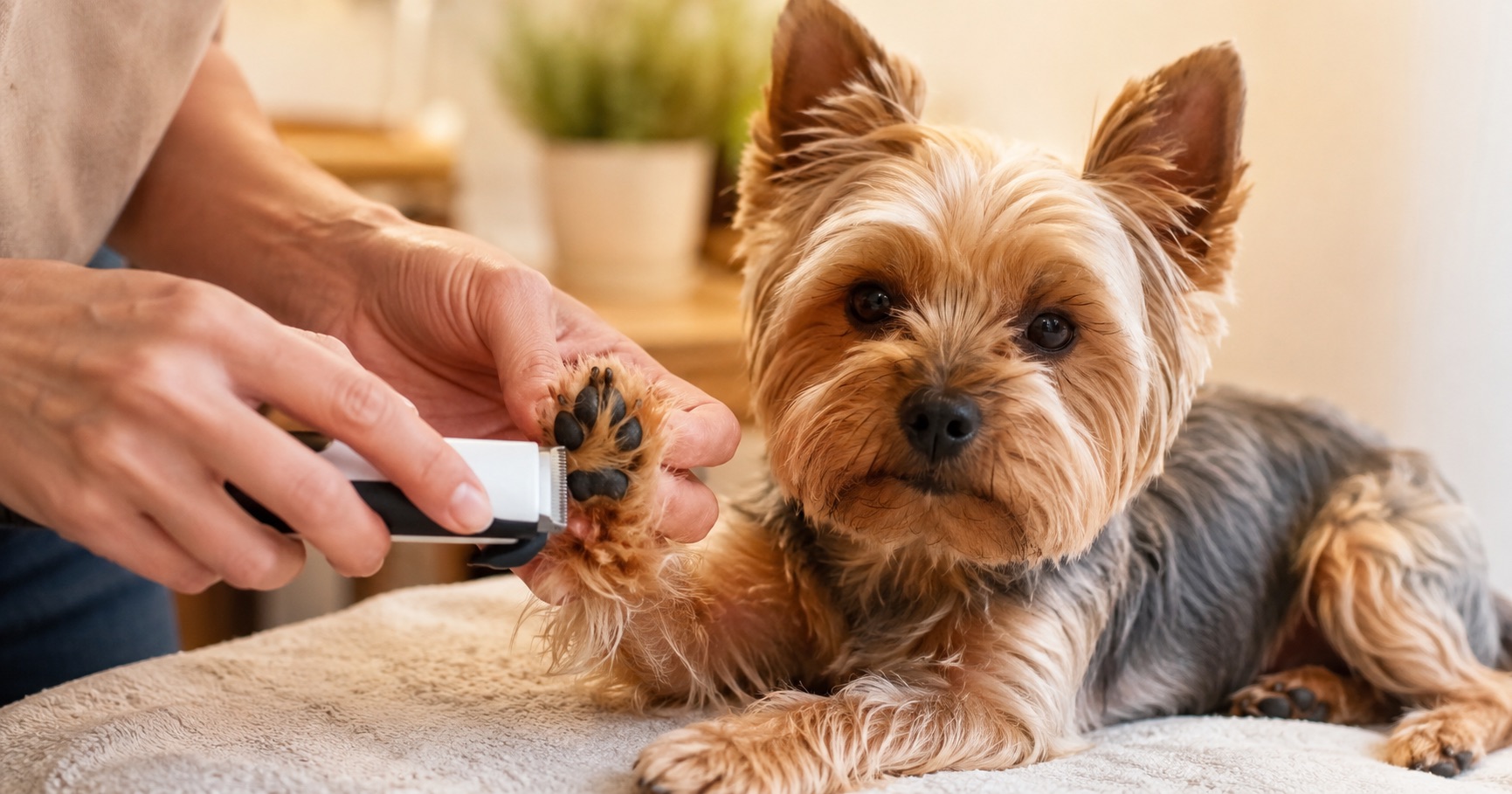
Why trim it at all?
A dog's pads grip the floor like rubber. Let the hair between them grow over the pads, and the dog is effectively standing ON hair: hardwood and tile become skating rinks. Once or twice is nothing: dozens of times a day, and the splayed-leg bracing posture becomes habit: small dogs accelerate toward luxating kneecaps, seniors toward arthritis.
Learned this on the job: before carpeting the house in non-slip mats, flip the paws over. The mats are the supplement: the trim is the treatment.
| When pad hair overgrows | The problem | Most vulnerable |
|---|---|---|
| Covers the pads | Slipping on hard floors, joint load | Small dogs, seniors, kneecap patients |
| Traps moisture between toes | Infections, yeast, the corn-chip funk | Curly long-coats, heavy rainy-season walkers |
| Snags debris | Pebbles, grass seeds, gum: ice and road salt in winter | Grass-trail walkers, winter walkers |
| Mats up | Clumps pressing the pads: pain, limping | Long grooming intervals |
* The groomer trims pad hair too: but it regrows inside the 6-8 week salon interval. One home session in between is the ideal rhythm.
The home method
- Tool: a small paw trimmer: narrow blade, low noise. Scissors find the thin webbing too easily: not recommended.
- Dog lying or sitting on your lap, paw folded BACK so the pad faces up. Pulling the leg forward is the version they hate.
- Trim the hair rising between the pads down to pad height: flush with the pad surface is the finish line. The deeper hair stays.
- Between the toes: spread them slightly and use only the trimmer's tip. The skin is thin there: linger and it burns.
- One paw, one treat, next paw. One paw a day is a perfectly legitimate schedule at first.
- Finish by feeling for leftover clumps and wiping away clippings with a damp towel.
Gureum started as a paw-thief: we began at one paw a day. Now all four take ten minutes: and on trim days, you can SEE the paws gripping the hardwood mid-zoomies.
When should you NOT trim?
Wounds, cracks, or red inflamed patches on the pads: don't run a trimmer over them. Heal first, trim after. And for dogs walking snowy winters: the hair between pads blocks some snow, so hold at pad height rather than shaving close. In every case, though: hair covering the PAD surface itself does nothing good.
Trim day needs exactly one paw photo
Pad hair re-covers the pads in 2-3 weeks. Post a paw photo on trim day to kkeung and each keeps its date: the feed shows the next due date at a glance. You stay ahead of the sliding.
Save a photo of today →Seasonal cautions
Rainy stretches
Wet paws that trap moisture in the hair start smelling that same day. Post-walk washing and between-the-toes drying is the baseline: and short hair halves the drying time. During rainy stretches, tighten the cycle to 2 weeks.
Winter
On snowy streets, ice balls form in the hair and press the pads: the dog lifts the paw and limps. Road salt rides home in the same hair. Rinse paws in lukewarm water after walks and dry completely: long hair is exactly what keeps the salt from rinsing out.
Summer
Hot pavement is dangerous regardless of hair: but matted pad hair traps heat and worsens pad burns. Move walks to after sundown, and hold the pad hair at pad height.
Pad-hair trimming is grooming's least glamorous line item and its highest-yield one for the joints. Before you buy the mats: flip a paw over. That's the start.
Frequently asked questions
What happens if I never trim the pad hair?
Can I use scissors instead of a trimmer?
I trimmed the pad hair and they slip MORE now.
They keep pulling the paw away during trims.
I'm scared of nicking the webbing between the pads.
This article is general information and does not replace a veterinary diagnosis. Talk to your vet about your dog's condition.