How Much Water Should a Dog
Drink Per Day?
Most households measure the food and leave the water to fate. But water is a body signal in both directions: drinking too little, and suddenly drinking a lot. Have you ever once checked how much your dog actually drinks in a day? Let's set the baseline.
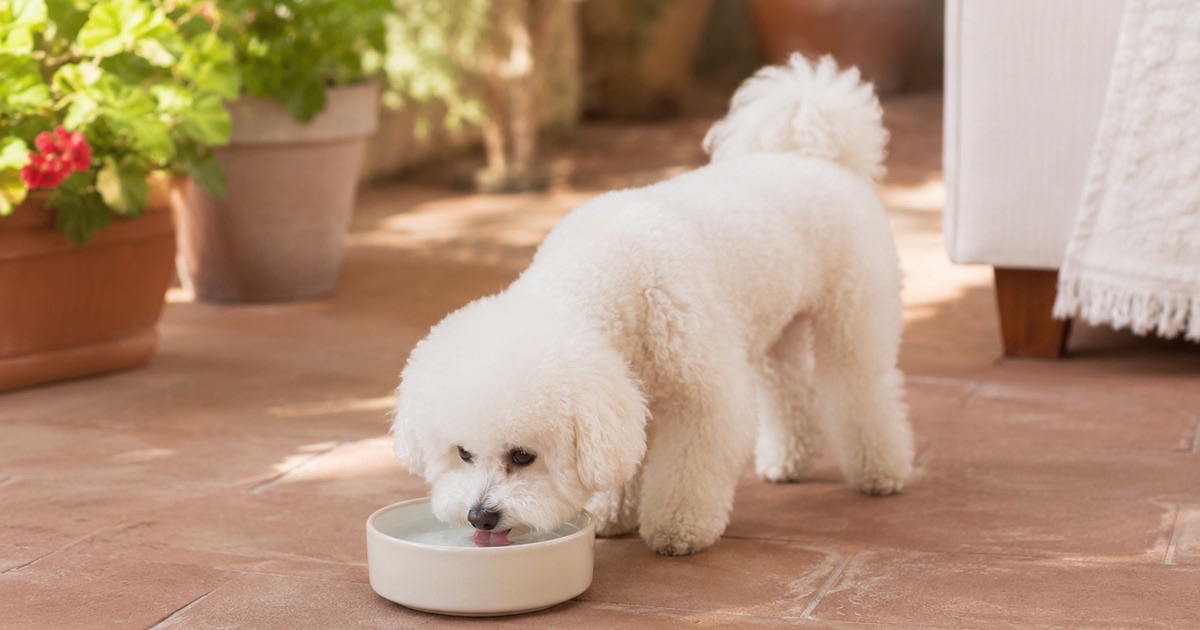
The daily guideline runs about an ounce of water per pound of body weight (roughly 50-60 ml per kg). For an 11-pound dog that's 8-10 fl oz: a bit over a cup. On wet food, they drink less because the food carries the moisture: normal. The warning signs run both ways: conspicuously low drinking, and a sudden jump in intake, can each signal disease and deserve a check.
Daily intake by body weight
| Weight | Daily guideline | Mental picture |
|---|---|---|
| 6.6 lbs (3 kg) | 5-6 fl oz | Not quite a cup |
| 11 lbs (5 kg) | 8-10 fl oz | A bit over a cup |
| 22 lbs (10 kg) | 17-20 fl oz | One small water bottle |
| 44 lbs (20 kg) | 34-40 fl oz | Over half a large bottle |
Measuring is simple: pour a known amount in the morning, and next day at the same time subtract what remains. Multiple bowls: sum them. Average two or three days, and you have your dog's baseline. Without the baseline, "more" and "less" are guesses.
Coaxing a reluctant drinker
First: bowl hygiene and water freshness. A slimed bowl and day-old water get vetoed by sensitive dogs: twice-daily changes alone fix plenty of cases. Second: more bowls, more spots. Two or three water stations around the home add passing-by sips. Third: for a moving-water fan, a fountain lands well. Fourth: fold hydration into meals with a splash of water or unsalted broth over the kibble, especially effective against the winter intake slump.
Sudden HEAVY drinking is the bigger signal
Here's the part I most want to underline. If the bowl empties unusually fast and urine volume and accidents are up, and weather and exercise don't explain it, that change needs a look. Excessive drinking with excessive urination is the shared early flag of diabetes, kidney disease, and hormonal conditions (Cushing's among them). Days running well past an ounce and a half per pound: book bloodwork and a urine test. The households that catch this signal early and the ones that catch it late see very different courses.
More trips to the water bowl lately? Save it
Intake change is the signal owners notice last. Post a short video of a long drinking session to kkeung and the post keeps its date, so at the exam you can say precisely when things changed.
Save a video of your dog →Summer and winter run different playbooks
Summer is about temperature and hygiene more than volume. Lukewarm water gets snubbed, so change it often, and a portable bottle is non-negotiable for outings. Floating a few ice cubes is fine for most; for a dog who crunches cubes whole, teeth argue for small chips instead. Winter flips the problem to low intake: less activity, less thirst, urine concentrating, and urinary trouble finding its season. Water mixed into meals and extra indoor water stations earn their keep in winter especially.
The bowl itself is on the checklist
Some dogs genuinely avoid drinking because they dislike their reflection in a stainless bowl or the clink of their tag against it: a ceramic or glass bowl solves those cases. Check the height too: a floor-level bowl strains the neck of large and senior dogs. And fountain households: keep the filter and motor cleaning schedule, because an unwashed fountain turns from convenience to bacteria farm. Weekly teardown cleaning is the baseline. My dog Gureum ignores the living room bowl entirely and drinks only from the one by the bathroom door (it means "cloud" in Korean): moving one bowl changed her intake more than anything else I tried.
Frequently asked questions
Tap water or filtered water?
They gulp furiously after walks. Okay?
I've heard the water bowl should be removed at night.
Can milk or sports drinks cover hydration?
How do I get a reluctant drinker to drink more?
This article is general information and does not replace a veterinary diagnosis. Talk to your vet about your dog's condition.