Do Non-Shedding Dogs Really Exist?
The Truth About Hypoallergenic Breeds
I brought my dog Gureum home on the promise that Bichons don't shed (it means "cloud" in Korean): and every brushing session leaves the brush packed with fur. Was I conned? Half. The claim turned out half-right: the hair doesn't NOT shed. It doesn't FALL. For anyone weighing breeds around an allergy, this is the distinction that matters.
No breed sheds zero. Poodles, Bichons, and Maltese shed into their own curls and length: the hair catches instead of hitting the floor. And the actual allergy triggers are proteins in dander and saliva, not the hair: so even a hypoallergenic breed sets some people off. The only real test: live with the specific dog for a few days first.
Why do some breeds SEEM shed-free?
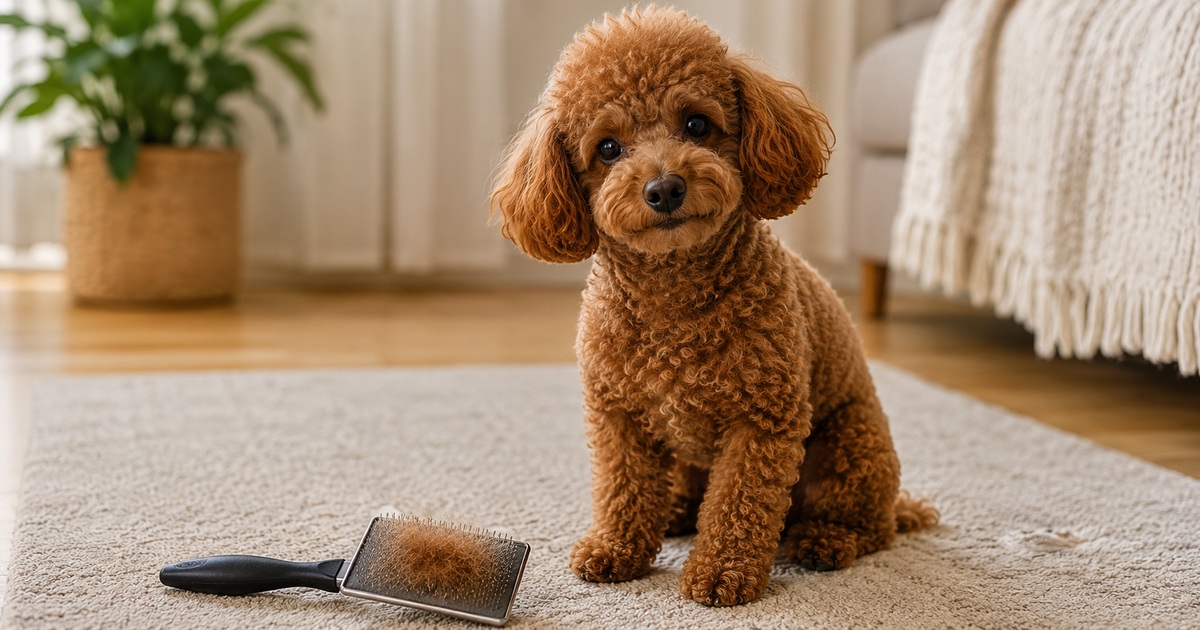
Every dog cycles its coat: old hair out, new hair in. The difference is where the old hair GOES. Straight, short double coats: Goldens, Shibas: drop it straight to the floor. Curly single coats: Poodles, Bichons: snag it in the surrounding curls, where it stays. Hence: nothing on the floor, everything in the brush. It's also why skipping the brushing mats these dogs from the inside: and why hot spots bloom under the mats.
| Coat type | Typical breeds | Perceived shedding | The reality |
|---|---|---|---|
| Curly single | Poodle, Bichon, Maltipoo | Nearly none | Sheds into the curls: daily brushing required |
| Long single | Maltese, Yorkie, Shih Tzu | Low | Shed hair rides the long coat: brushed out |
| Wire | Schnauzers, terrier types | Low | Dead coat clings: needs hand-stripping |
| Double | Pom, Shiba, Golden, Corgi | Heavy | Undercoat drops in clumps at coat-blow |
| Smooth | Dachshund, Frenchie, Beagle | Heavy | Short enough to miss: velcros to clothing |
* Low-shedding breeds trade floor fur for grooming bills and brushing minutes. Either way, the maintenance exists.
What actually causes dog allergies?
Not the hair itself: proteins in the dander flaking off the skin, in saliva, in urine. Those proteins hitch rides on the hair and go airborne, which is why hair LOOKS like the culprit. Lower-shedding breeds spread less of it around: hence the milder-reaction tendency: but dander and saliva exist in every breed, so a zero-reaction dog isn't on the menu.
Learned this on the job: protein levels vary dog to dog even within a breed. Someone fine with one Poodle genuinely can react to another. Hypoallergenic means lower odds: it has never meant safe.
How should an allergic household choose?
- Spend days with THE dog: not the photo, not the breed name. The individual.
- Get tested by an allergist: and even on a negative, run a real-world exposure trial.
- Mild symptoms: many manage with a bedroom ban, an air purifier, weekly baths, daily brushing.
- A child with asthma in the house: nothing proceeds without the pediatrician.
The post-brushing fluff is worth keeping
A coat that doesn't shed is a coat that gets brushed daily. Post the freshly brushed cloud to kkeung and the date stays on it: compare against a month ago and the coat's condition tells its own story. For households running an allergy-management routine of baths and brushing, that record earns its keep.
Save a photo of today →What a low-shedding breed actually costs you
Five minutes of daily brushing
Skip one day on a curly coat and mats form in the armpits and behind the ears. Slicker to work, comb to verify: five minutes, every day. Fail at this and the low-shedding advantage converts into hot spots and a clipper appointment.
Grooming every 6-8 weeks
The coat never stops growing: the salon is structural. Small-dog rate: $50-90 a visit, roughly $400-700 a year. Home-trimming the paw pads and eye areas stretches the interval.
But the floor stays clean
Commit to all that and the payoff is real: no white fur on black clothes, no tumbleweeds under the couch. I can barely remember vacuuming because of Gureum's coat. Emptying the brush, on the other hand, is a daily ritual.
Wanting a non-shedding dog makes sense. Just choose knowing the truth: not non-SHEDDING but non-DROPPING: and you'll start prepared instead of feeling conned three weeks in.
Frequently asked questions
Poodle or Bichon: which sheds less?
How do I know if a mixed breed will shed?
Can I have a dog while on allergy medication?
Do low-shedding breeds smell less too?
Are there low-shedding LARGE breeds?
This article is general information and does not replace a veterinary diagnosis. Talk to your vet about your dog's condition.