Dog Yawns: Not Always Sleepy.
Reading the Stress Yawn
In the vet waiting room, my dog Gureum yawned three times in a row: tired, I figured (it means "cloud" in Korean). Back home it clicked: she'd slept in that morning, gloriously. Those yawns weren't sleepy. They were this place scares me. I've read yawns differently ever since.
Beyond sleepiness, a dog's yawn carries three more meanings: tension, a calming signal, and empathy. Slow, silent yawns on their own bed: sleepy. Short frequent yawns at the vet or facing a strange dog: with lip-licks and averted eyes attached: stress yawns. The response: get them out of that situation for a beat.
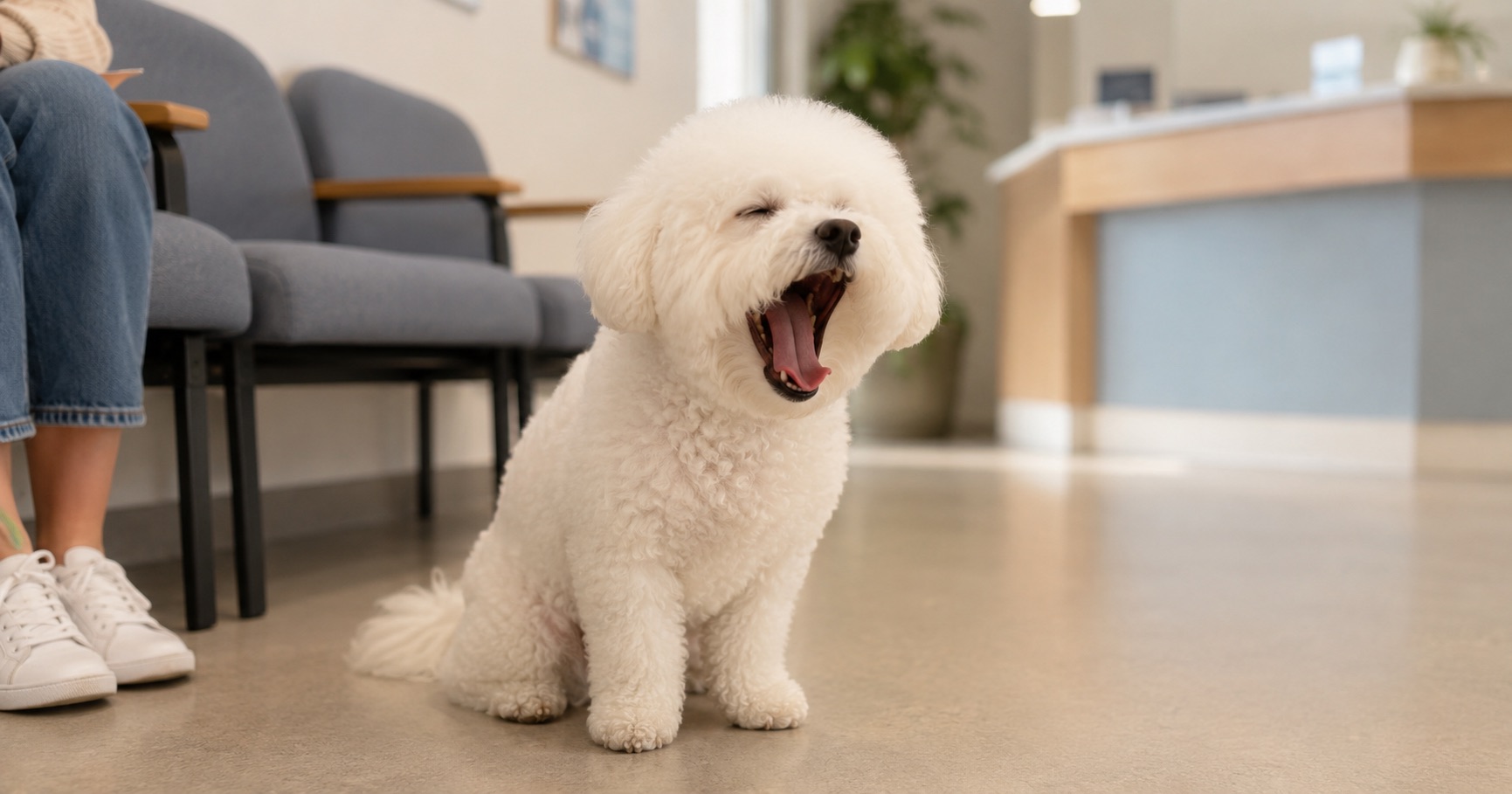
The five kinds of dog yawn
Humans spend yawns almost entirely on sleepiness and boredom: dogs use them as an emotional tool. A rising-tension yawn self-soothes: an outward-facing one tells the other party I'm not here to fight. So the entire decoding job is where, in what posture, packaged with which other moves.
| Type | Situation | What it looks like | Packaged with |
|---|---|---|---|
| Sleepy yawn | Their bed, around sleep | Slow and huge, eyes closing | Stretching, body going loose |
| Stress yawn | Vet, strange dogs, being scolded | Short and frequent, eyes open | Lip-licking, averted gaze, shake-offs |
| Calming-signal yawn | A dog or person approaching | With a slight head turn | Slowed movement, sitting down |
| Contagious yawn | Right after YOUR yawn | Follows within seconds | Nothing in particular |
| Anticipation yawn | Walk prep, meal prep | A whine mixed in | Pacing, tail wagging |
Spotting the stress yawn
The surest tell is context: a dog fresh off a long sleep yawning in a strange place is not tired. Second: the moves packaged around it: nose lick, head turn, dry shake-off, with yawns threaded between: near-certain tension. Third: frequency: sleepy yawns come once or twice: stress yawns arrive three and four to the minute. Fourth: the sound: sleepy yawns stretch long with a little squeak at the end: tension yawns end short and silent.
Learned this on the job: when I raise my voice, Gureum yawns on the spot. Early on I read it as insolence: being scolded and yawning at me: and got angrier. It was actually please stop. Now that yawn is my cue to lower MY volume first.
What to do about frequent yawning
- Extract them briefly: wait outside the vet waiting room: change direction when a dog approaches.
- Drop your voice low and slow: high and fast feeds the tension.
- Yawn WITH them: a slow human yawn transmits as it's-fine: there are observations of exactly this working.
- Skip the forced hug: mid-tension, contact can read as pressure, not comfort.
- Same situation, same yawns, every time: slice that situation thinner and rebuild familiarity slowly.
- Yawning stops and a shake-off arrives: tension released. Quiet praise there speeds up the next release.
One short yawn clip explains everything at the vet
Does she show stress signals at home? is a hard question to answer in words. Film the yawning moment in the unfamiliar place and post it to kkeung: the date stays on the post, so at the appointment you can show exactly what it looks like AND answer since when on the spot.
Save a video of yours →Yawn responses, by situation
Mid-training yawns
The session is running too long or too hard. Cash out: one easy command, praise, done. Push past the yawn and the next session starts with a dog who'd rather be elsewhere.
Yawning under a stranger's hand
A dog yawning while a guest pets their head is enduring, not enjoying. Translate on their behalf: maybe not right now. Let the dog make the approach instead, and the next greeting comes yawn-free.
Yawning at the camera
A lens aimed straight-on lands close to a hard stare. Shoot from the side, keep the camera low, and give the shutter sound time to become furniture.
One yawn seems like nothing: but a dog says something small like this ten times before ever barking. Start reading the yawns and you discover how talkative this animal always was. And from the moment you start answering: something in the relationship quietly upgrades.
Frequently asked questions
Is it true dogs catch human yawns?
Why do some yawns come with a whine?
How much yawning means a vet visit?
What about the yawn-plus-full-body-shake combo?
Why does my puppy yawn constantly?
This article is general information and does not replace a veterinary diagnosis. Talk to your vet about your dog's condition.