Marking:
Why Dogs Do It, and How to Dial It Down
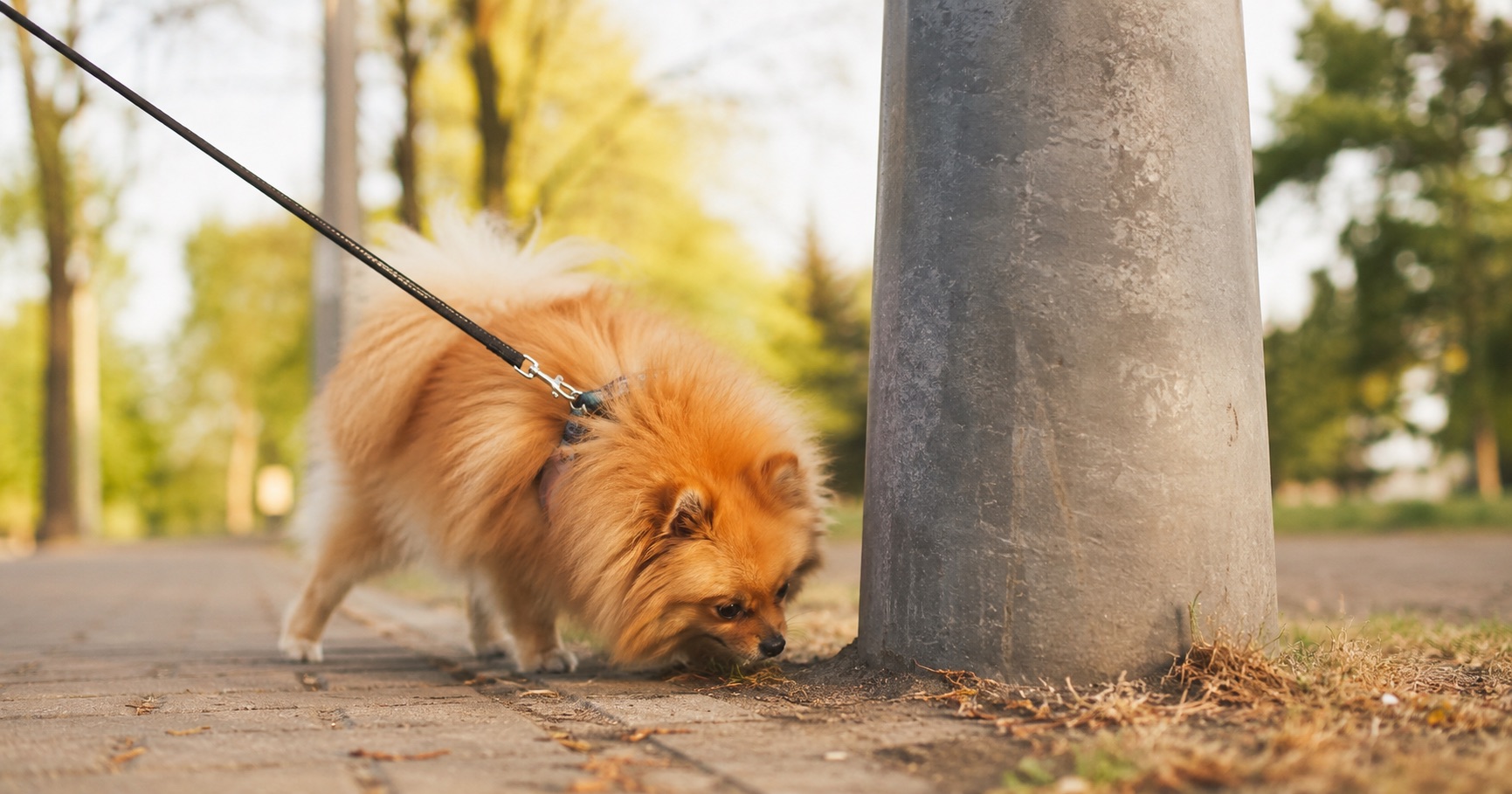
Stamping every utility pole on the walk: lifting a leg at the brand-new planter. Marking is the language of instinct, and blanket bans just stack stress on both ends of the leash. How much outdoor marking to allow, how to shrink the indoor kind: here's the treaty between instinct and daily life.
Marking isn't elimination: it's communication: small urine deposits left as information. The indoor playbook: 1) neutering consult (often effective against male hormonal marking), 2) enzymatic-cleaner odor removal at marked spots, 3) trigger management: new objects, guest bags, 4) resolving anxiety sources. Outdoor marking is natural: just steer them clear of front doors, car tires, and the like.
Marking vs. potty accident
| Item | Marking | Potty accident |
|---|---|---|
| Amount | Small, multiple spots | Full bladder, one spot |
| Location | Vertical surfaces, new objects, doorways | Floors, corners |
| Posture | Leg lift, raised rear | Normal potty stance |
| Context | After new family, guests, changes | Missed timing, illness, etc. |
This distinction is the first button: if it's marking, re-running potty training aims at the wrong target. And yes: females mark too, with a tendency to increase around heat cycles.
Reducing indoor marking, in order
First: health and hormones. Intact-male marking often drops substantially with neutering: worth the consult (long-habituated marking responds less, so timing matters). A sudden marking-style urination also needs separating from bladder trouble: fold in the checkup. Second: odor reset. Marked spots need enzymatic cleaning down to the molecule, or the re-stamp is guaranteed. Third: trigger management. New furniture, shopping bags, and guest luggage spend a few days out of reach: chronic targets like that planter get relocated or fenced. Fourth: anxiety. Marking after a move or a new family member isn't a territorial decree: it's a request for reassurance: stabilize the routine and guarantee the safe space.
Walk marking: manners, not prohibition
Outdoor marking is basically your dog's social media: sniffing the posts, leaving replies: a huge share of the walk's satisfaction. What needs managing is venue etiquette: pass front doors, storefronts, parked cars, and planted beds on a short leash: grant slack at the harmless spots, poles and grass strips. Carrying a water bottle to rinse after marking is settling in as good walk culture, too. My dog Gureum has her regular pole route through the neighborhood (it means "cloud" in Korean): watching where she files her replies feels like reading the day's local news: honestly, adorable.
Know the spots, know the plan
Marking repeats at the same locations. Post photos of the marked spots to kkeung and each keeps its date: which places, how often, laid bare: and that's exactly where the cleaning and blocking effort should concentrate.
Save a photo of today →Scolding and belly bands: handle with care
Catch them mid-mark: a brief interrupt and redirect is the ceiling. Scolding over PAST marking evolves exactly like scolded potty accidents: toward stealth. A belly band (the male marking diaper) earns its place as a situational tool: guest visits, new-home adjustment: but strapping it on permanently without solving the cause invites skin trouble and stress. The tool is a bridge: the solution lives on the cause side.
The multi-dog marking wars
Marking that starts after a second dog arrives is usually a territory-and-status renegotiation. The governing principle: reduce the competition. Stock resources ABOVE headcount: pads, water bowls, cushions: guarantee each dog a private safe zone, and distribute your attention in one-on-one time. Most cases settle within the few weeks it takes their scents to become furniture. But if the marking thickens into growling and resource-guarding aggression: that's the entry cue for a behavior professional.
Frequently asked questions
Does neutering eliminate marking 100%?
They mark so often on walks that we barely move.
They keep marking the same spot indoors.
They mark guests' bags. Mortifying.
Do female dogs mark?
This article is general information and does not replace a veterinary diagnosis. Talk to your vet about your dog's condition.