Water Fountain vs. Bowl: Which Is Better?
Intake and Hygiene Compared
My dog Gureum seemed to drink too little, so I bought a fountain (it means "cloud" in Korean): sold entirely by those videos of dogs gulping joyfully at the flowing stream. The results: Gureum ignored it for two months, and I was inducted into the world of pump-part scrubbing. We did find the answer eventually. It wasn't the fountain.
It splits by the dog. A dog drawn to running water: the fountain genuinely lifts intake: and the cleaning is genuinely more work than a bowl. Worth trying for faucet-lickers and standing-water refusers. A dog drinking happily from a bowl right now: there is no reason to change anything.
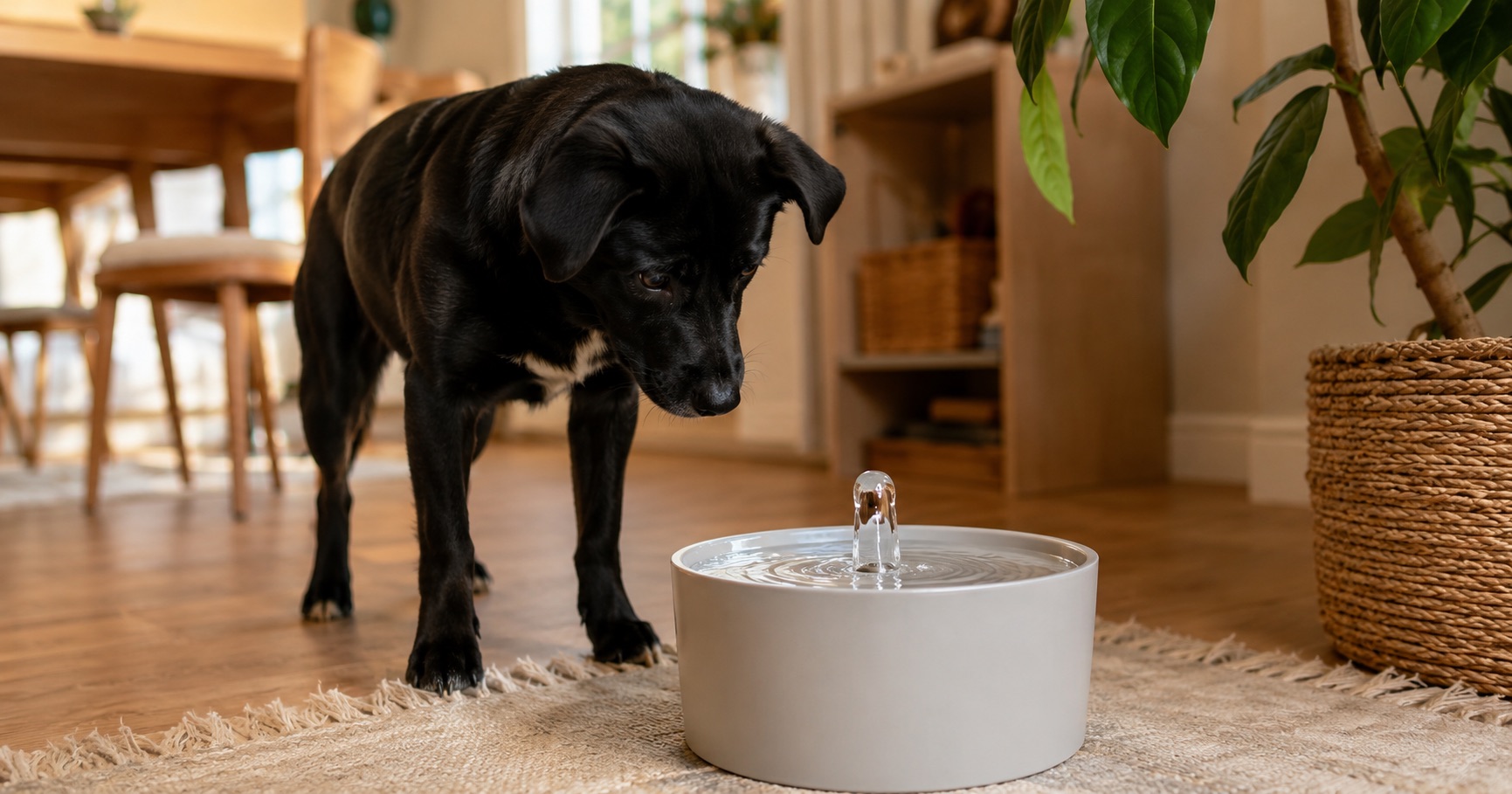
The honest comparison
The ads make the fountain look like a universal upgrade: the reality splits cleanly into tradeoffs.
| Factor | Circulating fountain | Bowl |
|---|---|---|
| Intake encouragement | Moving water draws attention: advantage | Plenty, if the dog's already sold |
| Freshness | Filter circulation maintains it | Identical, if changed often |
| Cleaning | Pump and parts, disassembled | Rinse, wipe, done |
| Noise | Motor hum: sensitive dogs object | None |
| Outages, breakdowns | Stops = water supply stops | Nothing to break |
| Cost | Unit plus recurring filters | The bowl. That's it. |
※ Whichever you run: one plain bowl stays out whenever you leave the house. It's the insurance policy for the day the fountain stops.
How much should a dog drink daily?
The rough rule: 50-60 ml per kg of body weight per day: call it an ounce per pound. A 5 kg (11 lb) dog lands around 300 ml (10 oz). Wet-food dogs drink visibly less and can still be in range: the food carries water. To get a real number: measure a set amount in the morning, check what's left at night. Chronic under-drinking taxes the urinary tract and kidneys: and a sudden switch to desperate gulping can be a disease signal: both directions deserve an eye.
The escalation ladder for reluctant drinkers
The fountain is not step one. Run the sequence: add a second and third water station: refresh with clean water twice-plus daily: trial a different bowl material: a surprising number of dogs object to the smell of plastic: and mix a splash of water or no-salt broth into meals. Learned this on the job: Gureum's final answer was a wide, shallow ceramic bowl, refreshed often: her actual complaint had been WHISKERS touching the bowl walls. The fountain stays in the deck: as a later card, not the opener.
The gulping sound is quietly beloved content
Videos of enthusiastic glug-glug-glugging rank just behind eating videos for likes on the kkeung neighborhood feed. Why the chin-dripping moment lands as hard as it does: post one and find out. Dates stay on posts: so if the fountain conversion happens, the before-and-after is in the record.
Go show off the eating clips →Water management in practice
If the fountain wins
Set the cleaning cadence in stone: tank and lid rinsed daily, pump and filter housing disassembled weekly. Slipperiness under the fingers is a biofilm already in residence. Filters change on the maker's schedule. And for the motor-wary dog: run it POWERED OFF as a plain bowl for the first days, then switch on once it's furniture.
If the bowl wins
Stainless or ceramic: refreshed twice-plus daily, washed with soap daily. That slick film inside the bowl isn't mineral scale: it's bacteria. Summer water goes lukewarm fast: raise the change frequency: and park the water bowl slightly apart from the food bowl, out of kibble-crumb fallout range.
Water on the go
Any walk past thirty minutes: water comes along: one portable bottle covers it. Communal bowls, with their parade of mouths: infection risk: politely skip them.
Fountain versus bowl was never the real question: the real question is whether fresh water is ALWAYS there. The gear assists. A diligent hand remains the finest watering system ever shipped.
Frequently asked questions
My dog barely drinks all day. Vet visit?
Do fountain filters really need the official replacement schedule?
Filtered water or tap?
Is ice water or cold water okay?
Does bowl HEIGHT matter?
This article is general information and does not replace a veterinary diagnosis. Talk to your vet about your dog's condition.