Dog Car Rides: Beating Motion Sickness,
From Car Seats to the Empty-Stomach Rule
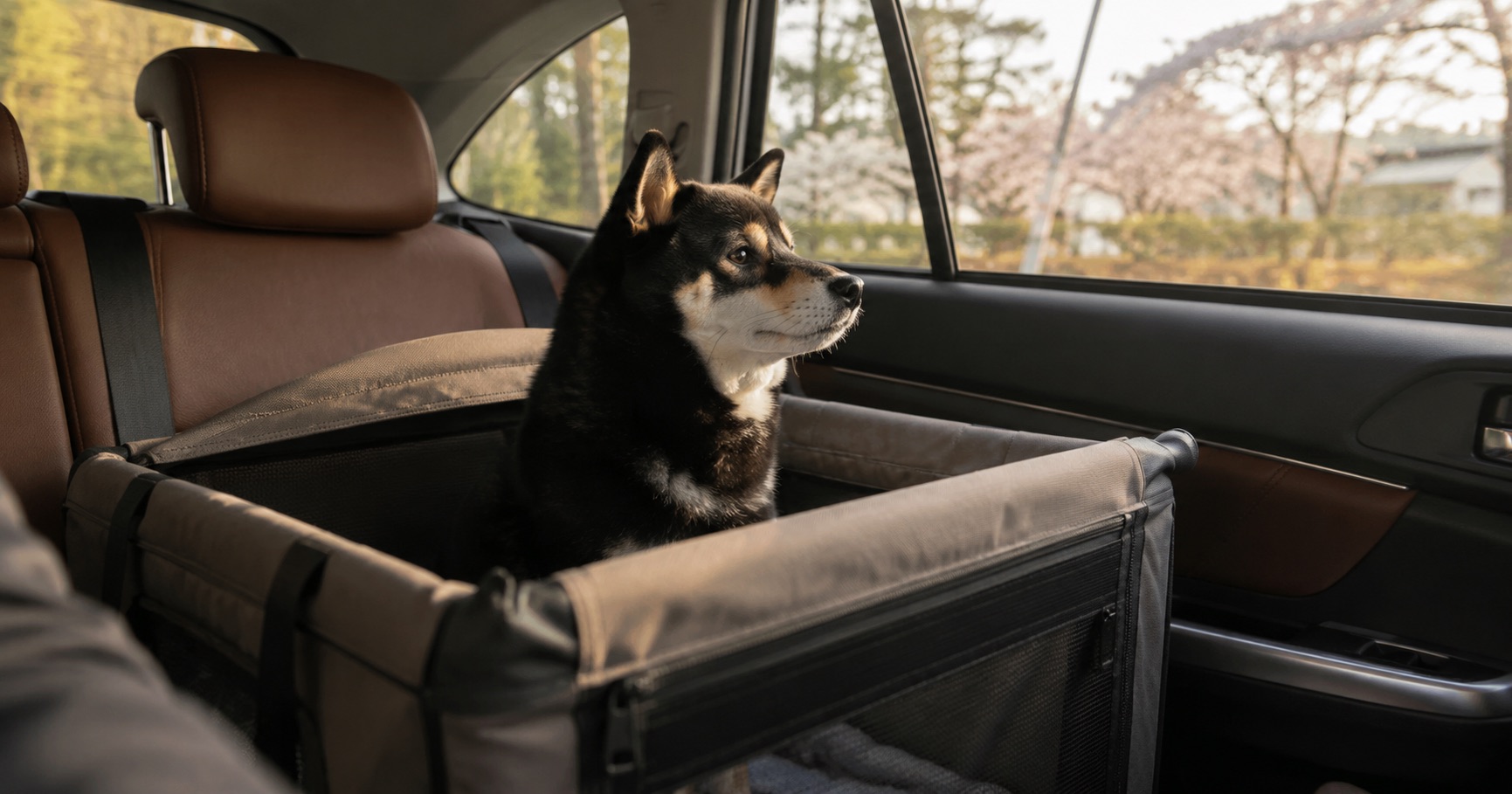
Our walk friend Haru backs away from an open car door: two vomits on the way to the vet did it. My dog Gureum used to drool the moment the engine turned over (it means "cloud" in Korean). These days she watches the scenery go by. Here's the road between those two dogs.
The basics are three: empty stomach from 2-3 hours before departure, a secured crate or dog car seat, and building up from short distances. Puppies get carsick often: underdeveloped balance organs: and most improve with age. Drooling, yawning, and whining are the opening signals: crack a window and plan the next stop when they appear.
Why carsickness happens, and the warning ladder
Motion sickness starts in the inner ear: the balance organs failing to keep up with the sway. Stack on a history where the car only ever went to the vet, and anxiety joins the nausea. The pre-vomit signals are readable: learn them and you can time the rest stop.
| Stage | Signals | Response |
|---|---|---|
| Early | Lip-licking, yawning, drooling | Crack a window: talk them steady |
| Middle | Whining, restlessness, trembling | Pull over nearby: break |
| Late | Retching, vomiting | Stop: settle: continue in short hops |
※ Keep a vomit kit in the car: pads, wet wipes, a spare blanket. Preparedness alone lowers everyone's blood pressure.
The pre-departure routine
Last meal 2-3 hours before departure: small sips of water are fine. Potty done before boarding, plus ten minutes of easy walking to let the tension out. Pre-condition the cabin temperature: and clear out anything strongly scented like air fresheners: to a sensitive nose, that's a nausea trigger all by itself. Inside the car, the body gets SECURED: crate or dog car seat. A swaying visual field is a major driver of the nausea, so fixing the body visibly shrinks the symptoms. And the lap-riding shortcut: one hard brake away from a serious accident. Skip it.
Rehabbing the car-fearful dog
Slice the ladder thin: that's the whole method. Sit in the parked car, engine off, eat a treat, get out. Engine on, get out. One lap of the parking lot. One block. THEN the neighborhood park. Days per rung is fine. The real lever is changing what the car MEANS: learned this on the job: the day Gureum figured out the car had gone to a lawn instead of the vet, her entire posture changed. Eight rides out of ten should end somewhere good.
The drove-somewhere walk earns a special entry
The first riverside walk after car rehab sticks in memory for years. Log that day's walk in kkeung and the distance and time file themselves by date: scrolling past that paw stamp later brings the whole day back. Expedition walks beyond the neighborhood become stories: if they get saved.
Log today's walk →Long-haul field notes
Breaks every two hours
On long drives, stop every two hours: water, legs, sniffing. At rest stops, the leash clips on BEFORE the door opens: bolting in a strange place is one of the most common travel accidents there is.
Cabin temperature and airflow
Floor level and crate interiors run hotter than you'd think: confirm the AC actually reaches the crate. Panting dog: open a window one finger's width for flow. Head-out-the-window riding: debris injuries: not allowed, however classic the image.
When medication makes sense
Still vomiting every ride despite the full rehab ladder: talk to the vet about anti-nausea prescriptions, ideally before a big trip. Human motion-sickness pills, self-dosed: never.
From trembling at the door to sightseeing out the window is a shorter road than it looks. Stacking up good destinations: that's nearly the whole method. This weekend: the park five minutes away. One small success calls the next one.
Frequently asked questions
Does puppy carsickness really improve with age?
Can't I just hold the dog in my lap?
Motion sickness or anxiety: how do I tell?
Can I calm them with treats before the ride?
Do taxis and trains work the same way?
This article is general information and does not replace a veterinary diagnosis. Talk to your vet about your dog's condition.