Choosing Dog Toys by Type:
Chew, Snuffle, Tug, and the Squeaky
Bean's house holds twenty-odd toys: Bean plays with exactly one, a duck plushie shredded past recognition. Same here: my dog Gureum ignores the expensive puzzle and worships a balled-up sock (it means "cloud" in Korean). The lesson took a while to land: what matters isn't how many toys. It's how many KINDS.
The baseline kit is one toy per job: chewing, snuffle work, tug, and solo play. Four distinct jobs beat six duplicates of one job, every time. Size: clearly bigger than the open mouth. And the safety rule: torn down to swallowable pieces means thrown out that day.
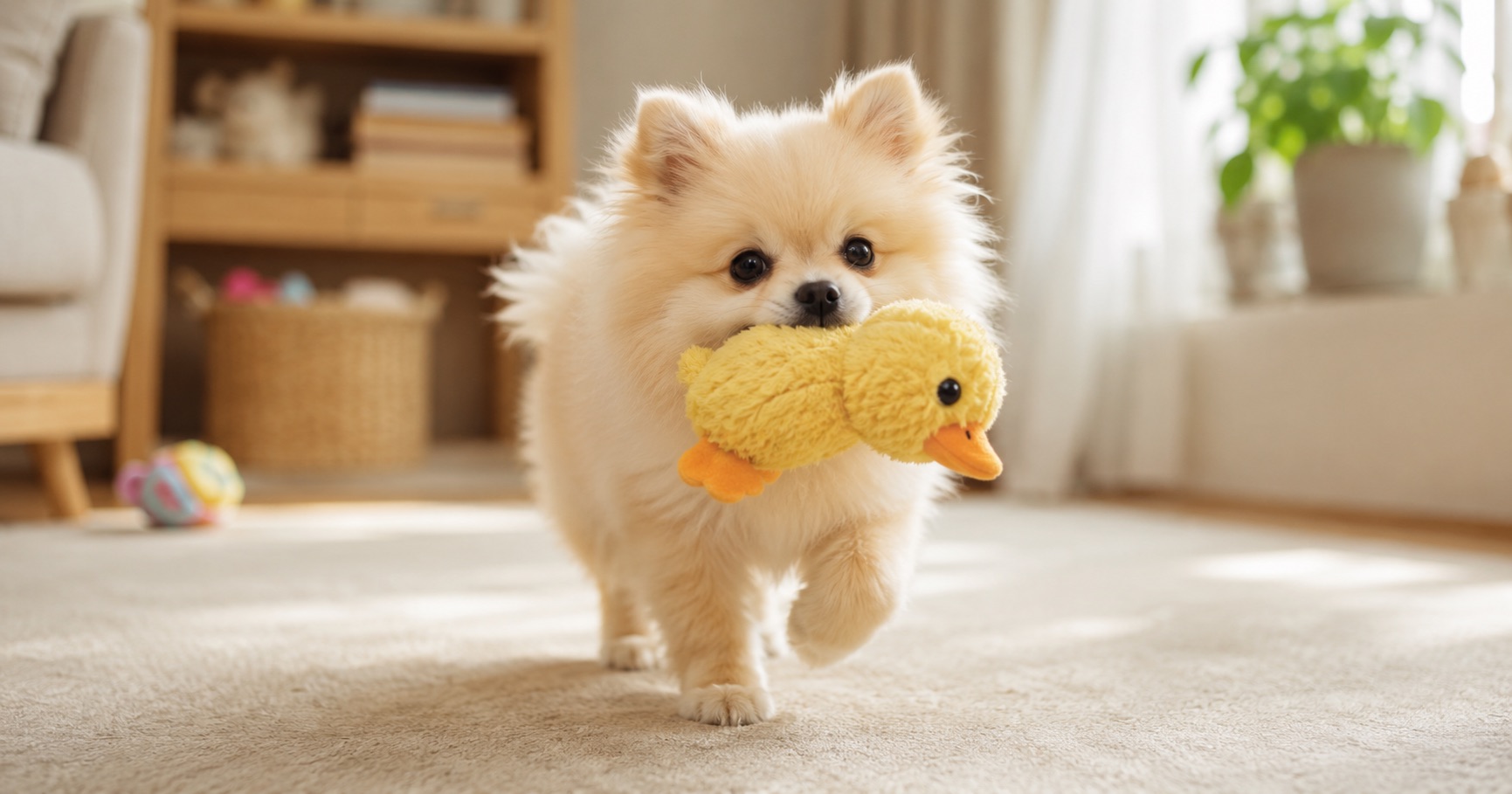
What does each toy type actually do?
Each type feeds a different appetite: the need to chew, the need to sniff and search, the need to pull and contend, the need to not be bored. Feed all four and the furniture-shredding drops off visibly.
| Type | Feeds | For | Watch out |
|---|---|---|---|
| Chew (dental chews, rubber) | Chewing drive, teething | Furniture-shredders, puppies | Bigger than the mouth: check hardness |
| Snuffle (sniffing mats) | Nose work, energy burn | Rainy days, indoor dogs | Deduct the treats from meals |
| Tug (ropes) | Play WITH you, bonding | The energy surplus crowd | Gentle during teething |
| Squeaky plushie | Prey drive, triumph | The grab-and-shake enthusiasts | Squeaker-swallowing risk |
| Puzzles, treat-stuffers | Brain work, solo play | Long home-alone hours | Start at the easiest level |
※ Swallowed squeakers are a quietly common accident. The day the belly seam opens: sentimental or not, it goes out that day.
The three-point safety check
First: size: bigger than the mouth at full stretch, so the throat is never an option. Second: hardness: if a thumbnail pressed in leaves no mark, that toy can break teeth. Third: durability: swallowed fragments are the top danger, so power-chewers get rubber over plush. And before leaving the house: anything shreddable gets picked up.
Why do new toys go stale so fast?
Because everything left out at once becomes wallpaper. Learned this on the job: keep three toys out and rotate weekly, and the veterans return like new releases. After a month in the closet, the duck got a hero's welcome: Gureum's tail nearly detached. Rotation before purchase, always.
The favorite toy: the neighborhood dogs want to see it
Shredded ducks and balled socks are a beloved genre on the kkeung neighborhood feed. One short grab-and-shake clip: the date stays on the post, the likes come in from the local dogs, and there's real comfort in confirming that every dog's taste is exactly this unreasonable.
Show the neighborhood dogs →Toys by life stage
Puppies
Teething makes chew toys non-negotiable: chilled in the fridge, they calm the itching gums too. One or two bite-safe rubber pieces beat a pile of small soft ones.
Adults
Shift the mix toward the energy-spenders: snuffle work and tug. On a no-walk day, fifteen minutes of nose work tires a dog like thirty minutes of walking.
Seniors
Hard chews strain old teeth: go soft. Trade body-work for nose-and-brain work: sniffing mats, easy puzzles: in short, frequent sessions. And a dog who suddenly avoids yesterday's favorite toy may be reporting a toothache: check the mouth.
Asked to name the single best toy, the honest answer is: the owner. The priciest puzzle goes stale if it's tossed over and abandoned. Ten minutes a day of pulling together, searching together: that's the actual product. The dog never wanted the toy. The dog wanted the time. Tonight after work: ten minutes, one duck. Watch the eyes change.
Frequently asked questions
My dog ignores toys entirely. Why?
Are tennis balls okay?
My dog brings me sticks. Can we play with those?
How do I wash the toys?
How much snuffle-work treat is too much?
This article is general information and does not replace a veterinary diagnosis. Talk to your vet about your dog's condition.