Making Dog Friends in the Neighborhood:
Offline and Online
My dog Gureum's best friend Mungchi didn't fall out of the sky one afternoon (it means "cloud" in Korean). He was manufactured: same park, same hour, weeks on repeat, until the pattern became a friendship. Dog friends turn out to be design, not luck. Here's the design: plus the first-greeting protocol, and how to retreat from a mismatch with everyone's dignity intact.
The core move: fix the walk time and place, and let the same faces repeat. Dogs warm to a dog they've SEEN several times far faster than to a stranger. Layer on meeting grounds like dog parks, and pre-warming online with nearby dogs: and the first-meeting threshold drops through the floor.
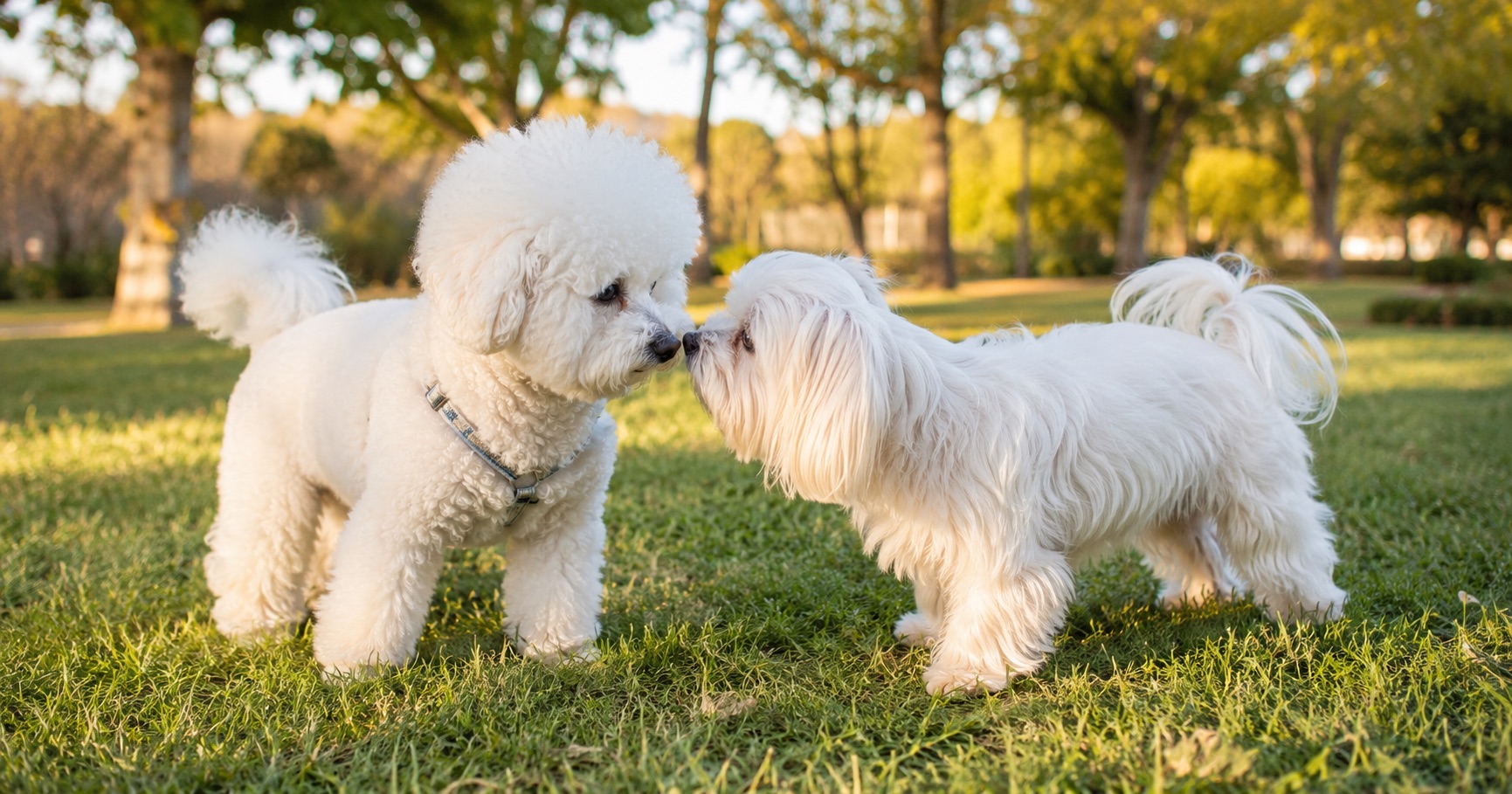
Does a dog even need dog friends?
This first: not every dog wants one. Some prefer people: some prefer solitude: both are normal. But for the dog who clicks with a friend, the returns are real: walks gain a plot: dog-on-dog play drains energy like nothing else: and dog-to-dog manners stay in practice. The owner wins too: a neighborhood of fellow dog people covers everything from vet intel to an emergency favor: sturdier than it sounds.
The friend-making methods
| Method | The technique | The caution |
|---|---|---|
| Fixed walk time and place | Same hour, same park, daily: regulars appear within two or three weeks | Open with greeting-free pass-bys |
| Dog parks | Off-leash mingling practice inside the fence | Quiet hours first: observe before entering |
| Local dog meetups | Breed groups, building or block dog circles | Match the group size to the temperament |
| Online pre-warming | Getting acquainted with nearby dogs through a dog app or local feed first | The real meeting still follows full first-greeting protocol |
※ Whatever the method: the DOG sets the tempo. Freezing or hiding at the sight of other dogs means the current chapter is distance-and-familiarity, not friend-making.
Running the first greeting
Friend or not-friend gets largely decided in the first thirty seconds. Head-on approach reads as rude in dog grammar: angle in from the side. Leash LOOSE: a taut leash wires your tension straight down the line. Three seconds of mutual sniffing, then separate: short and repeated beats long and single, for safety and for chemistry. The good signs: a soft mid-height tail wag, loose body. The stop signs: stiffening, raised hackles, a growl: that's "we're done for today," and it gets honored. And asking the other owner "okay if they say hi?" first: that's just the floor of good manners.
Trade waves on the feed before the park
Swap likes on completed walks and daily flexes in the kkeung neighborhood feed, then actually cross paths at the park: it already feels like running into someone known. Owners pre-connected make the dogs' first hello dramatically smoother. Neighborhood friendships start exactly there.
Meet the neighborhood dogs →After the friendship lands
Make it a standing date
Dog friendship feeds on repetition: a fixed slot: every Saturday morning: hardens the bond. On Mungchi days, Gureum's pace picks up from the park entrance: dogs keep calendars too, in their way.
Mismatches can be closed out
Dogs have chemistry, same as people. If every meeting is one dog chasing or flattening while the other dodges: that's not play. Owner friendship doesn't obligate dog friendship: don't force the pairing. And two dogs who politely ignore each other and sniff their separate corners: that's a perfectly respectable relationship too.
The timid dog goes at the timid dog's pace
For the dog-fearing dog: start at spectating distance: treats there, good memories banked, the gap closed by inches across weeks. This isn't a dog who can't make friends: it's a dog who makes them slowly. No rush lives here.
The goal was never a popular dog: it's a dog whose world got a little wider. One well-matched friend covers it. On today's walk, linger ten extra minutes in the usual spot. That's where the luck gets manufactured.
Frequently asked questions
Can an adult dog past the socialization window still make friends?
My dog is scared of other dogs. Should I push them together anyway?
Can dogs with a big size gap be friends?
First trip to the dog park: what do I watch?
Is a dog without dog friends a problem?
This article is general information and does not replace a veterinary diagnosis. Talk to your vet about your dog's condition.