Top 7 Tips for Photographing Your Dog:
A Smartphone Is Enough
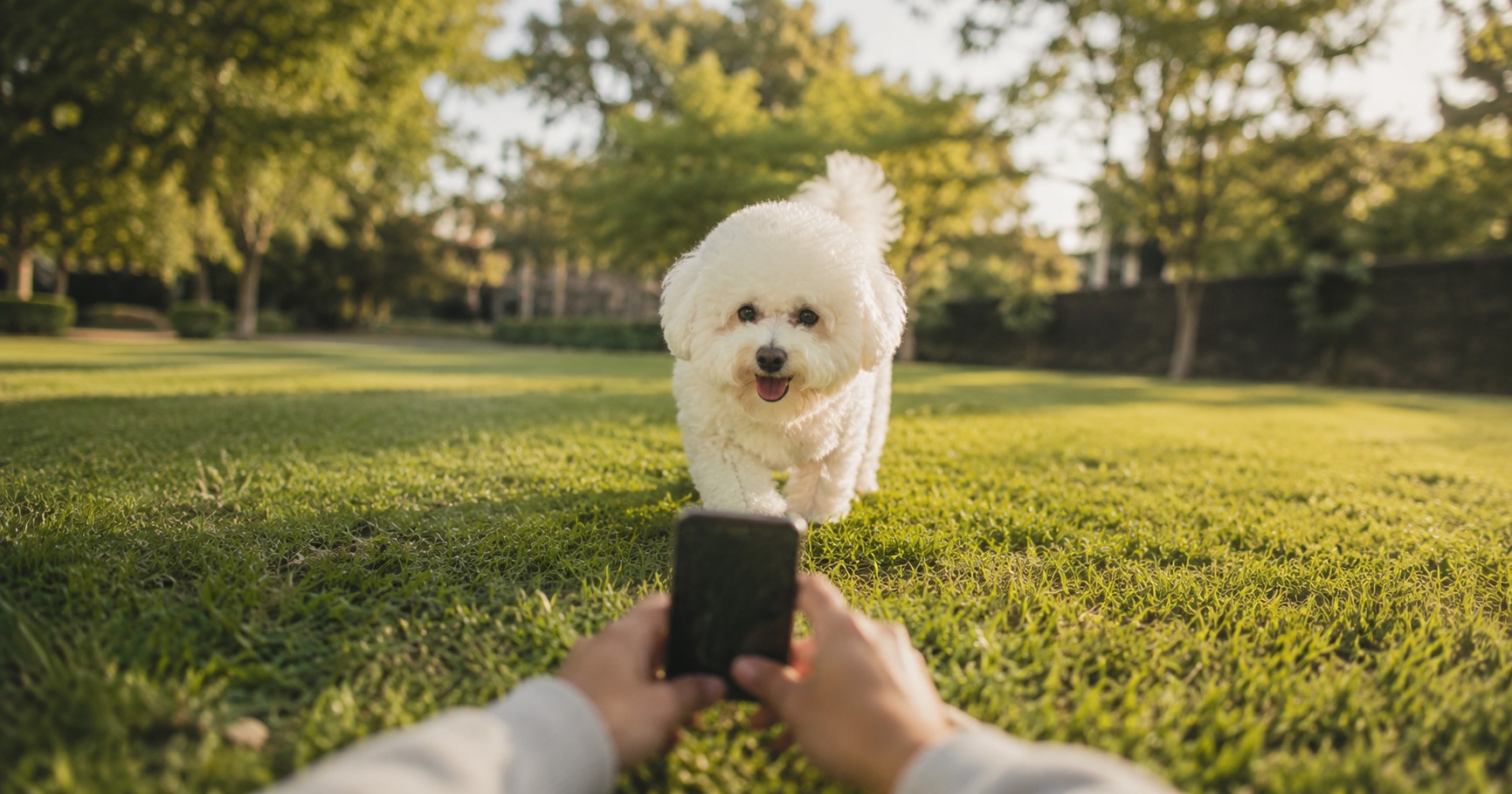
A thousand-plus photos of my dog Gureum taught me the secret (it means "cloud" in Korean): the good ones come from a good POSTURE, not a good camera. The day I started shooting from a flat-on-the-floor sprawl, the photos changed species. Here are the seven tricks: no expensive gear anywhere on the list.
The core three: get down to the dog's eye level, put the light on their face, and shoot in burst mode. Add focus-on-the-eyes, a simple background, a treat for gaze direction, and the calm window right after play: and a phone produces genuinely beautiful photos. Posture and light before gear: always.
The seven, ranked by impact
Ordered by effect: honor just the top three and the photos visibly level up.
| Rank | Technique | The point |
|---|---|---|
| 1 | Down to eye level | Standing shots capture the top of a head. Crouch or lie down: lens at THEIR eye height |
| 2 | Light onto the face | Backlit by a window or sun: the face goes black. Reposition so the dog FACES the light |
| 3 | Burst mode | Hold the shutter, harvest dozens, keep one. Motion never yields to a single tap |
| 4 | Focus on the eyes | Tap the eyes on screen. Sharp eyes carry a photo even when the rest softens |
| 5 | Clean the background | A wall or grass beats the drying rack. The simpler the backdrop, the more the dog pops |
| 6 | Direct the gaze | Treat just above the lens, or one strange noise: the head-tilt moment gets caught |
| 7 | Shoot after play | Post-walk, post-game calm holds poses far longer |
※ Wipe the lens on your shirt before shooting. Half of all hazy photos are fingerprints, not failure.
Why do my photos come out blurry?
Dogs move faster than people, and phone cameras slow down as light drops: indoor motion is the worst-case pairing, and blur is the honest result. Three fixes: one, move to light: a window or daytime outdoors speeds any phone up. Two, burst: among nine shaken frames hides one frozen keeper. Three, ambush the still moments: mid-sniff, right after "sit," the head-turn when the name lands.
Learned this behind the shutter: chasing a running dog is an undefeated losing strategy. When I stop and wait, Gureum wanders into the frame on her own. The camera doesn't hunt the dog. The dog arrives.
The thirty-second pre-flight
Lens wipe: eye-gunk and mouth check: grid ON in camera settings: the grid levels the horizon and makes off-center intersection framing easy. Decide portrait or landscape BEFORE the moment: portrait for profiles, landscape when scenery matters. And one treat in the pocket, always. The finest photography equipment ever manufactured is boiled chicken breast.
The chosen one deserves better than the album
The single photo culled from dozens of burst frames dies unseen in a phone album. Posted to kkeung, it wears its date: scrolling the feed returns straight to that day: and the likes from the neighborhood dogs come free. Today's best shot: start there.
Save a photo of today →By situation
Indoors
Daytime window light is the answer: dog beside or facing the window, soft light on the face. At night, avoid directly under ceiling lights: under-eye shadows, yellowed color. One lamp turned toward the dog outperforms the ceiling every time.
On the walk
Low sun: early morning and late afternoon: renders coat texture best: high noon sun stamps hard shadows and kills expressions. For walking shots: crouch two or three steps ahead and burst the approach. Leash in one hand, phone in the other. Safety outranks photography: no exceptions.
White dogs and black dogs
A white dog like Gureum blows out easily: tap the screen, drag exposure DOWN slightly, and the coat texture returns. Black dogs invert the problem: the face crushes to shadow: raise exposure, and skip bright-sky backlighting. Dark coats read best against mid-tone backgrounds, not bright ones.
Shoot a thousand, love a handful: that ratio is normal, not failure. And don't grieve the misses: the proof of having been together today prints just as clearly in the blurry ones.
Frequently asked questions
Should I use portrait mode?
Is flash okay?
Burst mode is flooding my album.
My dog turns away the moment the camera appears.
Why do the eyes glow blue or green in some photos?
This article is general information and does not replace a veterinary diagnosis. Talk to your vet about your dog's condition.