Does a Dry Nose Mean a Sick Dog?
The Myth, and the Real Signals
"A healthy dog has a wet nose." Every dog person has heard it, and every dog person has touched a post-nap dry nose and felt their stomach drop. As a beginner I once searched dry dog nose in the middle of the night, so consider this article a letter back to that version of me.
Nose moisture is not a health thermometer. Right after sleep, in dry rooms, near heaters: healthy noses dry out, and change several times a day. The signals that DO matter are different: persistent cracking and scabs, pigment changes with texture changes, yellow or green discharge, nosebleeds, and surface ulcers or swelling. Those mean an exam regardless of moisture: and health itself is judged by appetite, energy, and temperature, not the nose.
Normal dryness vs. real signals
| Category | What | Read |
|---|---|---|
| Normal | Naps, right after sleep | No licking = temporary dryness |
| Normal | Heating, dry seasons | Environmental: manage humidity |
| Normal | Age-related dryness trend | Manage with moisturizing |
| Caution | Persistent cracking, scabs, ulcers | Possible skin condition: exam |
| Caution | Yellow or green discharge / one nostril only | Possible infection, foreign object: exam |
| Immediately | Nosebleed, breathing trouble alongside | Straight to the clinic |
Why the nose cycles wet and dry
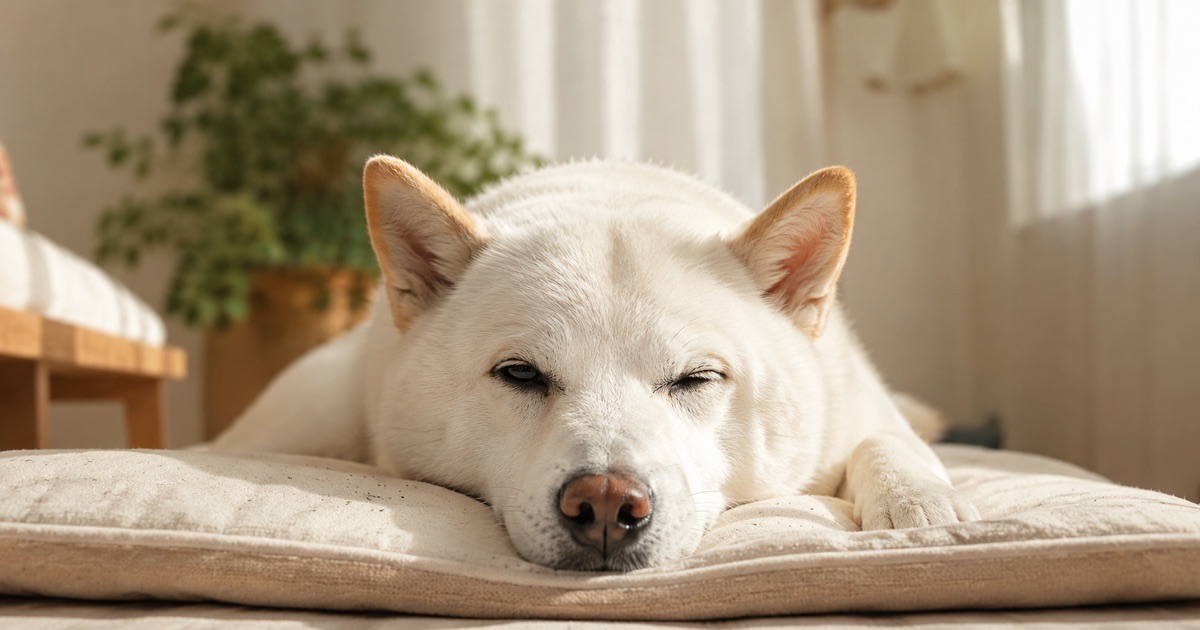
A dog's nose stays moist through gland secretions and their own licking: it grips scent particles and helps regulate temperature. So during the no-licking hours (sleep) it dries: naturally: and re-wets once they're up and about. The nose is a snapshot of the moment, with far too many variables to serve as a health gauge. The myth's origin makes sense: a sick dog lies flat and doesn't lick, so the nose dries: but then the thing to watch was the LYING FLAT, not the nose. My dog Gureum's nose dries the first day the heater comes on each year (it means "cloud" in Korean); watching it return within half a day of running the humidifier finally put my mind at ease.
Judge health by these three instead
The reliable home-check trio: appetite, energy, and, when needed, temperature. Eating like usual? Reacting to favorite things like usual? Both normal: the dry nose is a nap's footprint, nothing more. And the reverse holds: a perfectly moist nose on a dog skipping meals and lying flat: THAT's the signal. When worry lingers, the thermometer (normal roughly 100.4-102.6°F) beats any hand-feel. Nose-touching can stay in your life: just file it under affection, not diagnostics.
The rookie's midnight searches shrink with everyday records
What matters isn't whether the nose is dry: it's whether anything differs from THEIR usual. Post sleeping and eating photos to kkeung regularly and each keeps its date: on the worrying night, the comparison is one scroll away. Most midnight searches end right there.
Save a photo of today →Care for the chronically dry nose
Dogs whose noses run rough without any disease (seniors especially, some flat-faced breeds) can get comfort from moisturizing: a thin layer of pet nose balm. Like paw balm, it must be the pet product designed with licking in mind: human lip balm and petroleum jelly aren't recommended. Indoor humidity at 40-60% helps nose and skin alike. But cracking that deepens or scabs that keep returning despite the balm can be keratinization or autoimmune territory: those get the clinic's eyes.
The discharge: read color and direction
Far more important than dryness is what comes OUT of the nose. Fleeting clear discharge is common: sticky yellow or green discharge signals infection, and discharge from ONE nostril only raises that side's foreign object (grass seed), tooth-root trouble, or growth: signals that need looking into. Sudden fits of sneezing while pawing one side of the nose lean foreign-object too. Note the discharge's color, side (one or both), and companions, and the cause-hunt at the exam moves fast.
Frequently asked questions
How do I tell healthy moisture from a runny nose?
The nose color has faded. Disease?
They had a nosebleed. What do I do?
What's this reverse sneezing thing? A nose problem?
The nose area is cracking with scabs. What now?
This article is general information and does not replace a veterinary diagnosis. Talk to your vet about your dog's condition.