Cracked Paw Pads:
Sorting the Cause, Fixing the Care
Wiping paws after a walk, you find it: rough pads, a crack in the surface. When did those cushiony beans get like this? Paw trouble splits into three causes: dryness, burns, inflammation: and each gets a different response. Sorting comes first.
The big three causes of cracked pads: dryness (winter, aging), heat damage (summer pavement), and pododermatitis (inflammation between the toes). Simple dryness: manage with a pet paw balm. Blisters, peeling, bleeding, limping, or red toes with obsessive licking: that's burn or inflammation territory, exam first. Human hand cream is out: it gets licked off.
The cause-sorting table
| Cause | Clues | Response |
|---|---|---|
| Dryness | Roughness, fine cracks, worse in winter | Paw balm, indoor humidity |
| Heat damage (burn) | Post-summer-walk pain, blisters, peeling | Clinic now; cool-water compress en route |
| Pododermatitis | Red between toes, obsessive licking, smell | Exam (treat the cause), block the licking |
| Injury | Bleeding, embedded object, sudden limp | Pressure then clinic; deep objects stay IN |
Winter dryness care, step by step
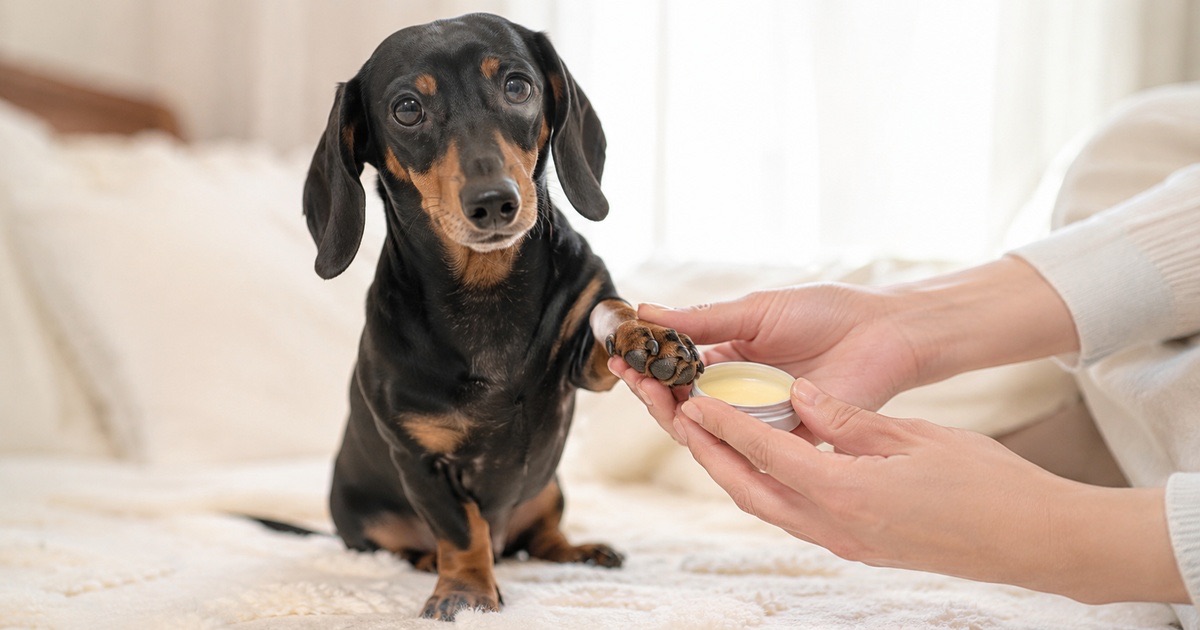
Winter walks hit the pads with a triple burden: cold dry air, rough ground, and road salt. The care sequence: rinse paws in lukewarm water after the walk to clear the ice-melt, dry thoroughly between the toes, then apply a thin layer of pet paw balm. Since many dogs lick it straight off, the trick is a few minutes of treats or a snuffle game right after application. My dog Gureum's pads go notably rough in deep winter (it means "cloud" in Korean), so balm after the evening walk became our winter routine. Holding indoor humidity at 40-60% quietly does a lot too.
A licked paw is a different problem
Cracking often gets bundled with paw-licking, but obsessive licking of one spot points past dryness toward pododermatitis or allergy. The licking itself builds a saliva-humid environment that feeds the inflammation: a feedback loop: and saliva staining turns the paw brown. Here balm is not the answer: the cause (allergy, bacteria, fungus) needs treating. Spread the toes, check for redness and smell, and if it matches, go straight to the exam. Cones and boots serve as treatment support, arranged with the clinic.
Paw pads speak in before-and-after photos too
Whether cracks are healing only shows across days. Photograph the pads from the same angle and post to kkeung: each keeps its date, putting balm-day-one beside one-week-in: and doubling as your evidence for whether an exam is due.
Save a photo of today →Summer pavement: prevention is everything
Summer pad burns are overwhelmingly easier to prevent than treat. Midday asphalt reaches egg-frying temperatures, so the base rule: back of your hand on the pavement for 5 seconds: too hot for you, no walk for them. Shift to early morning or after sundown and favor shade and dirt paths, and most of the risk evaporates. If they're already pained after a walk, with red pads or blisters: cool the heat with cool water and head to the clinic. Applying ointment to peeled pads on your own runs into the licking problem on top of everything else: skip it.
The finishing touches: fur and nails
Long fur between the pads means sliding on hardwood: joint load: and in winter it's where snowballs and ice-melt cake on. Ask for paw-fur trimming at grooming. Nails are part of the set too: overgrown nails force a splay-toed gait that loads the pads. Clicking on the floor means they're due. Balm, fur, nails: the basic three-piece kit of paw care.
Frequently asked questions
Can I use Vaseline or my hand cream?
What about dog boots?
Do I need to wash the paws after every walk?
The pads are hardening. Just age?
How often do I apply paw balm?
This article is general information and does not replace a veterinary diagnosis. Talk to your vet about your dog's condition.