Spaying and Neutering:
When Is the Right Time?
Neutering is among the biggest decisions an owner makes on a dog's behalf. I lost count of how many times I picked up and put down the pen over my dog Gureum's consent form (it means "cloud" in Korean). When is right? Is it right at all? Emotion and information tangle here, so today's article serves the information side, as plainly as possible.
The common recommendation is around 5-6 months for small breeds, and spaying females before the first heat is known to maximize mammary-tumor prevention. For large breeds, the trend is to wait longer (past 12 months) in light of growth-plate closure. But the optimal window shifts with breed, size, and health, so the final call belongs to a consultation with YOUR vet.
Typical windows by sex and size
| Case | Common recommendation | Why |
|---|---|---|
| Male, small breed | Around 5-6 months | Before marking and mounting habits set |
| Female, small breed | Before first heat (5-6 months) | Maximum mammary-tumor prevention |
| Large breeds | Consult after 12 months | Growth plates, joint development |
| Adult dogs | Possible if healthy | Anesthesia fitness confirmed by workup |
More important than the table's numbers is the recent shift. The old conventional wisdom was the earlier the better; newer research differentiates timing by breed and size, and for large breeds especially, the weight has moved toward not rushing. Which makes this one decision that needs a your-dog-specific consultation rather than an internet average.
The pros and the cons, both on the table
The benefits are clear: spaying sharply reduces pyometra and mammary-tumor risk in females; neutering lowers testicular-tumor and prostate-disease risk in males. Hormone-driven behaviors: heat-cycle stress, escape attempts, marking: often decrease too. The costs are real as well: anesthesia and surgery carry low-but-nonzero risk, metabolism drops afterward so weight gain gets easier, and some studies suggest a link between early neutering and joint disease in certain large breeds. Filter out both the all-upside articles and the pure-fear ones: the good decision is the one made knowing both sides.
From the night before through surgery day
Once scheduled, the clinic gives fasting instructions (usually from the prior evening): this ties directly to anesthesia safety, so the no-sneaky-treats rule binds the whole family. On the day: a potty break, an unhurried arrival, and the pre-surgical tests (bloodwork and such) confirming anesthesia fitness. Same-day discharge is typical but not guaranteed, so keep the schedule clear. And many owners get a shock at pickup: the groggy, half-there eyes of lingering anesthesia. Almost always, the usual gaze is back within a day.
Recovery photos help the next appointment
Whether the incision is healing normally is hard to judge with eyes that see it every day. Photos from the same angle posted to kkeung keep their dates, letting you compare yesterday's and today's swelling and color: and show the recheck exactly that.
Save a recovery photo →The recovery week: three points
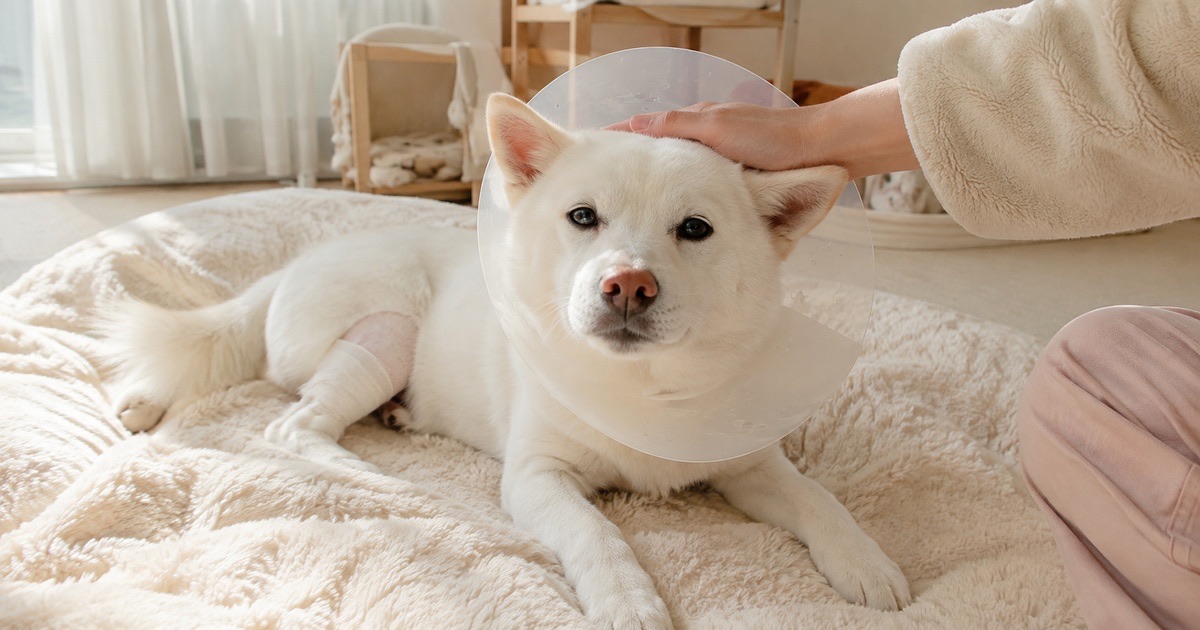
First, the cone (or recovery suit) stays ON. However pitiful the look, licking the incision leads to infection and suture trouble: hold the line until suture removal. Second, hard activity restricted: couch jumps and sprints blocked for about a week, walks short and per clinic guidance. Third, incision watching: mild swelling is normal, but discharge, bleeding, gapping, or heavy swelling means calling the clinic. Appetite usually restarts with a small dinner that evening and mostly returns by the next day: past two days without eating needs a check.
What actually changes afterward: just watch the weight
The personality-change worry is common, and the core personality genuinely stays: what changes is hormonal behavior and metabolism. The metabolic drop is real, so pre-surgery portions on a post-surgery body add weight. Once recovery ends, lower the food to the feeding chart's neutered tier and fine-tune over a month or two of watching. Mind that one thing, and the classic post-neuter obesity trap never springs.
Frequently asked questions
If we skip neutering, will they definitely get sick?
She's already had her first heat. Did we miss the window?
What does the surgery cost?
The anesthesia scares me. We keep postponing.
Will their personality change after neutering?
This article is general information and does not replace a veterinary diagnosis. Talk to your vet about your dog's condition.