Senior Dog Food:
When and How to Make the Switch
"My dog, a senior already?" The senior shelf tag lands a little strangely every time. But when to start senior food isn't decided by the age number alone. Here are the benchmarks and the method, step by step.
The usual review windows: small dogs around 9-10, medium around 8, large breeds around 6-7. But the body's signals outrank the number: falling activity, weight creeping up, slower chewing. When those appear, pair a checkup with a vet conversation about switching, and transition gradually over 7 days.
Review timing by breed size
| Size | Review window | Why |
|---|---|---|
| Small (under 22 lbs) | Age 9-10 | Aging starts relatively late |
| Medium | Around 8 | Middle pace |
| Large (over 55 lbs) | Age 6-7 | Aging runs fast |
Same age, different aging speeds: the final call belongs to the body, not the age chart. Activity visibly down. Weight rising on the same portions. Hard kibble chewed slower. Stool not what it used to be. Two or three of these overlapping means it's time for a checkup and a switch conversation.
What's actually different about senior food?
Three things at the core. First, lower calories, matched to a slowed metabolism. Second, reinforcements: joint compounds (glucosamine and kin) and easier-digesting proteins. Third, smaller or softer kibble in many products, easing the chewing load. It's not the same meal in smaller amounts: it's a meal redesigned for a slower body. Which is exactly why "same adult food, just less of it" falls short of a true switch.
One caveat: if a checkup surfaces kidney, heart, or other conditions, a prescription diet may outrank generic senior food. That's why the pre-switch checkup gets recommended: the results set the direction.
The switch takes 7 days: rushing means stomachaches
An older gut is touchier about change. First two days: 75% old food, 25% new. Next two: half and half. Next two: 25 to 75. Final day: 100%. Even this standard pace can run fast for a senior, so soft stool means parking at that stage a few extra days before moving on. Ten days, two weeks: all fine. There is exactly zero reason to hurry.
A senior's body speaks through its steps first
The body's signals tell you when the food conversation is due. Log walks in kkeung and distance and time stack by date, making a shrinking-walks trend visible. That trend is the cue to discuss senior food and a checkup.
Log today's walk →Feeding tricks for the hard-chewing struggle
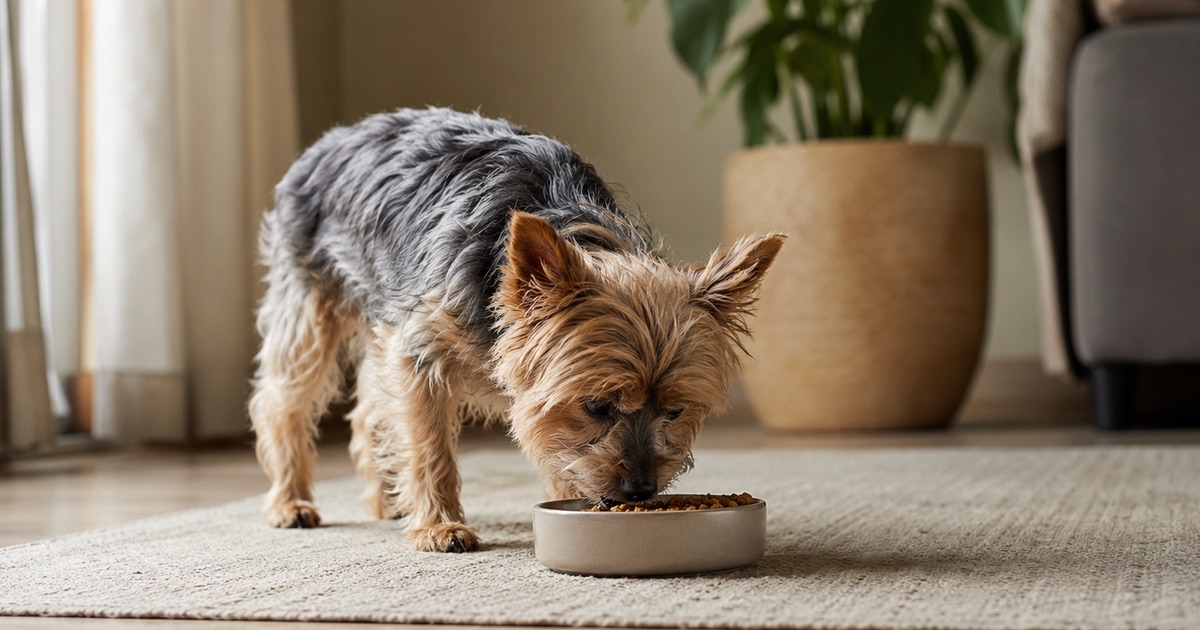
Some dogs find even senior food too hard. Soak it 10-15 minutes in warm water or unsalted broth: the aroma rises and the chewing eases. Wet food as a topper works too. Two notes: soaked food spoils fast, so clear leftovers immediately; and if the teeth deteriorated suddenly, the problem may be dental, not dietary: get the mouth examined first. Slow eating turns out to be tooth pain more often than people expect.
A picky senior should never be strong-armed
The classic senior-switch failure: forcing the "healthier" food they won't eat. The older they get, the larger meals loom in their quality of life. If the palatability truly misses, try other senior products, and if nothing lands, a compromise, favorite food plus senior toppers and supplements, is worth raising with your vet. The food they'll eat is, in the end, the good food. Don't chase the number: go at your dog's pace. My dog Gureum isn't senior-food age yet (it means "cloud" in Korean), but she's wary of new foods, so we're building the warm-water-aroma habit now, ahead of the day.
Frequently asked questions
Seven years old but very healthy: switch anyway?
Does the portion change on senior food?
My senior is LOSING weight fast. Is senior food right?
Should treats go senior-specific too?
They refuse the new senior food. Now what?
This article is general information and does not replace a veterinary diagnosis. Talk to your vet about your dog's condition.