Choosing Dental Chews:
One Size Decision Decides the Safety
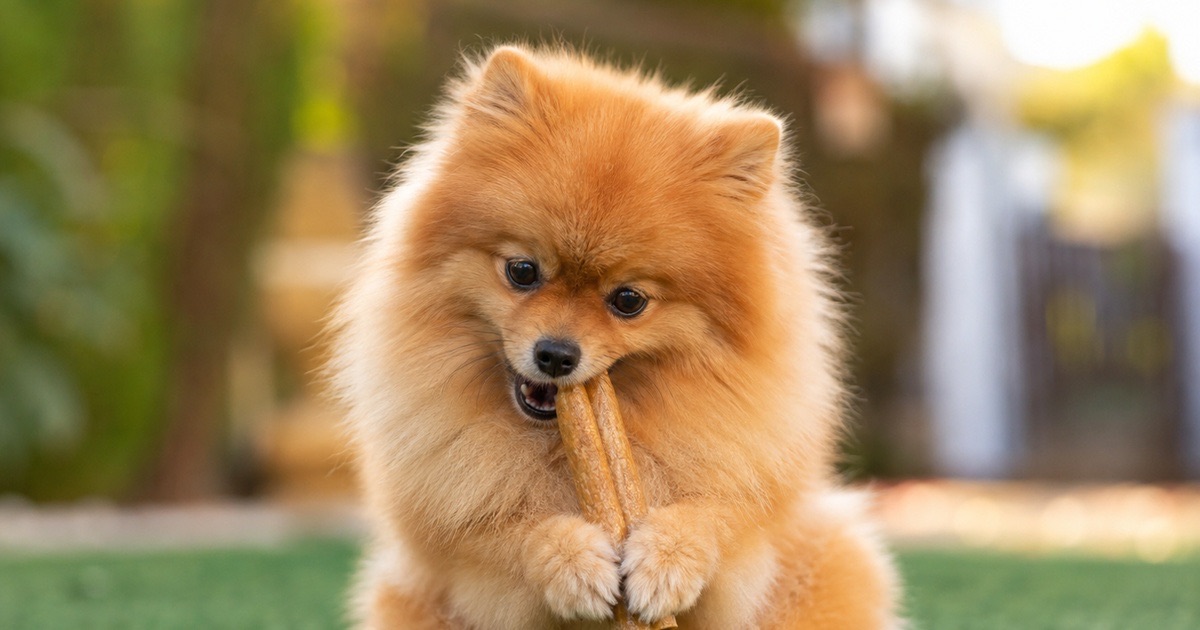
Dental chews are the steady bestseller of dog treats, and also the item behind the most swallowing-accident stories. I once bought my dog Gureum the wrong size (it means "cloud" in Korean), watched her try to gulp the final chunk whole, and felt my heart hit the floor. Here are the selection rules I wrote up after that day.
The #1 criterion is size: too big to swallow whole even at maximum jaw-stretch, and the chewed-down final chunk gets confiscated. For hardness, a thumbnail pressed in should leave a mark; over-hard items (antlers, rock-hard tendons) risk tooth fracture. And chew time happens in front of you, always.
The 4 selection criteria
| Criterion | What | Why |
|---|---|---|
| 1. Size | Clearly bigger than the open mouth | Whole-swallowing is the top accident type |
| 2. Hardness | Thumbnail pressure leaves a mark | Over-hard products fracture teeth |
| 3. Ingredients | Clearly named materials | Beware indigestible cheap rawhide |
| 4. Form | Softens as it's chewed | Sharp-splintering types are dangerous |
The accident happens at the last chunk
The classic chew accident runs like this: a long, happy chewing session, and then the shrunken final chunk gets gulped, quick, before anyone can take it. That's what lodges in the esophagus or gut. Hence two rules. First, chew time only in front of you: never handed over in an empty room. Second, once it's down to about two thumb-joints in size, confiscate and trade for another treat. Trading, not taking, is what keeps them handing it over next time too.
Tartar control: how much is real?
The chewing action genuinely helps manage plaque. But expecting chews alone to erase tartar is the overreach. Products carrying verified dental certification (VOHC and the like) are the better picks, and even then a chew is toothbrushing's assistant, never its replacement. In sequence terms: brushing is the feature film, the chew is the bonus track. On a skipped-brushing day, a chew beats nothing, but it doesn't count as brushing.
Chew time is one of the day's scenes too
A dog absorbed in a chew makes for great photos and short clips. Posts on kkeung keep their dates, so scrolling back later shows which chews they loved and since when: your dog's personal fit-list, assembling itself.
Save a video of your dog →Choosing by age and dental condition
Puppies are mid tooth-swap, so soft puppy-specific products only; hard chews wait until the adult teeth have settled. Senior dogs' teeth and jaws weaken, so serving the same hardness as their younger years raises the fracture risk: step down to soft dental chews. And for a dog with past dental work or a loose tooth, the chew question itself goes through the vet first. If they flinch mid-chew or favor one side, that can be an oral-pain signal worth checking.
Chews count against the treat allowance
An easy fact to forget: chews pack real calories, and one chew often spends the entire daily treat budget (10% of caloric needs). A daily-chew habit means trimming that day's other treats, and for a dog on a diet, switching to a low-calorie dental product. If chewing-urge relief is the goal, mix in zero-ish-calorie options, like a Kong loaded with a little kibble and frozen: chew time preserved, calories contained.
Frequently asked questions
They vomited after a chew. Vet visit?
Are milk-based soft chews the safe option?
What about natural chews like antlers or coffee wood?
How often should chews be given?
They carry the chew off and hide it instead of eating. Why?
This article is general information and does not replace a veterinary diagnosis. Talk to your vet about your dog's condition.