Pomeranian Personality and Traits:
Double-Coat Care and Bark Training Are the Job
Bean, the Pomeranian upstairs, barks first whenever he meets my dog Gureum in the hallway (it means "cloud" in Korean). Half her size, twice her swagger. Then he lands in his owner's arms and becomes the gentlest face in the building. Both faces are the real Pom. Here's the breed, with what Bean's owner has taught me along the way.
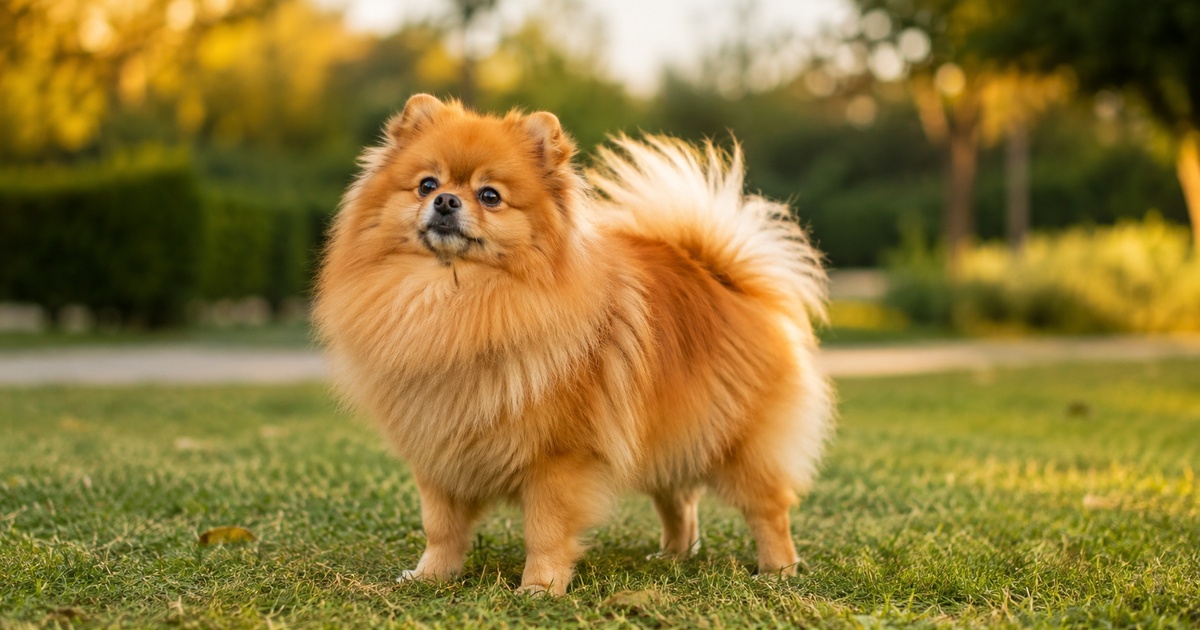
The Pomeranian is a lively, confident, wildly expressive tiny breed. Affectionate with their person, but the strong alert instinct makes barking frequent: early training is mandatory. The thick double coat needs daily brushing and coat-blow management: and a short summer shave can mean fur that never returns right. Tracheal collapse and luxating kneecaps run common.
What's the Pom temperament?
The Pom is a sled-dog Spitz miniaturized over generations: the body shrank, the personality didn't. Curious, lively, and unwilling to back down from strange people or dogs. With their person: overflowing affection, every emotion broadcast through face and body. The catch: a strong alert instinct means the doorbell, footsteps, and window movement all get announced: in an apartment, training is not optional.
| Pomeranian | Notes | |
|---|---|---|
| Size | 7-9 in tall, 4-8 lbs | Tiny |
| Temperament | Lively, confident, expressive | Fearless for the size |
| Barking | On the high side | Alert-driven: training mandatory |
| Training | Moderate | Clever with a stubborn streak |
| Exercise | Moderate | Two 20-30 minute walks |
| Coat | Double coat, heavy shedding | Daily brushing: coat-blow is an event |
| Lifespan | 12-16 years | |
| Common conditions | Tracheal collapse, luxating kneecaps, alopecia, dental disease |
Handling the Pom bark
This I learned from Bean's owner: Pom barking is alert instinct, not fear: something crossed into my territory and headquarters must be notified. Which means the approach differs from a Maltese's fear-bark. What works: desensitization (doorbell audio at whisper volume, treats flowing, volume rising by the week), environment (block the window view), and the iron rule of praising only the SILENCE. Six months of that took Bean's doorbell response from three barks to one.
The coat: what you must never do
- Summer shaving: clip a double coat short and the guard coat may never return right: undercoat-only regrowth is the post-clipping alopecia pattern. Want them cooler: rake OUT the undercoat instead.
- Skipping brush days: in coat-blow season (spring, fall), the undercoat rake runs daily or the mats win.
- Half-dried baths: the undercoat holds water long after the surface feels dry. Double the drying time, down to the skin.
- Collars: tracheal collapse runs in the breed: pressure on the throat is the enemy. Harness, always.
Coat-blow before and after: two different dogs
Double-coat upkeep is invisible work, which makes it exhausting. Each spring, photograph the mountain of raked-out fluff next to the newly svelte dog and post both to kkeung: the dates stack up, and after a few years you can even see when coat-blow starts each season. The before-and-after is where the satisfaction lives.
Save a photo of today →Before you commit
The trachea
A goose-honk cough during excitement or leash pressure is the tracheal-collapse signal: very common in Poms. Prevention: harness over collar, weight discipline, excitement management. Severe cases need medication or surgery.
The kneecaps
The tiny-breed universal, and Poms are no exception. Mats over the slippery floors, steps at the couch, paw-pad hair kept trimmed.
Don't just carry them
Poms love riding in arms: and a carried Pom skips socialization and doubles down on barking. Ground-level walking and dog-to-dog greetings are what convert that confidence from noise into poise.
The Pom is a big personality in a small chassis. Aim that personality early: away from the barking: and you get the most expressive companion dog on the market. Bean wags at Gureum now instead of barking. It took six months: it was worth all of them.
Frequently asked questions
Can I give my Pom a short teddy-bear cut?
Why is my Pom suddenly losing fur?
Do Poms suit homes with kids?
How much walking does a Pom need?
Do Pomeranians get separation anxiety?
This article is general information and does not replace a veterinary diagnosis. Talk to your vet about your dog's condition.