Golden Retriever Personality and Traits:
The Realistic Guide for First-Time Big-Dog Owners
My dog Gureum's favorite friend at the park is Barley, a Golden Retriever five times her size (Gureum's name means "cloud" in Korean). Gureum climbs on his face: Barley doesn't move. The temperament is exactly as advertised. Then you hear how far Barley's owner walks him daily, and how much brushing happens: and you learn that temperament isn't free.
The Golden Retriever is a supremely friendly, patient, highly trainable large breed: the most-recommended pick for families with kids and for first-time big-dog owners. The bill: an hour-plus of daily walking, serious shedding, and large-dog food and vet costs. Hip dysplasia and cancer rates run high: parent health testing matters.
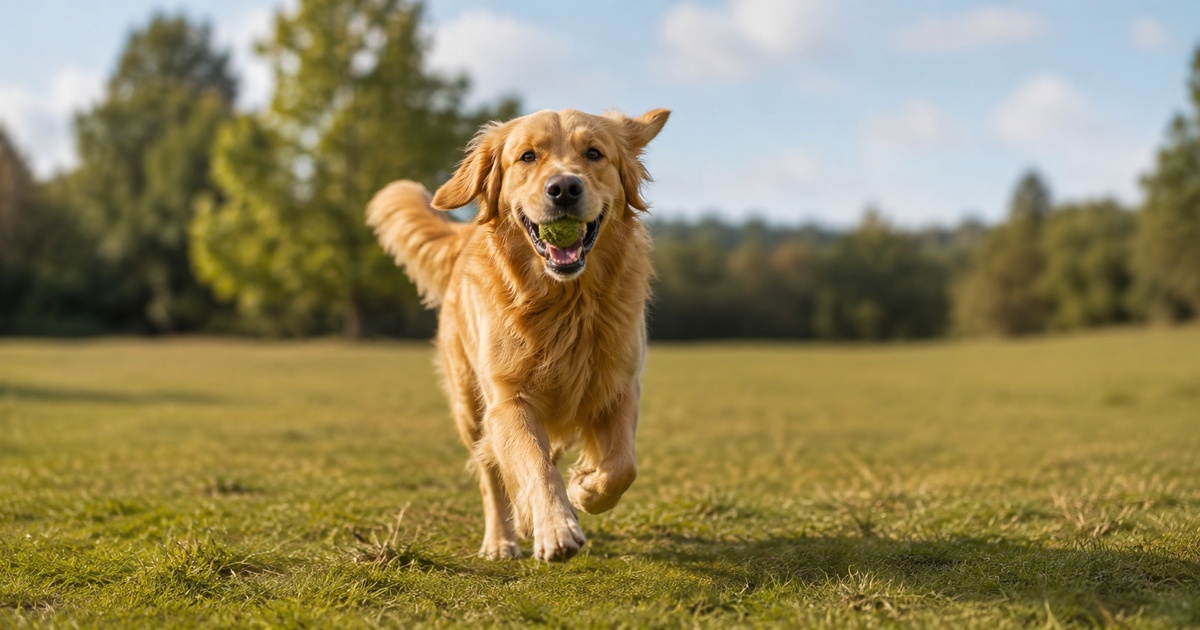
What's the Golden temperament?
Goldens are retrievers: bred to fetch downed birds from the field. They love working WITH people, carry a strong fetch drive, and have mouths soft enough to carry things undamaged. Kind to strangers too: the worst guard dog imaginable, and the best companion. The patience absorbs children's mistakes gracefully, and the training responsiveness is why they dominate guide-dog and therapy work.
| Golden Retriever | Notes | |
|---|---|---|
| Size | 20-24 in tall, 55-75 lbs | Large |
| Temperament | Friendly, patient, gentle | Kind to everyone |
| Barking | Low | |
| Training | Very easy | #4 in the intelligence rankings |
| Exercise | High | An hour-plus daily: loves swimming |
| Coat | Double coat, heavy shedding | Brushing 3x weekly: daily in coat-blow season |
| Lifespan | 10-12 years | On the short side, as large breeds run |
| Common conditions | Hip dysplasia, cancers including lymphoma, skin allergies, ear infections |
What does a Golden actually demand?
- Walking: an hour daily is the floor: weekends want somewhere to RUN. Shortchange the walks and the furniture pays.
- Coat: double-coated: brushing three times weekly, daily through spring and fall. Retire the black wardrobe.
- Money: food $60-120 monthly: even partial grooming runs $80+ a visit: surgeries cost double the small-dog rate.
- Space: room to turn around, floors that don't slip. Apartments work: factor in the elevator and the neighbors.
- Strength: an adult tops 65 lbs. A hard pull drags a grown adult. Leash training in puppyhood is mandatory.
This I learned from Barley's owner: the puppy phase is the hard part. Until age two the energy is volcanic: two hours of walking and the couch still gets chewed. Past two, they calm down like a switch flipped. The real question is whether you can survive those two years.
What conditions run in the breed?
Hip dysplasia is the large-breed classic: checking the parents' hip scores cuts the risk meaningfully. Large-breed puppy food (slowing the growth spurt) and avoiding stairs and jumps in puppyhood are the other levers. Goldens also carry a known elevated cancer rate: twice-yearly checkups from age 7 are the standard. And those beautiful drop ears trap moisture: check them weekly for infection.
The first leap into the water deserves an audience
A Golden Retriever broadcasts every emotion, so every video has a highlight. Post the first creek plunge to kkeung and the date stays on the post, with likes rolling in from the neighborhood dogs. A big dog's daily life is rich in bragging material.
Show the neighborhood dogs →Before your first big dog: three preparations
Leash training from puppyhood
Leash manners unlearned at 20 pounds cannot be fixed at 70. Stop-when-pulled and walk-beside start at four months. This is eighty percent of Golden training.
Make fetch the outlet
A Golden with something in its mouth is a happy Golden. Ten minutes of fetch drains energy like thirty of walking. The shoe-and-sock parade is this same instinct misrouted: stock plenty of legal toys.
Scout the water
Goldens love water. A swimmable creek or a dog pool on the summer map cuts the walk burden dramatically: and swimming is kind to the joints.
The Golden really is the easiest large breed: with the operative words being large breed. Judge it by small-dog standards and the walking, the fur, and the bills will ambush you. Handle those three, and you get a dog like Barley: friend to every dog in the neighborhood.
Frequently asked questions
Can a Golden Retriever live in an apartment?
How do Labs and Goldens differ?
Why does my Golden puppy mouth EVERYTHING?
How much does a Golden eat?
How long do Goldens live?
This article is general information and does not replace a veterinary diagnosis. Talk to your vet about your dog's condition.