Adopting a Shelter Dog:
The Process, and the First Three Weeks
One of my dog Gureum's walk friends is Bomi, a shelter mix (Gureum's name means "cloud" in Korean). When we first met her, Bomi flinched at any hand raised above her head: half a year later she was offering her belly before Gureum could. I asked her owner about the adoption, step by step: and here's that story, organized. Because starting unprepared is how both dog and owner end up hurting.
Shelter adoption runs visit, application and interview, meet-and-greet, adoption contract: and once home, remember the 3-3-3 rule. Three days of wariness, three weeks of settling in, three months before the real personality appears. Not judging before then is the first rule of preventing a failed adoption.
How does the adoption process work?
Municipal shelters and rescue organizations run slightly different tracks. Shelters are comparatively simple: rescues often add interviews and home checks. It can feel demanding: that demandingness is exactly why their return rates run lower.
| Step | Municipal/county shelter | Rescue organization |
|---|---|---|
| 1. Find | Browse listings on sites like Petfinder, or visit | The rescue's website or social listings |
| 2. Apply | Visit or call, fill the application | Online application + interview (phone or visit) |
| 3. Meet | Meet at the shelter in person | Visit the foster home, often multiple meetings |
| 4. Contract | Adoption agreement, microchip registration | Adoption contract, home check, adoption fee (varies) |
| 5. Follow-up | Usually none | Check-ins for 1-3 months, support if problems arise |
* A newly arrived stray sits through a hold period (a few days to a week in many jurisdictions) so an original owner can claim them: adoption finalizes after it ends. In open-admission shelters, dogs past that window can face euthanasia when space runs out: timing matters.
What should you verify before adopting?
- Health status: ask about vaccines, spay/neuter, heartworm and skin test results. Shelters often run only the basics: a full vet checkup right after adoption is part of the plan.
- Estimated age and size: puppy adult-size is guesswork. Paw size and suspected parent breeds help: estimate generously.
- Temperament observations: reactions to hands, to other dogs, to sounds: ask the staff. Cage behavior and outside behavior differ: take them for a walk if allowed.
- Your household's honest conditions: other pets, young children, hours alone. Say it all plainly: bringing home a mismatched dog is the worst outcome for everyone.
What happens at 3 days, 3 weeks, 3 months?
This I learned from Bomi's owner: the most important number in rescue adoption is three. The first three days: wariness, hiding, refusing food. Around three weeks: the house rules get mapped, trust in you begins. Only past three months does the tension fully drain and the true personality walk out. Bomi first brought over a toy in month three. Until then, her owner had assumed she was a quiet, docile dog: she was, in fact, a tense one. Not knowing this window: deciding in week one that we're just not a match: is the classic road to a returned dog.
Start the photo record on day one
The day-one huddle in the corner, the first tail wag at week three, the belly-up sleep at month three: each is its own milestone. Photos posted to kkeung keep their dates, so on the hard days you can scroll back and see how far you've both come. In a rescue adoption, that record is what keeps the owner going.
Save a photo of today →Common early behaviors, and what to do
Fear of hands
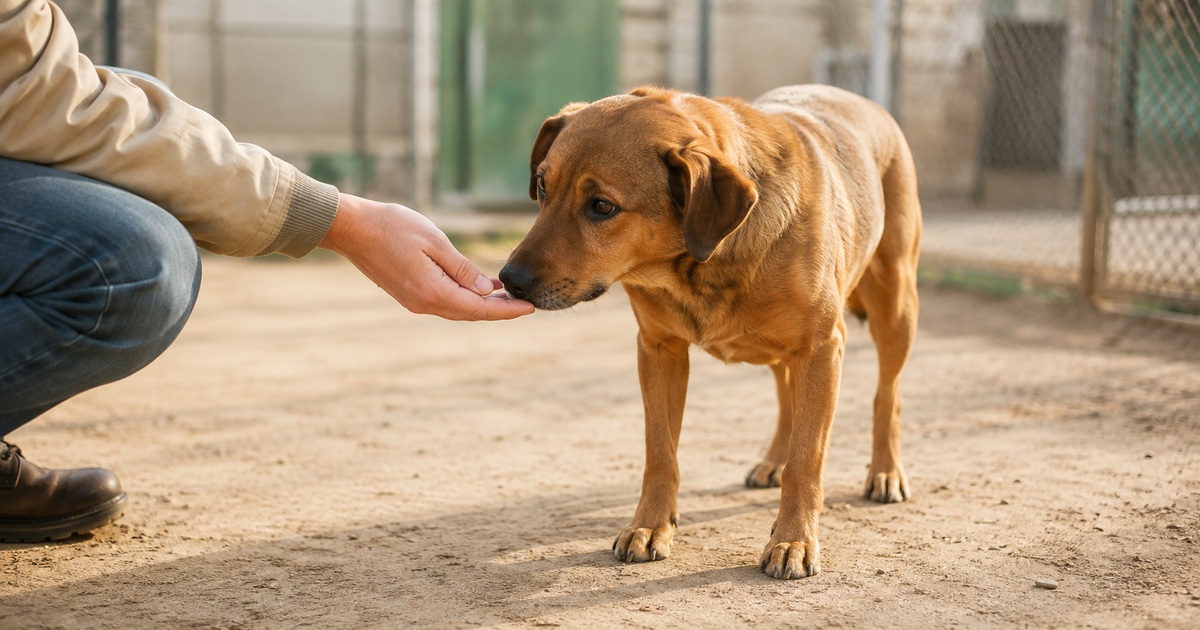
A dog with a rough history, or no history with human hands, flinches at anything descending from above. Approach from below instead, slowly, back of the hand first for sniffing. It takes weeks. Forced petting sets it back.
Potty accidents
Shelter life often means pottying inside a kennel: the indoor-rules concept may simply not exist yet. Teach from zero, like a puppy: adults typically get it in 2-4 weeks.
Food intensity
A dog who has known hunger guards the bowl or bolts the food. Stay away from the bowl at mealtime, feed generously on schedule, and it softens within weeks. Hand-fed treats build trust beautifully in the meantime.
Separation anxiety
A dog who's been left once feels every departure as another abandonment. Stay close the first week, then grow the alone time very slowly, starting from five minutes.
Rescue adoption isn't uniquely hard. It's just trusting a dog whose past you don't know: for three months. Bomi is now the best smiler in the neighborhood.
Frequently asked questions
Aren't shelter dogs there because something's wrong with them?
How much does adoption cost?
Is a puppy better than an adult?
What if it doesn't work out after adoption?
I already have a dog. Can I still adopt?
This article is general information and does not replace a veterinary diagnosis. Talk to your vet about your dog's condition.