Do Dogs That Don't Bark Exist?
Quiet Breeds and Quiet Temperaments
Haru the Shiba, our walk friend, almost never barks. His owner says: I hear him a handful of times a YEAR. My dog Gureum, meanwhile, files ten separate reports per delivery truck (it means "cloud" in Korean). Same species. Why the gap? Breed? Personality? Something wrong? I dug in.
A dog that never barks doesn't exist: but breeds and temperaments with VERY little barking absolutely do. Basenjis, Greyhounds, Shibas, Akitas, and Berners lead the list: and independent, confident individuals bark less across every breed. The caveat: a talkative dog who SUDDENLY goes quiet isn't showing temperament: that can be throat trouble, pain, or a low mood, and it needs checking.
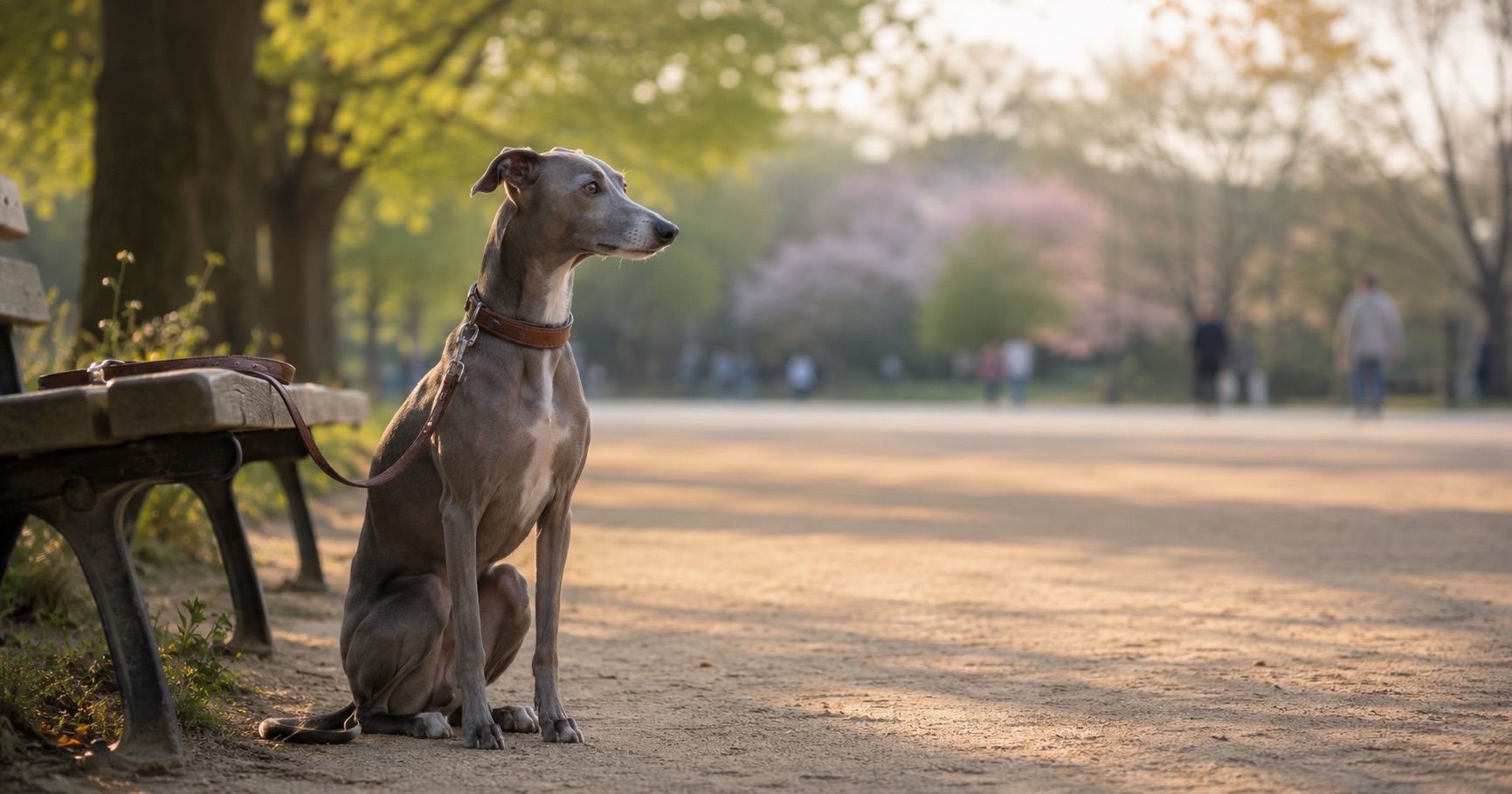
Which breeds run quiet?
Barking tracks a breed's original job description. Lines built to guard property or announce prey were built to be LOUD: lines built to track silently, pull sleds, or warm laps had little reason to speak. Below are the famously quiet ones: with the standard disclaimer that individuals within a breed vary widely.
| Breed | Size | Why quiet | Speaks instead with |
|---|---|---|---|
| Basenji | Medium | The larynx physically can't bark | A yodel-like sound |
| Greyhound, Whippet | Mid-large | Sight hounds: composed by design | Staring, relocating |
| Shiba, Akita | Medium, large | Independent: bark only on real alert | The scream (Shibas) |
| Bernese, Newfoundland | Large | Unhurried temperament | A low grumble, body-blocking |
| Cavalier, Shih Tzu | Small | Bred purely for companionship | Whines, a paw on your leg |
| Borzoi, Saluki | Large | Silent hunters | Almost nothing at all |
How does a quiet dog talk?
Low-bark is not low-conversation: the vocabulary just moves into the body. Sitting at the door. Nudging your hand with a nose. Staring. Sighing. Whining. Relocating pointedly. And here's the catch: when those signals go unanswered long enough, a quiet dog gives up on transmitting and starts absorbing alone. The quieter the dog, the more actively the human has to watch. Some route around barking entirely: the Shiba's famous scream, the Basenji's yodel.
Learned this on the job: mid-walk, when something bothers Haru, he simply stops. No barking, no pulling: he sits. His owner assumed stubbornness at first: then noticed every sit-down spot had a big dog in it, or construction noise. Quiet dogs say it quietly.
When a talkative dog suddenly goes silent
- Hoarse or damaged vocal cords: barking motions that come out cracked or empty can be laryngitis or a tracheal issue.
- Pain: barking costs energy, and a hurting dog stops spending. Check activity and appetite alongside.
- Hearing loss: nothing heard, nothing to answer. Common in seniors.
- Low mood: some dogs go quiet after a move, a family change, or the death of another pet.
- Punishment history: a dog scolded hard for every bark may have surrendered the channel. That's not calm: that's suppression.
Rapid quieting over days, with other changes riding along (meals, walks, play): vet.
A quiet dog's words fit best on video
A three-second clip of a dog sitting at the door, glancing back over a shoulder: not one sound in it, and the whole let-me-out message is right there. Quiet dogs' expressions deserve the archive MORE than loud ones. Posts on kkeung keep their dates, and the neighborhood dogs' likes roll in.
Save a video of yours →Raising the quiet ones well
Practice reading the signals
Once a day, replay a moment your dog asked for something silently: the sit at the door, the stand by the water bowl, the sigh from the bed. Catch it and answer it, and the quiet conversation keeps flowing.
Re-license the bark
A dog silenced by scolding may need re-teaching that ONE bark at a stranger is legal. The protocol: one bark, a thank you, a treat, then quiet. Expression survives: the explosion never starts.
Quiet is not content
The no-complaints dog slides down the priority list: walks shrink, play gets postponed. But quiet breeds like Shibas and Greyhounds carry full-size exercise needs. Silence isn't satisfaction. It's a different dialect.
Living with a talkative dog like Gureum, I've envied the quiet ones. But after enough time watching Haru, I've revised it: the quiet dog is the one whose person has to listen HARDER. Like the friend of few words: what they do say is worth more.
Frequently asked questions
My dog NEVER barks. Are they mute?
If I get a quiet breed, no apartment complaints?
Can a non-barker guard the house?
What about debarking surgery?
My puppy hasn't barked once. Normal?
This article is general information and does not replace a veterinary diagnosis. Talk to your vet about your dog's condition.