Why Dogs Chase Their Tails:
Play or Compulsion? How to Tell
When my dog Gureum chased her tail as a puppy, the whole family laughed (it means "cloud" in Korean). And every time the laughter came, she spun harder. Later a trainer told us: that's the textbook behavior that hardens into attention-seeking: and I felt the sting of recognition. Here's where the adorable ends and the concerning begins.
Tail-chasing is one of four things: puppy play, attention-seeking, an anal gland or skin problem, or compulsion. Under a year old, occasional spins that self-terminate: play. Spinning only when you laugh or engage: attention-seeking. Biting the tail until fur breaks or blood shows: physical problem. Multiple long sessions daily that your voice can't interrupt: compulsion: and compulsions need the vet and trainer BEFORE they set.
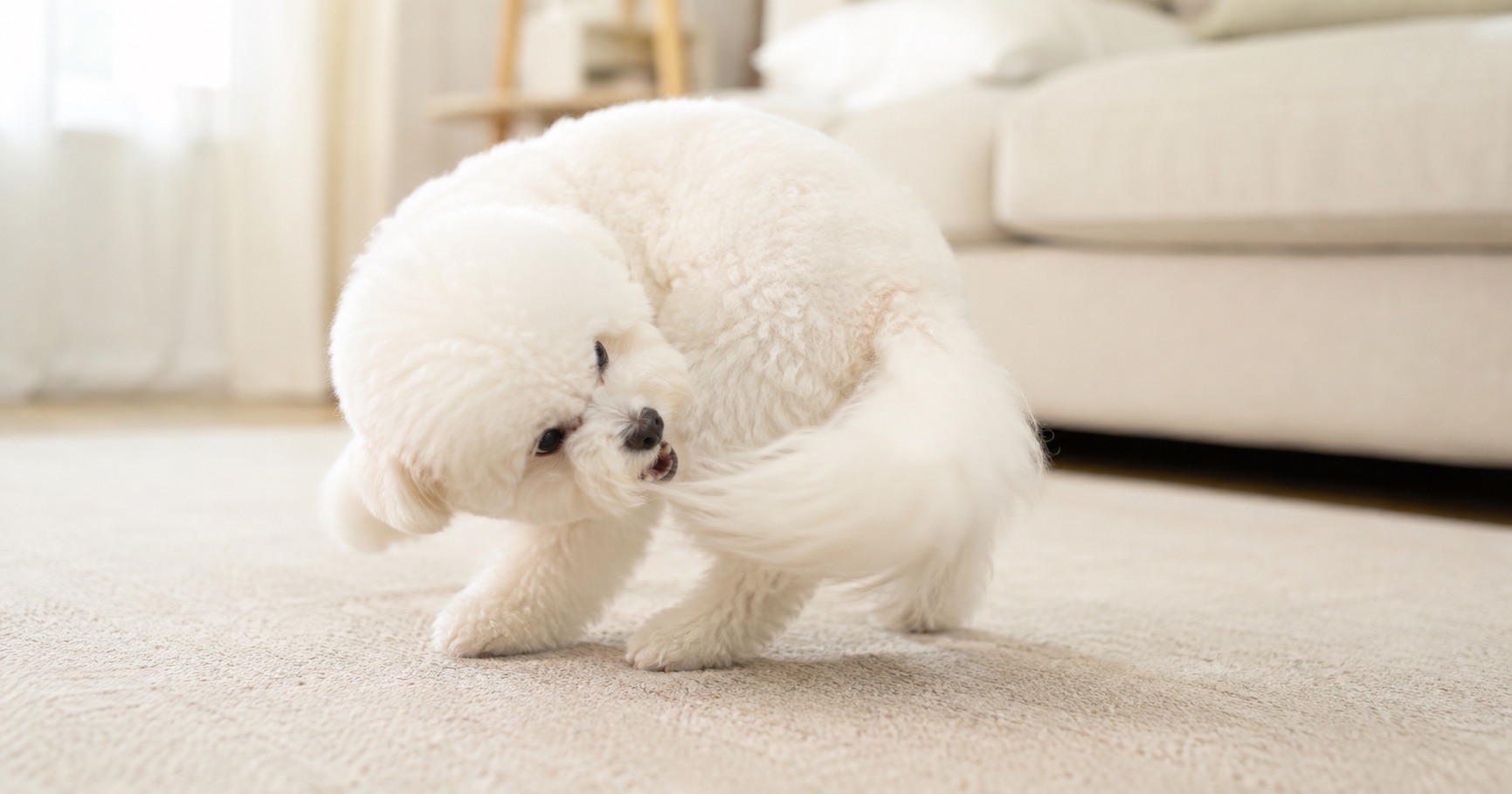
Why do dogs chase their tails at all?
To a puppy, the tail is a moving object not yet filed under "self": chasing it is the obvious move. The trouble starts after. Every spin draws laughter and raised phones, and the lesson lands: spinning summons attention. Add boredom with no other outlet, and spinning becomes the release valve. Layer certain breeds' wiring on top and it can set into compulsion: Bull Terriers and German Shepherds are the best-documented cases.
| Cause | What it looks like | The tell | Response |
|---|---|---|---|
| Puppy play | Occasional, a few spins, moves on | Under 1, stops when called | Leave it alone |
| Attention-seeking | Only with an audience: laughter fuels it | Never happens alone | Zero reaction, walk away |
| Surplus energy | Evenings, walk-skipped days | Arrives with other problem behaviors | Raise the walks and play |
| Anal glands, skin, fleas | Biting the tail base, scooting | Fur loss, redness, odor | Vet |
| Compulsion | Daily, long, glassy-eyed | Won't stop when called: continues despite wounds | Vet plus trainer |
Play or compulsion: the three-part test
Check three things. One: can you stop it? A name-call or a tossed toy that breaks the spin instantly: play. Spinning that continues through it: compulsion territory. Two: frequency and duration. A few spins once or twice a day: play. Multiple minutes, multiple times daily: problem. Three: the eyes. Play eyes sparkle over an open mouth: compulsion eyes go glassy and unfocused. And a dog that keeps spinning past an open wound on its own tail: that compulsion has already set.
Learned this on the job: what finally broke Gureum's attention-spinning was almost insultingly simple. The moment she started, the entire family turned around and left the room. About a week in, she concluded that spinning makes nothing happen: and retired the act.
Cutting it off before it hardens
- Don't laugh. Don't raise the camera. If attention is the paycheck, the behavior stays employed.
- The moment spinning starts, assign a different job: a sit, a toy retrieve: anything that uses the body differently.
- Raise walks and play. Most compulsive behavior is born in an energy and stimulation deficit.
- Watch the clock: spins at the same hour daily mean play should be scheduled BEFORE that hour.
- Inspect the tail and rear: redness, odor, or fur loss puts the vet first in line.
- Daily spinning for 2+ weeks: behavior vet or trainer. Some cases genuinely need medication.
Don't laugh: film it, and show the vet
How many rotations, what the eyes look like, whether a name-call breaks it: the video holds all of it better than any description. Film a spin quietly, no laughter on the track, and post it to kkeung: the date stays on it, and a trainer or vet can read play versus compulsion straight off the clip. The dates also show whether it's growing or fading.
Save a video of yours →The playbook, case by case
The spinning puppy
No need to block it: just don't pay it. Watch quietly, and when the spin STOPS, produce the toy: the lesson becomes stopping earns things. Still spinning daily past six months: check whether it's crossing into attention-seeking.
The dog who performs for guests
Guest laughter is the premium reward tier. Brief the guests in advance: when the spin starts, please look away. Burn off the excitement with a walk before they arrive, and pay out treats for calm sitting while they're there: the sit gradually replaces the spin.
The senior who suddenly spins
An older dog spinning for the first time isn't playing. Cognitive decline, vestibular disease, or pain lead the list: and one-directional spinning WITH wobbling is a same-day vet visit.
A tail-chasing dog is adorable: the adorableness only becomes a problem when we applaud it. Hold the laughter, reroute the energy into walks and play, and they'll chase the ball instead of the tail. Which stays adorable much, much longer.
Frequently asked questions
If it's compulsive, is it treatable?
They chased their tail, bit it, and drew blood.
What if they spin without looking at the tail?
Do certain breeds chase more?
They get dizzy and fall over. Okay?
This article is general information and does not replace a veterinary diagnosis. Talk to your vet about your dog's condition.