Before You Get a Second Dog:
Hierarchy and Jealousy, Managed
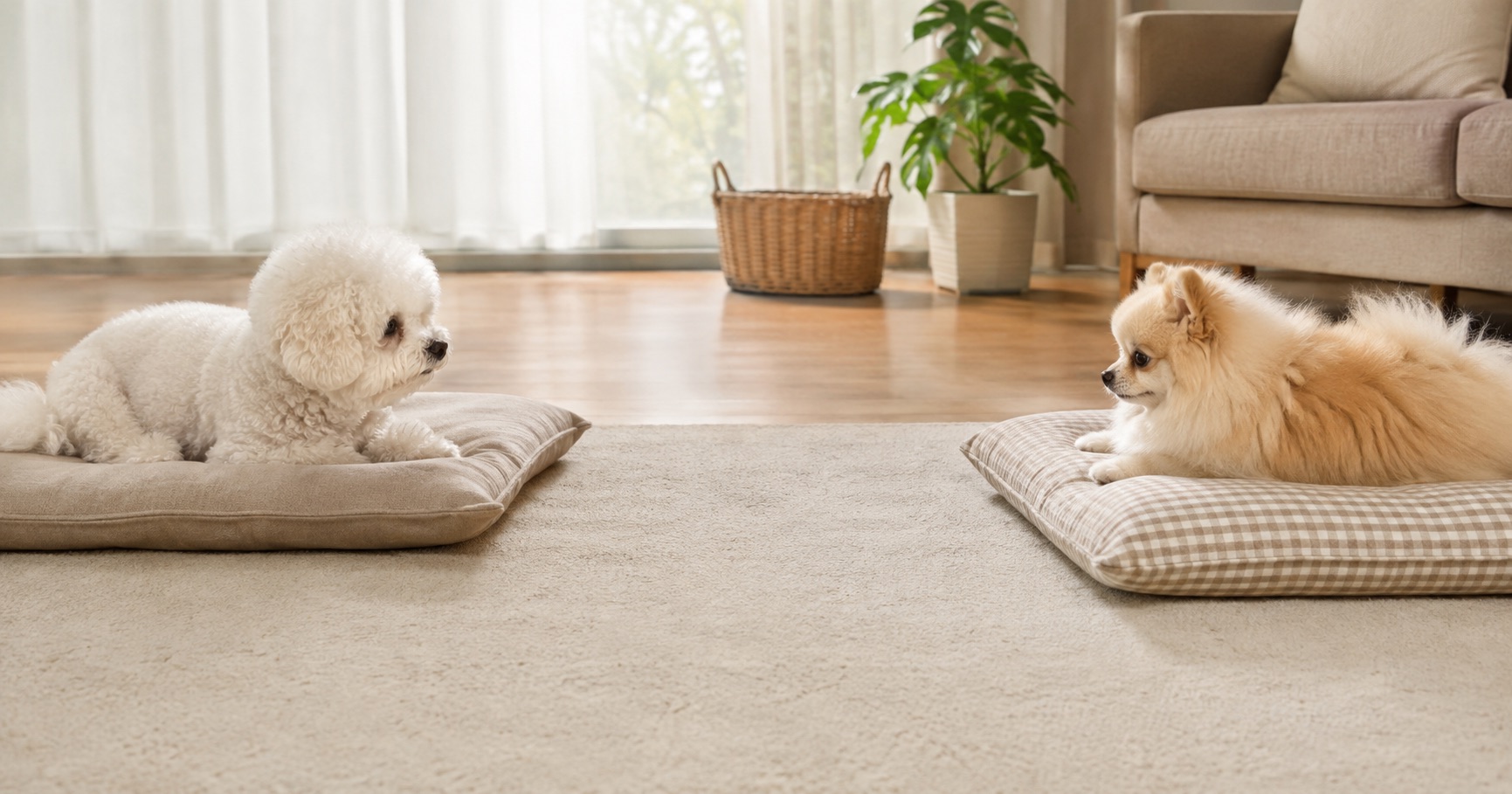
Isn't Gureum lonely? That thought once sent me second-dog shopping (Gureum's name means "cloud" in Korean). Then our walk friend Bean's family (the Pomeranian) added a second dog, and I watched their first month: and quietly closed the tab. Bean stopped eating and lost sleep guarding his bed. A second dog, it turns out, isn't a gift FOR the first dog. It's a major life event that happens TO them.
Before a second dog, verify exactly one thing: is the FIRST dog ready? Basic training finished, comfortable around other dogs, relationship with you stable. The combination math: 2+ years of age gap, opposite sexes, similar sizes. Once home: first-dog-first for meals, greetings, and walks: and separate beds, bowls, and toys. That separation is most of the jealousy prevention.
Which homes are ready for a second dog?
The question starts as is my first dog lonely: but the thing to examine is the first dog's STATE. Add a second dog to a first with separation anxiety, barking, or nipping issues, and you now have two problems: the newcomer learns the incumbent's bad habits. And if your first dog dislikes other dogs, a second dog isn't company. From their side, it's an invasion.
| Ready | Too early | |
|---|---|---|
| First dog's age | 2+, basic training done | Under 1, still learning potty and bark rules |
| First dog's temperament | Plays with or ignores other dogs | Growls at or flees other dogs |
| Your time | Room for two separate walk schedules | One dog's walks already strain the day |
| Budget | Double vet bills are absorbable | One dog's costs already pinch |
| Space | Two retreat spots that don't overlap | Room for exactly one bed |
| Motive | You want THIS second dog, as itself | Curing the first dog's loneliness |
The age, sex, and size math
Age: younger than the first, by 2+ years. Near-identical ages breed competition: and a first dog past 7 finds puppy energy exhausting, so consider an adult second. Sex: opposite is the smooth lane: male-male can dispute rank, female-female fights run hot when they happen, and two fixed dogs soften any combination. Size: similar, or play itself becomes hazardous: a big dog's playful bounce injures a tiny one.
Learned this on the job: Bean's household struggled precisely because the newcomer was female, like Bean's housemate, and the same age. Their trainer's first words: you picked the hardest combination in the book. Knowing the math beforehand changes everything.
The first meeting, and the first month
- Meet OUTSIDE the home: a park, walking parallel: then enter the house together. Installing the newcomer first and bringing the resident home to find them makes the resident meet an intruder.
- First-dog-first: meals, greetings, treats, walk order: all of it. Fussing over the adorable newcomer first tells the first dog their seat was taken.
- Beds, bowls, water, toys: separate. Feed in different rooms or across a gate. Most food-bowl growling is born right here.
- Apart when you're out: for the first month, different spaces whenever no human is home.
- Daily one-on-one time with the first dog: a walk, a game, even 10 minutes: but theirs alone.
- Growling is normal: the first dog is teaching house rules. Intervene only at tooth contact or a screaming puppy.
Before a second dog: try a neighborhood friend
If loneliness is the worry, a walk friend comes before a housemate. Friend a neighbor dog on kkeung and their completed-walk posts surface in the neighborhood feed, making same-time walks easy to line up. It's also how you discover what KIND of dog actually gets along with yours.
Meet the neighborhood dogs →When jealousy and rank disputes run hot
The first dog stops eating, or guards the bed
That's resource anxiety: fear of losing what's theirs. Meals move to fully separate spaces: the bed moves somewhere the newcomer can't reach: and when the newcomer approaches an occupied bed, YOU call the newcomer away. The point being made: the person guards the first dog's place. That's your job now.
The newcomer won't stop charging the first dog
A puppy second can't read the first dog's growls yet. Build the first dog a high perch or gated retreat, and drain the puppy's energy YOURSELF with walks and play. Outsource the puppy's education to the first dog, and the first dog burns out.
A fight draws blood
One injury-level fight means no more unsupervised time together, and a trainer's eyes on the situation. Resource dispute and personality clash need different fixes. And rarely, a pairing never works: that's nobody's fault, including theirs.
Adding a second dog is less like giving your first dog a sibling and more like assigning them a roommate they never requested. So the first dog's consent is everything: and that consent is earned by how you run the first month. Don't rush it. Dogs take longer than we expect to become friends: and once they do, it lasts.
Frequently asked questions
When will my first dog accept the second?
Is an adult dog okay as the second?
Will a second dog fix my first dog's separation anxiety?
Can they walk together?
What if my first dog bites the second?
This article is general information and does not replace a veterinary diagnosis. Talk to your vet about your dog's condition.