Dog Stairs and Ramps: Does Your Dog Need Them?
The Small-Dog Joint Math
Every time my dog Gureum hopped off the couch, the landing sound needled me (it means "cloud" in Korean): that little THUD. After the vet first said the word "kneecap," it needled harder. I deliberated over the stairs for weeks. Skipping to the verdict: should have bought them immediately.
A small dog who commutes to the couch and bed: stairs or a ramp, recommended. Fragile-kneed breeds, long-backed breeds, puppies, and seniors bank the landing impact directly into their joints, jump after jump. Existing joint problems: ramp over stairs. Tight on space: stairs win.
How bad is jumping down, really?
A 40 cm (16 in) couch is, to a small dog, roughly a human repeatedly jumping from their own height. The damage rarely comes from one landing: it comes from dozens of landings a day, compounding over years into luxating kneecaps and back disease. These profiles should consider gear preemptively:
| Profile | Why | Recommendation |
|---|---|---|
| Small breed, fragile kneecaps | Landing force concentrates on the knees | Stairs or ramp |
| Long-backed breeds | Jump-downs load the spine | Ramp, emphatically |
| Puppies | Growth plates still soft | Plus restricted access to heights |
| Seniors | Declining strength and flexibility | The gentlest ramp available |
| Already diagnosed | Further impact must stop | Ramp, after the vet consult |
※ A healthy mid-size or large dog handling a low couch: not a worry. The variable is height RELATIVE to the body.
Stairs versus ramp
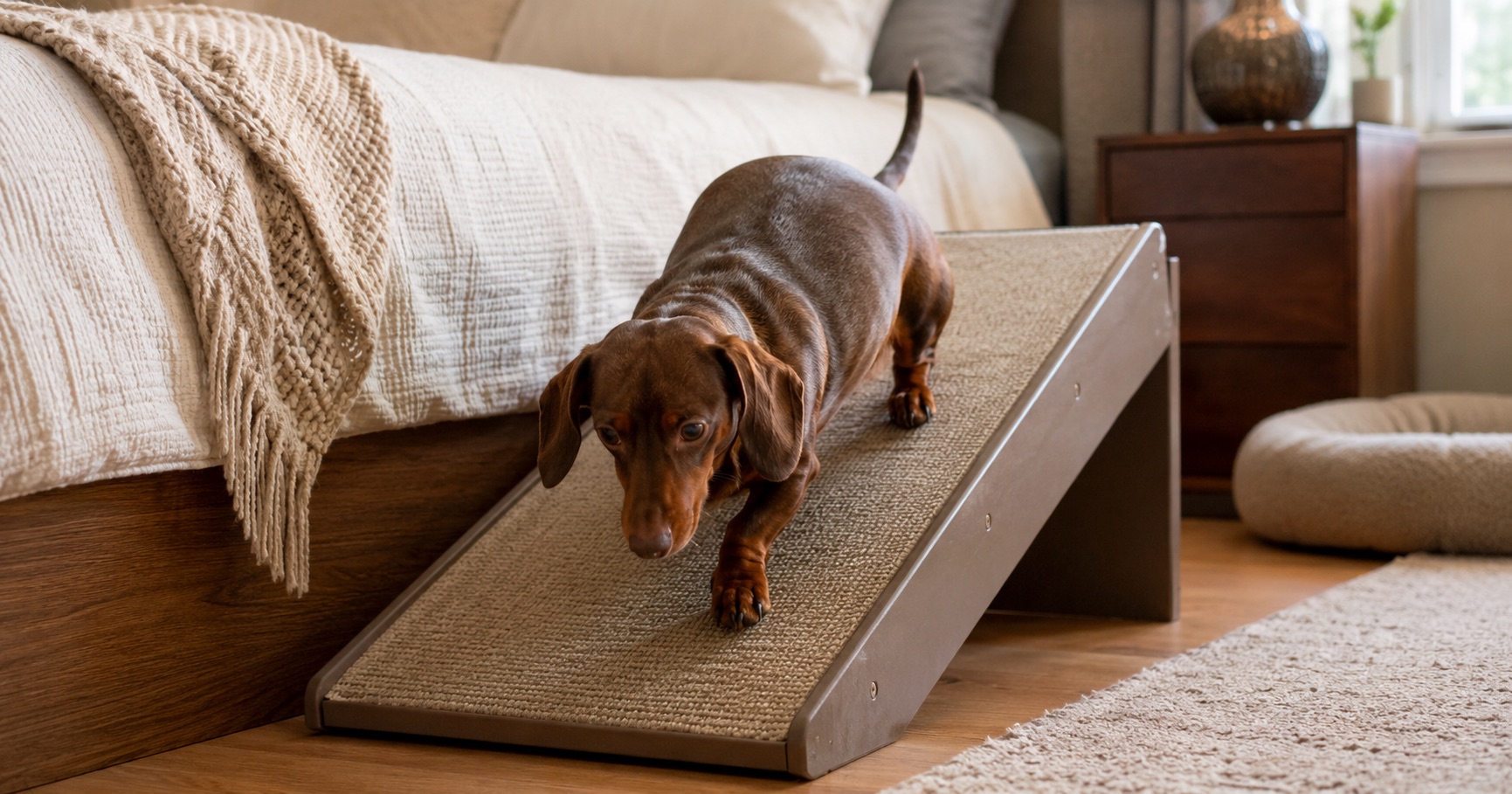
Stairs: small footprint, fast commute: but each step still uses the joints. Ramps: lowest joint load of all: but gentle means LONG, and long means floor space. Hence the usual split: healthy dogs on prevention duty take stairs: dogs with known knee or back trouble take the ramp. Either way, verify three things: a non-slip surface, zero wobble under the dog's weight, and a height that actually matches the furniture.
What if they won't use it?
Nearly every household hits this: don't pre-worry it. Dogs audit strange new structures on principle. Treats one step at a time: couch access granted ONLY via the stairs: a few days of that converts most dogs. Learned this on the job: Gureum ignored the stairs until they moved to dead center of the couch: her exact traditional launch point: and then she just started using them. Install on the EXISTING flight path: that's the trick. And expect sideways jumps in moments of urgency: keep praising the stair trips until the habit sets.
Half of joint care is the steady walking
Stairs subtract the impact: the muscle that BRACES the joint comes from walks. Log walks in kkeung and every walked day stamps a paw print: easy to keep the blank days from stretching past two. The weaker the knees, the more a short daily walk matters: and watching the stamps fill in is its own reward.
Go fill in a paw stamp →Buying and placing them right
Match the height and width
A big gap between the top step and the couch means the last move is STILL a jump: measure the furniture for real and match the product to it. Width: enough room to turn around comfortably.
Material and stability
Foam stairs are light, but the squishy ones swallow paws and breed distrust: choose moderately firm, with a removable washable cover: and confirm the non-slip base.
Finish the surrounding setup
Slick floor at the bottom of the stairs means the slip just relocates: a mat at the landing zone completes the system. And for the bed: night jumps happen because the stairs are invisible in the dark: a soft nightlight covers it.
One set of stairs won't prevent every joint problem: but erasing dozens of daily impacts is real, compounding work. Knees are a consumable: that line applies to dogs, word for word.
Frequently asked questions
What age should stairs start?
How steep can a ramp be?
Wouldn't banning the couch entirely be better?
My dog is already diagnosed with luxating patella. Do stairs help?
Folding or fixed?
This article is general information and does not replace a veterinary diagnosis. Talk to your vet about your dog's condition.