Giving a Dog Medicine:
Field-Tested Tips for the Spitters
The final gate of any treatment isn't the clinic: it's your living room. You've brought home the prescription, and your dog picks the pill out with surgical precision. My dog Gureum once accepted a cheese-wrapped pill (it means "cloud" in Korean), and seconds later deposited the pill: just the pill: on the floor. Cheese swallowed. Here's everything sharpened since that day.
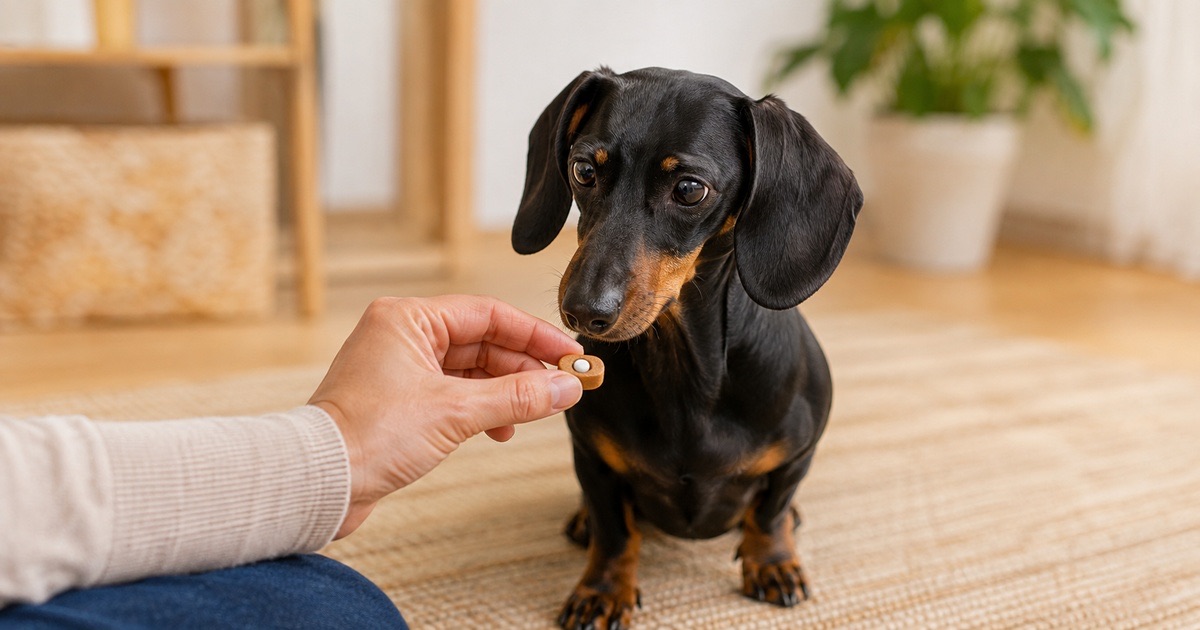
The foundation: hide it in a treat: but serve it among DECOYS. Two empty treats first, the loaded one third and casual, an empty chaser after: success rates jump. For the pickers: crush and mix into a spoonful of wet food or a squeeze treat, use a pill gun, or ask about a format change (liquid, chewable): in that order. Forcing the mouth open and tossing pills at the throat builds choking risk and medication terror: keep it as the true last resort.
The methods, sorted
| Method | Technique | Fits |
|---|---|---|
| Treat hiding | 2 empty + 1 loaded + 1 empty, in order | Most first attempts |
| Crush + mix | Fully blended into a little wet food or squeeze treat | The pill-pickers |
| Pill gun | Place at the back of the tongue, stroke the throat | Treat refusers, fasting doses |
| Format change | Liquid, chewable, compounding consult | When everything else fails |
One critical premise: whether a pill can be crushed or a capsule opened varies BY DRUG. Extended-release tablets must stay whole; some drugs need an empty stomach; some absorb poorly with dairy. Ask about hiding-treat choices and crushability AT the prescription counter: that's the professional move.
Beating the champion pickers: the details
Dogs who spit the pill every single time share one trait: they've learned. Your tense face, the unusual posture, the crinkle of the medicine bag: they read the signals and enter alert mode. So the technique is ACT NORMAL: casual as a training reward, one loaded treat among several, attention pulled to the NEXT treat the moment it's given. Strong-smelling carriers (cheese, squeeze treats, wet food, pill pockets) mask pill odor best, and for big pills, ask the clinic if splitting is allowed: smaller pieces mean less mouthfeel. Some days they'll still catch you. That failure belongs to nobody: don't let it become a war: just move to the next method.
The pill gun: a solid tool once you know it
A pill gun (pill popper) places the pill precisely at the back of the tongue: the fixer for fasting doses and days the treat plan collapses. The technique: cup the upper jaw with one hand and lift slightly, slide the gun in from the side of the mouth, deposit the pill at the center-back of the tongue, close the mouth immediately, then puff lightly on the nose or stroke the throat downward: the swallow follows. A little water or squeeze treat right after keeps the pill from lingering in the esophagus. First time? Ask the clinic for one demonstration: minutes of learning buys weeks of easy dosing.
Dose-tracking runs on photos, not memory
The day the morning pill becomes a genuine mystery always comes. Post the dosing moment or the medicine packet with your dog to kkeung and it keeps its date: today's status, and the day count, one glance away.
Save a photo of today →The never-do list
Urgency breeds dangerous shortcuts. Never: tilt the head skyward and toss the pill at the throat (choking, aspiration); force the mouth open and wrestle (medication terror, bite risk); mix medication into random human food (interactions, dangerous-food overlap); or re-dose without knowing how much went in when a pill got spat (overdose risk: spat pills may have partially dissolved and absorbed, so the re-dose call belongs to the clinic). Eye drops and ear medications follow the same philosophy: staged, treat-paired adaptation beats pin-and-fight every time: and gets there faster.
Long-term medication needs a SYSTEM
For the daily-forever drugs: heart meds, anticonvulsants: daily cleverness isn't enough: build the system. Anchor dose time to a fixed routine like meals; pre-sort into a weekly pill organizer so given-or-not is physically visible; assign WHO doses (the anyone-does-it household is where double-dosing accidents live); and set a refill alarm three days before the bottle empties. Long-term dosing's real enemy isn't refusal: it's the looseness that follows familiarity. The system protects the diligence.
Frequently asked questions
I mixed the pill into their food and they left some.
The crushed pill is so bitter they foam at the mouth.
I completely forgot a dose.
What's the best treat for hiding pills?
They vomited after the dose. Give it again?
This article is general information and does not replace a veterinary diagnosis. Talk to your vet about your dog's condition.