Korea's 10 Most Popular Dog Breeds,
by Registration Data
Step onto a walking path in Korea and half the dogs you meet seem to be Maltese or Poodles. Bichons like my dog Gureum are rarer than you'd guess (it means "cloud" in Korean). Curious how the actual numbers stack up, I pulled the national registration data: and it matches the sidewalk almost exactly. Here's the ranking, with the one thing to know about keeping each breed.
In Korea's animal registration statistics, the perennial top three are Maltese, Poodle, and Pomeranian: followed by mixed breeds, Chihuahuas, Shih Tzus, Golden Retrievers, Jindos, Bichon Frises, and Yorkshire Terriers rounding out the ten. Seven of the ten are small breeds: the defining trait of Korean dog culture.
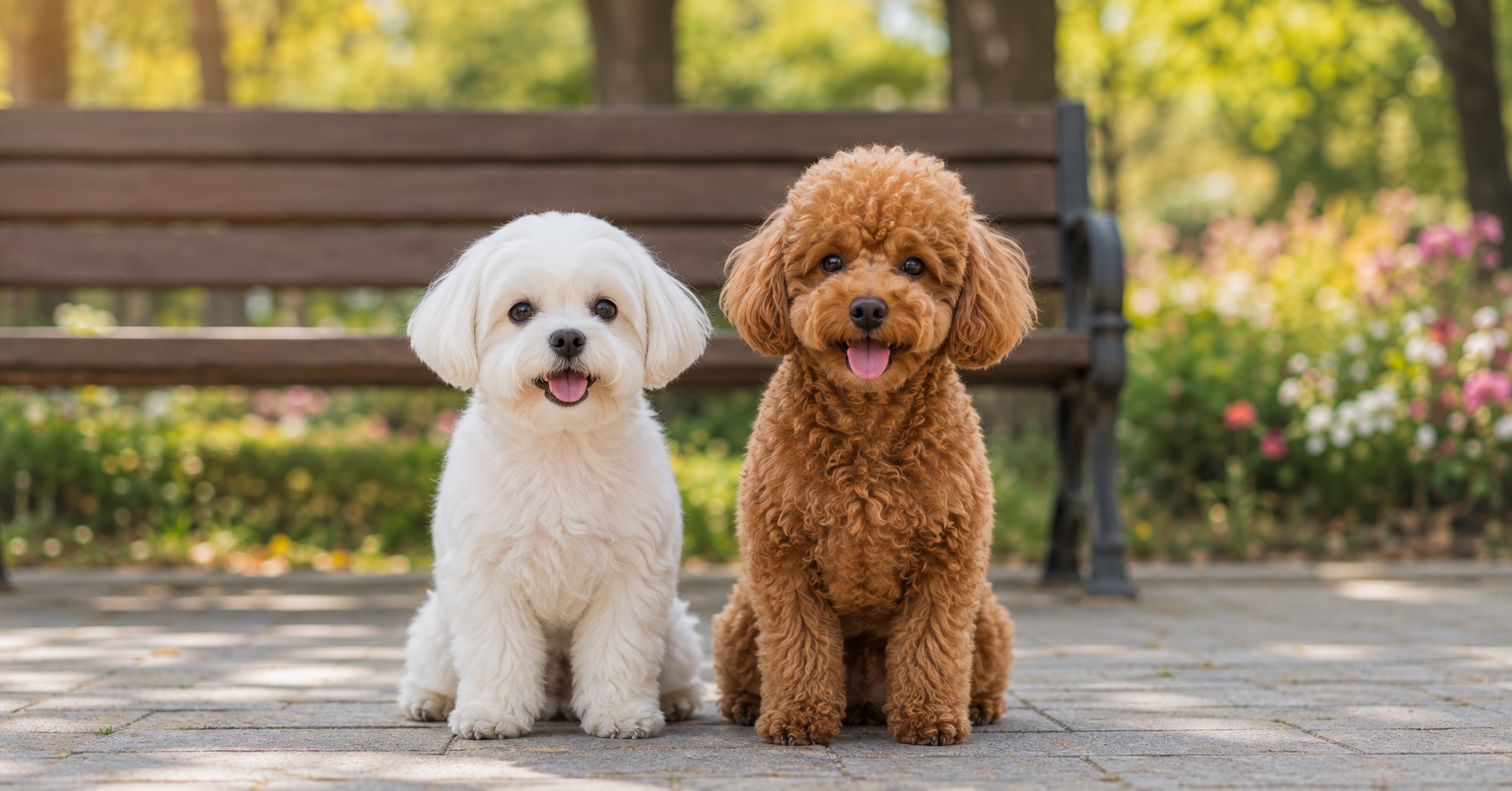
So which breeds top the list?
Dog registration is mandatory in Korea, which keeps the statistics fairly accurate. Ranks shuffle a spot or two year to year, but the upper tier has held for ages. Apartment-centered housing, the rise of single-person households, and the coat-and-exercise math all point the same direction: small breeds dominate.
| Rank | Breed | Size | One-line reality |
|---|---|---|---|
| 1 | Maltese | Small | Affectionate people-lover: budget for tear stains and bark training |
| 2 | Poodle (Toy) | Small | Clever and low-shedding: regular grooming is mandatory |
| 3 | Pomeranian | Small | Lively and expressive: double-coat care and bark training |
| 4 | Mixed breed | Varies | Meet the individual: lower genetic-disease risk overall |
| 5 | Chihuahua | Tiny | Deep one-person bond: feels the cold badly |
| 6 | Shih Tzu | Small | Gentle and quiet-leaning: eyes and skin need attention |
| 7 | Golden Retriever | Large | Best-in-class friendliness: brace for the exercise and the fur |
| 8 | Jindo | Medium | Loyal and independent: socialization decides everything |
| 9 | Bichon Frise | Small | Bright and sociable: daily brushing is the daily job |
| 10 | Yorkshire Terrier | Tiny | Small and fearless: the long coat is the work |
* Ranks shift a spot or two by year. Read this as the long-term pattern, not a single year's tally.
Why so many small dogs?
Learned this on the job: the small-dog dominance is less about taste than about environment. Apartments make large dogs hard: single-person households struggle to fund long walks: and grooming and food bills scale with body weight. So small, clever, low-shedding breeds like the Maltese and Poodle claimed the top spots almost by physics.
But small does not mean low-maintenance. The Maltese's tear stains, the Poodle's 6-week grooming cycle, the Pomeranian's double-coat brushing: daily work rivaling any large breed. And plenty of households skip walks because the dog is small: small dogs need their two daily walks like everyone else.
Who's rising outside the top 10?
- Welsh Corgi: a steep climb in recent years. The short legs and famous rear won the internet: the shedding and exercise needs are very real.
- Shiba Inu: the independent charm draws people in: the leash training humbles beginners.
- French Bulldog: quiet and indoor-suited: fragile in heat, with the airway issues of a flat-faced breed.
- Border Collie: famously brilliant: with exercise needs so enormous apartments aren't recommended.
A high ranking has a practical upside: abundant information, abundant supplies, and vets who see the breed daily. Rare breeds narrow every menu, from food to groomers. First-timers should weigh that too.
What does YOUR neighborhood look like?
Statistics are a national average: your block is its own dataset. The kkeung neighborhood feed stacks up neighbors' proud photos and completed-walk posts, and browsing it shows which breeds actually live around you. Then you meet those very dogs on your next walk: and it's oddly delightful.
Meet the neighborhood dogs →Choosing among the popular breeds
Popular and compatible are different questions
The #1 breed is not automatically YOUR breed. Write down three numbers first: hours the house sits empty, time available for walks, money available for coat care. Then choose. If grooming bills sting, for instance, Poodles and Bichons drop down the list.
Beware the trending breed
A breed that spikes in popularity gets overbred to meet the moment. Verify genetic testing rigorously: and remember that when the trend fades, the abandonments rise. A dog is a fifteen-year term.
Meet one in person
The breed in photos and the breed in your arms are different animals. Meet a friend's dog, or ask an owner on the walking path: most people will happily talk about their dog at length. Before choosing a Bichon I cornered three Bichon owners in my neighborhood. One of them asked: are you sure you can brush every day? That question was the most accurate thing I heard.
Frequently asked questions
Where does the registration data come from?
How are mixed breeds classified?
Are the popular breeds expensive to buy?
Why do large breeds rank so low?
Do people keep Jindos in apartments?
This article is general information and does not replace a veterinary diagnosis. Talk to your vet about your dog's condition.